Fontanka river embankment, Riverfront and cultural heritage site along Fontanka River in Saint Petersburg, Russia
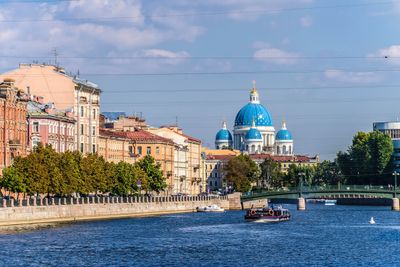
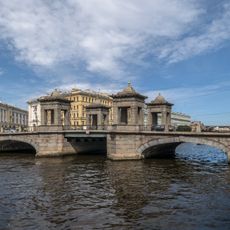
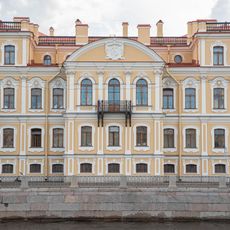
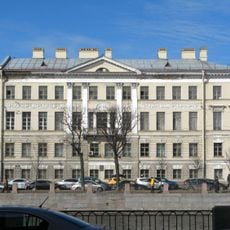
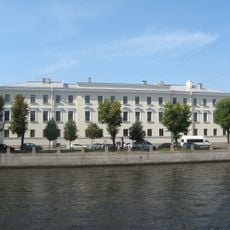
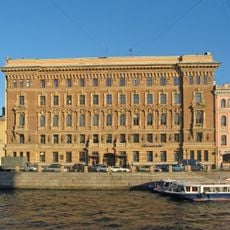
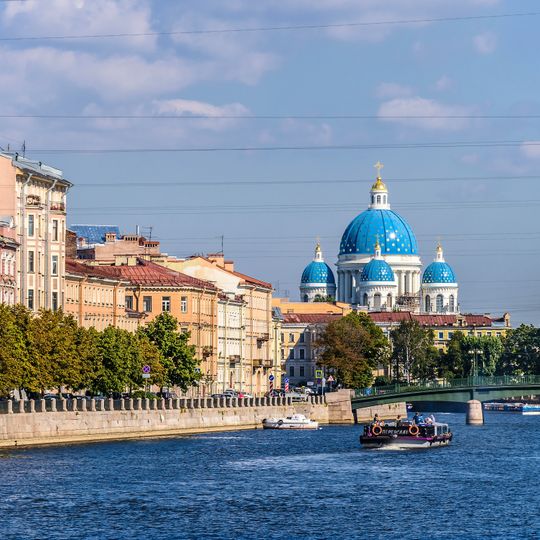
The Fontanka River embankment runs along both banks of the Fontanka from its outflow from the Neva to its mouth at the Bolshaya Neva. Its granite facing, built in the 1780s to Giacomo Quarenghi's design, rises from the waterline in rectangular grey-brown blocks to a flat promenade edged by a low parapet. The left bank is 6.4 km long, the right 5.7 km.
In the 18th century, the Fontanka marked the southern edge of Saint Petersburg before the city grew outward. The granite reinforcement of the banks was completed between 1780 and 1789, transforming the river into a key part of the city's framework.
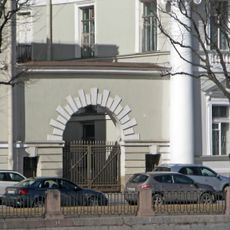
The Fontanka's name comes from the Italian 'fontana', for the fountains that once fed the river from the Summer Garden. At No. 21, a memorial sign marks the "Blockade Ice Hole", cut in the river during the Siege of Leningrad. At No. 22, a courtyard wing housed the 1964 show trial of poet Joseph Brodsky, sentenced to five years of exile.
Traffic runs one way on each bank: along the right bank toward the Summer Garden, along the left toward Galerny Island. Since 2017 cycle lanes line both roads for almost the river's whole length. The left embankment is 6.4 km long, the right 5.7 km, and the roadway was rebuilt in the early 1990s and again in 2016–2019.
The granite banks were laid out in the 1780s under the plan of Aleksei Kvasov's committee, with Giacomo Quarenghi among the architects credited with the work. The embankment then served as the boundary of the central part of Saint Petersburg, and it has held the status of a cultural heritage object.
The community of curious travelers
AroundUs brings together thousands of curated places, local tips, and hidden gems, enriched daily by 94,019 contributors worldwide.