Big Salabyk mound, Archaeological monument in Salbyk Valley, Russia
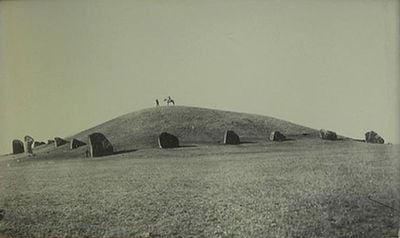
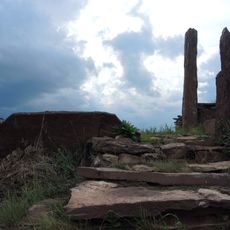
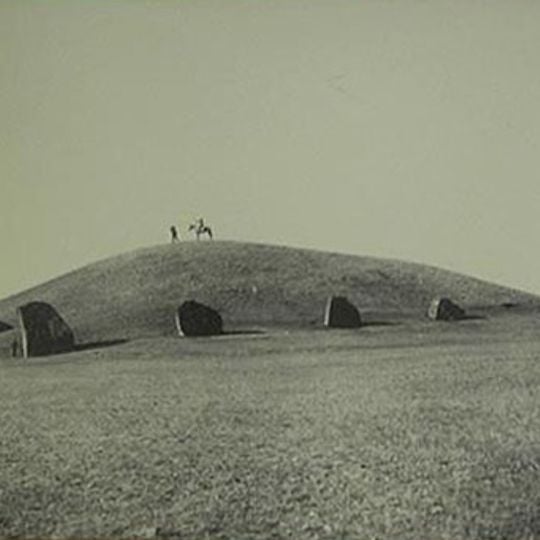
Big Salabyk mound is an ancient burial constructed with a square perimeter marked by massive stone plates in the Salbyk Valley. The stonework weighs between 50 and 70 tons per block and creates a defined boundary around the central burial chamber.
The mound dates back to the Bronze Age and remained part of the steppe landscape for thousands of years. In the 18th century, scientist Gerard Friedrich Miller first studied and documented the site during his expedition.
The mound held deep meaning for the ancient people who constructed it as a burial place and gathering space for ceremonies and rituals. The carefully positioned stones suggest this was a location where the community came together to mark important moments in their lives.
The site has an associated museum offering guided tours and visitor facilities nearby. Come prepared for open steppe conditions with little shade, bringing water and sun protection for your visit.
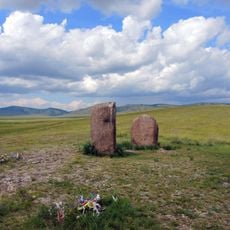
Around the mound stand about 23 upright stones reaching up to 6 meters high, positioned along the corners and sides of the stone enclosure. These tall stones may have served as markers or as part of a system for tracking celestial movements.
The community of curious travelers
AroundUs brings together thousands of curated places, local tips, and hidden gems, enriched daily by 91,845 contributors worldwide.