Uspensky Convent, Former Orthodox convent in Tula, Russia
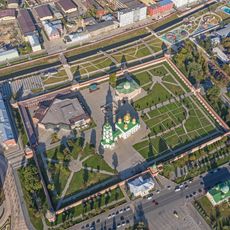
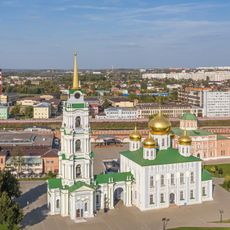
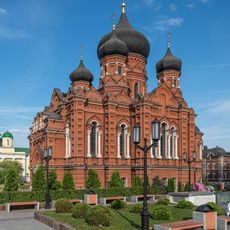
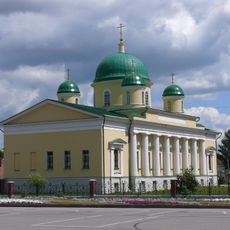
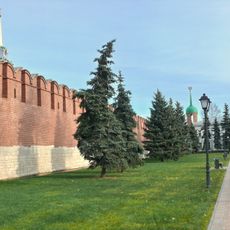
Uspensky Convent is a former women's Orthodox monastery by the Tula Kremlin. Its surviving Uspensky Cathedral, built in 1899–1902 to a design by provincial engineer E. V. Skavronsky in the Russian style, has a lower church dedicated to Mary Magdalene and St. Panteleimon and an upper church with three altars. The adjacent two-storey, five-domed Transfiguration Church with six altars was built around 1830–1845 to a design by V. F. Fedoseev, a pupil of K. I. Rossi.
Founded between 1645 and 1649 by Tsar Alexei Mikhailovich, the convent is first mentioned in 1649 and received a Gospel book from the tsar in 1657. In 1723 the parish church of St Nicholas was attached; in 1792 a new stone Dormition church was built with funds from Catherine II. The convent was closed in late 1921, and its bell tower, walls, and necropolis were destroyed.
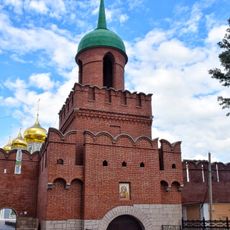
The convent was closed at the end of 1921; the Znamenskaya church, the bell tower, the walls and towers and the necropolis were destroyed, and the Uspensky cathedral held the State Archive of Tula Oblast. Both surviving churches, the Uspensky cathedral and the Spaso-Preobrazhensky church, were returned to the church and now serve as parish churches.
The convent is easily accessible via Mendeleevskaya and Turgenevskaya streets and welcomes visitors to observe regular religious services and ceremonies. It is helpful to check service times in advance and dress respectfully to honor the traditions of this sacred place.
The upper floor of the Uspensky Cathedral was painted in 1909 by artists of the schools of Viktor Vasnetsov and Mikhail Nesterov; part of the frescoes repeat those of Kyiv's St Volodymyr Cathedral. A plaque left of the entrance records the work, done under Abbess Magdalina with the blessing of Bishop Parthenius of Tula and Belev.
The community of curious travelers
AroundUs brings together thousands of curated places, local tips, and hidden gems, enriched daily by 94,028 contributors worldwide.