See the monuments around you in AROpen chests in the app
Around Us is built for your phone — point your camera at the streets and discover the monuments and places around you in augmented reality.Around Us is built for your phone — chests unlock when you walk, explore and capture nearby places.
Unusual Louisiana: secret places, abandoned sites, and bayou mysteries
Louisiana can be explored far from the usual routes. Next to the bayous and New Orleans, the state hides cemeteries where voodoo priestesses rest, chapels filled with ex-votos, plantations known for their ghosts, and even an abandoned amusement park from Hurricane Katrina. Some places remember the Civil War, others tell stories of industrial accidents that turned a lake into a giant whirlpool.
You can also find museums full of thousands of found objects, a replica of the Eiffel Tower made from pieces sent from Paris, or an oak tree with chimes that make music when the wind blows. In Laplace, the Frenier cemetery recalls a voodoo priestess's prophecy before the storm of 1915. Near Erath, Lake Peigneur still bears scars from a 1980 drilling accident that created a whirlpool swallowing barges and platforms. In St. Francisville, the Grace Church tells how Union and Confederate soldiers paused their fighting to hold Masonic funerals.
These places talk about local traditions, forgotten stories, and daily life in Louisiana, well beyond the usual jazz and gumbo clichés. They show a state where the past stays alive, where every place has an extraordinary story.
Unusual Louisiana: secret places, abandoned sites, and bayou mysteries
Louisiana can be explored far from the usual routes. Next to the bayous and New Orleans, the state hides cemeteries where voodoo priestesses rest, chapels filled with ex-votos, plantations known for their ghosts, and even an abandoned amusement park from Hurricane Katrina. Some places remember the Civil War, others tell stories of industrial accidents that turned a lake into a giant whirlpool.
You can also find museums full of thousands of found objects, a replica of the Eiffel Tower made from pieces sent from Paris, or an oak tree with chimes that make music when the wind blows. In Laplace, the Frenier cemetery recalls a voodoo priestess's prophecy before the storm of 1915. Near Erath, Lake Peigneur still bears scars from a 1980 drilling accident that created a whirlpool swallowing barges and platforms. In St. Francisville, the Grace Church tells how Union and Confederate soldiers paused their fighting to hold Masonic funerals.
These places talk about local traditions, forgotten stories, and daily life in Louisiana, well beyond the usual jazz and gumbo clichés. They show a state where the past stays alive, where every place has an extraordinary story.
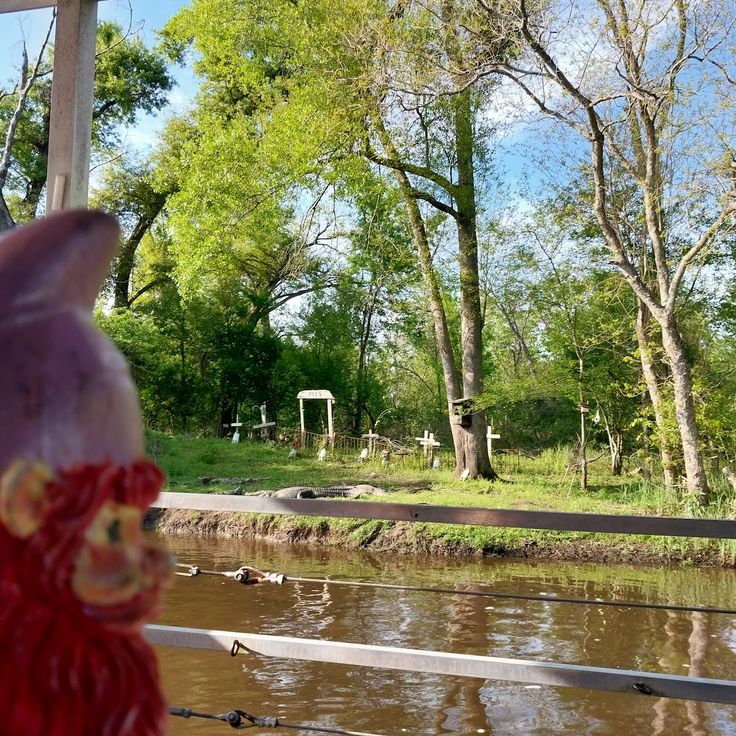
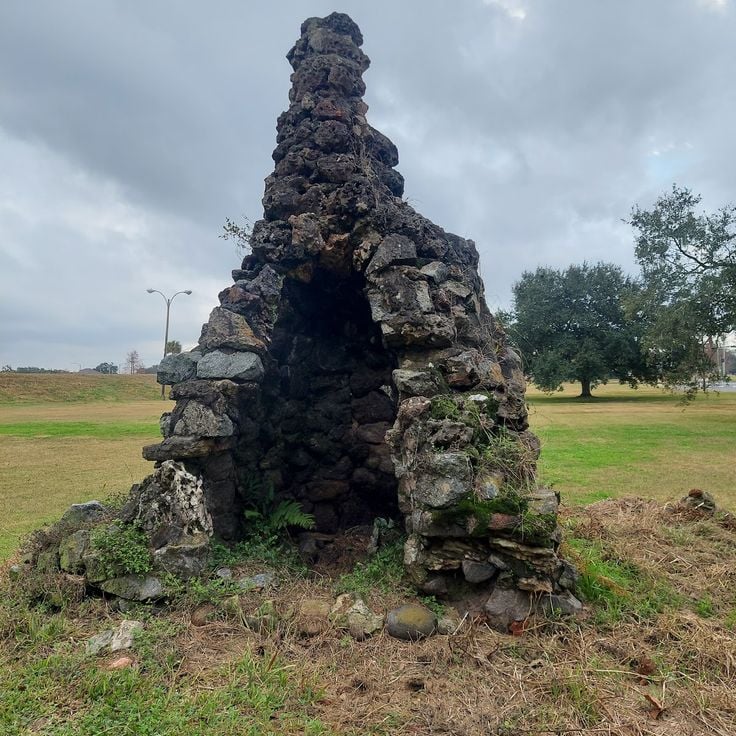
Frenier Cemetery sits deep in swamp country and marks the place where Julia Brown is buried, a voodoo priestess who, according to local tradition, predicted her own death and the fate of the village weeks before the hurricane of 1915. The storm destroyed the village completely, and Frenier disappeared from the map. Vegetation has taken over the site, with trees and marsh plants growing between the graves. You can only reach the cemetery on foot along unpaved paths, surrounded by wetlands and still water. The story of Julia Brown belongs to local folklore and continues to circulate in the area.
This Tour Eiffel of New Orleans was built from original parts that came from the former restaurant of the Parisian monument. In the 1980s, the pieces were shipped to Louisiana after the restaurant at the top of the French tower was dismantled. The structure is about 60 feet tall (approximately 18 meters) and recalls the French roots of the city. It stands on private property and can only be viewed from the outside. The construction shows how historical fragments can find a new life in unexpected places. It connects Paris with New Orleans through a piece of European architectural history that continues here in a different context.
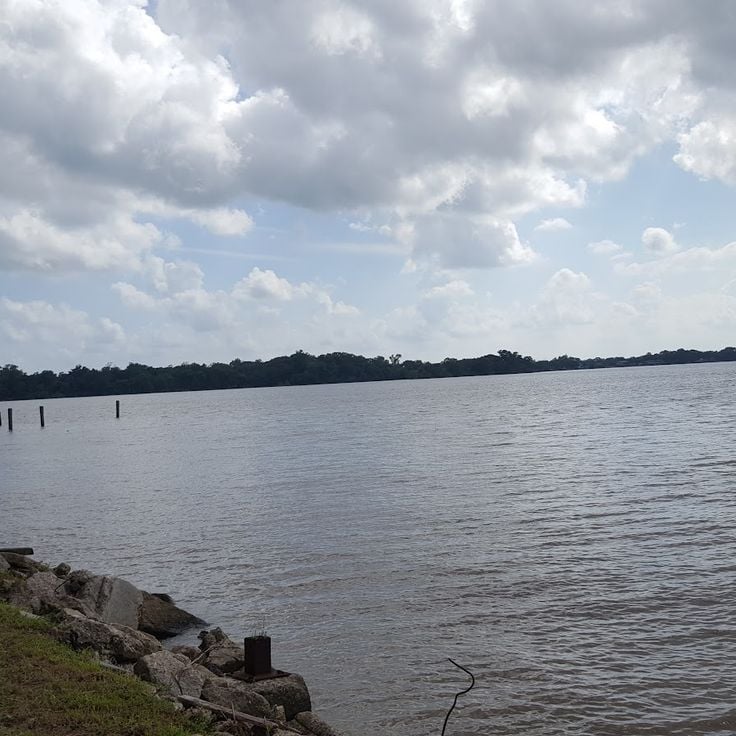
Lac Peigneur is a lake where an unusual industrial accident happened in 1980. That day, an oil rig drilled through the lakebed and accidentally pierced an underground salt mine. Water began flowing downward, turning the shallow lake into a giant whirlpool. Within hours, drilling platforms, barges, and parts of the shoreline disappeared into the water. The whirlpool was so powerful it reversed the flow of a nearby canal. The accident left deep craters along the shore and permanently changed the shape of the lake. Today, the altered landscape still shows what happened when a drilling mistake reshaped the geology of an entire area.
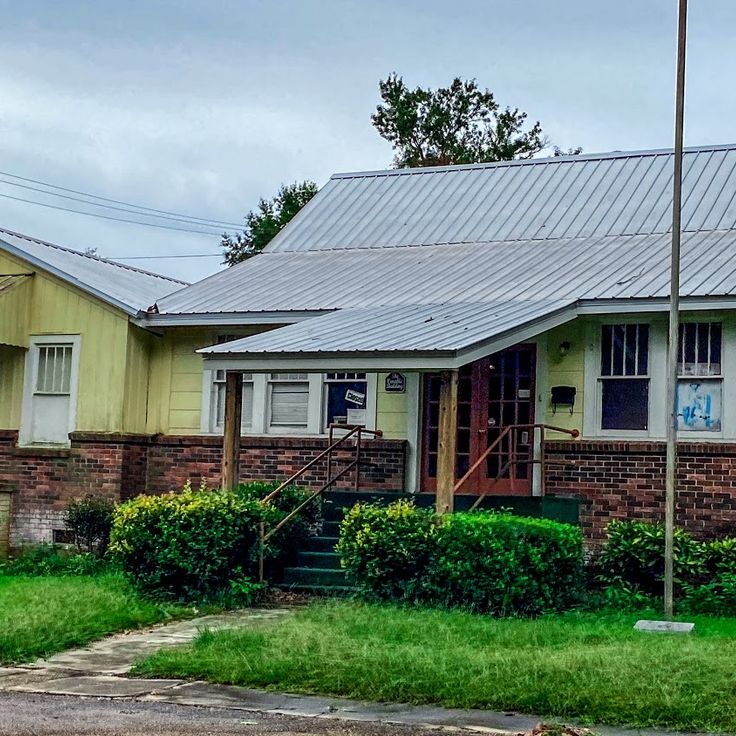
The Historical Museum and Museum of Cultural Arts in Kentwood brings two histories together under one roof. It displays memories of singer Britney Spears, who was born in this town: stage costumes, awards, and personal objects from her career. Alongside this, it preserves documents about Kentwood soldiers who fought in World War II: letters, uniforms, and photographs. The collection can be viewed in about half an hour and shows what has shaped the community. The building is modest and run by volunteers.
The abandoned Jazzland amusement park sits east of New Orleans and has been closed since Hurricane Katrina struck in 2005. Roller coasters, carousels, and buildings remain standing, some partly submerged, covered in rust and vegetation. The site recalls the force of the storm and how quickly a place full of people can turn into ruins. Some rides still stand upright, others are twisted or collapsed. Graffiti covers walls and facades, and mud has settled in the corners. The park shows how a disaster transforms everyday places and how nature reclaims abandoned spaces.
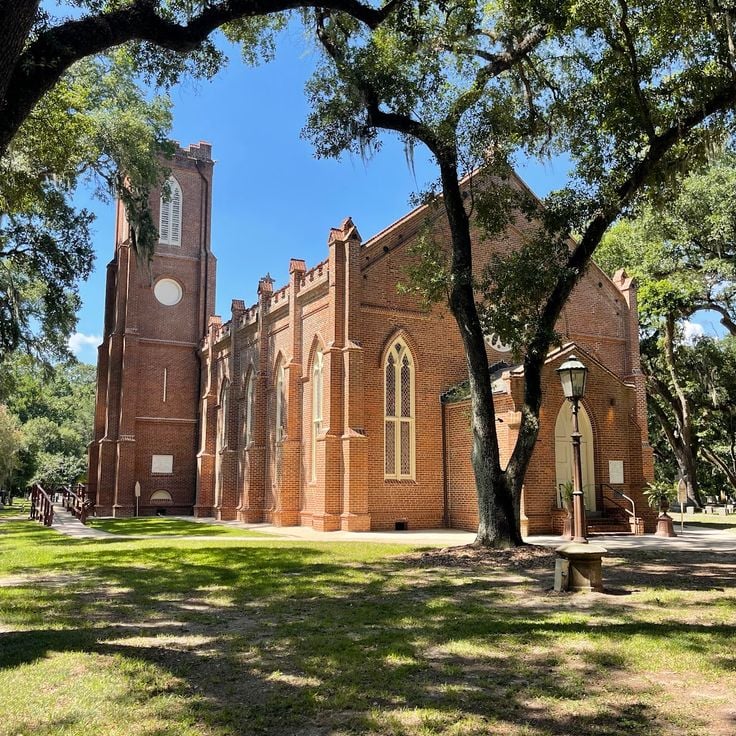
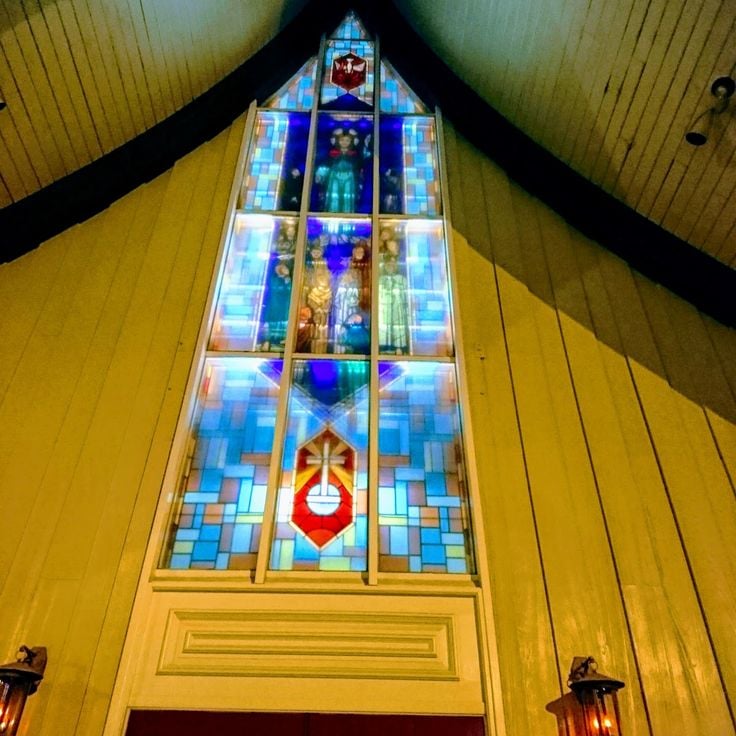
The Grace Episcopal Church stands among the historic buildings of St. Francisville from before the Civil War. Built in 1858, the church is known for an event in 1863 when opposing troops agreed to a truce to honor a fallen officer. During the Battle of Port Hudson, a Freemason died on the battlefield, and soldiers from both sides organized a joint funeral service inside the church. The ceremony followed Masonic lodge rules, regardless of political divisions. The building has kept its original nineteenth-century design, with plain wooden walls and traditional windows. The cemetery holds gravestones from the years before and after the war. This place shows how local communities tried to maintain human values despite military tensions.
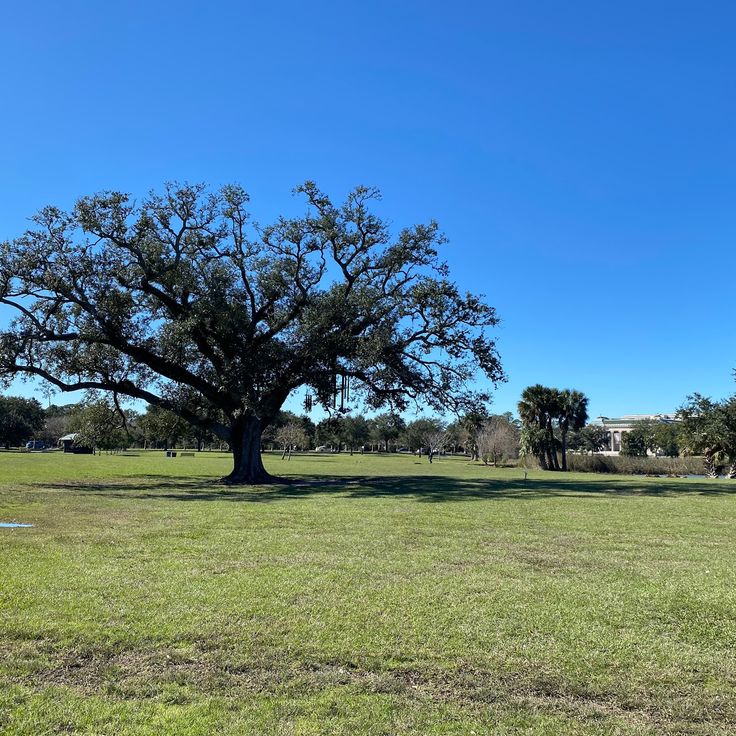
This oak tree stands in City Park and holds several wind chimes of different sizes in its branches. When the wind blows, they create different notes that combine into a random melody. The sounds change depending on wind strength and direction, so each visit offers a different musical atmosphere. The place connects nature and sound art in a simple way and shows how Louisiana integrates music into daily life beyond the familiar jazz clubs.
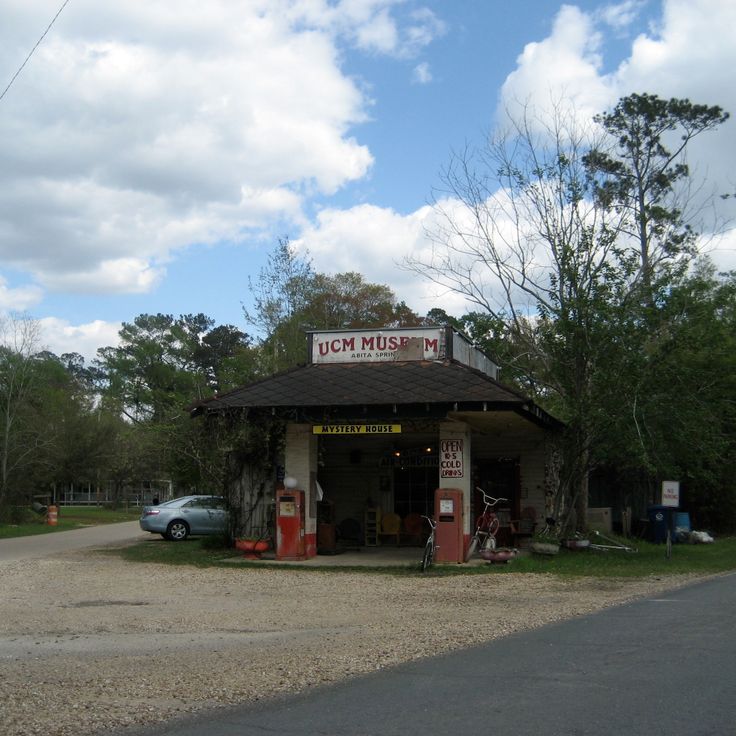
The Abita Mystery House displays over 50,000 found objects, homemade inventions, and unusual artworks inside a former gas station. Visitors see everyday items reassembled into new constructions, self-built machines, and collections that took decades to form. The exhibition reflects a form of folk creativity where nothing is thrown away and everything can find a second use. This place belongs to those Louisiana museums that lie off the usual routes and document local traditions of collecting and tinkering.
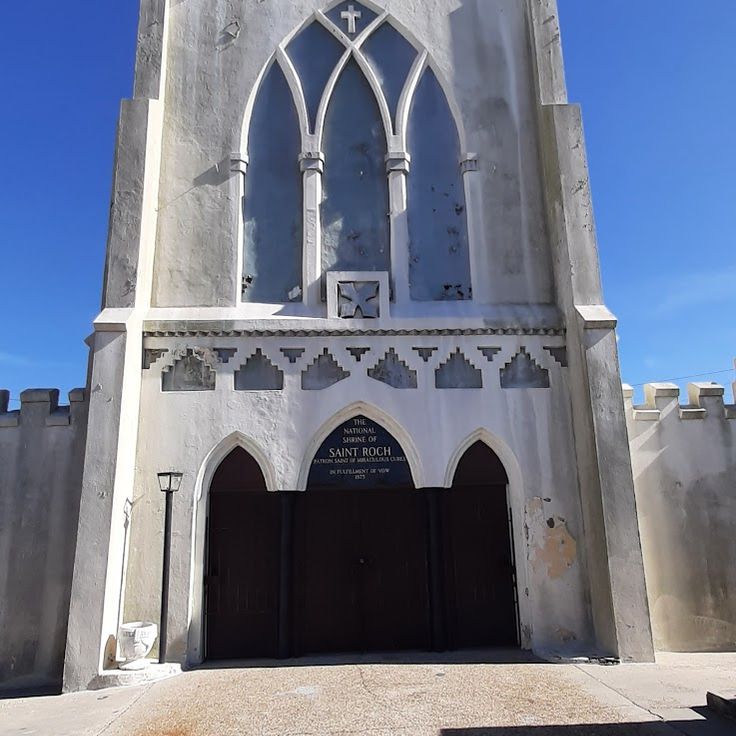
This chapel dates back to 1876 and appeared after a yellow fever epidemic. The walls are covered with votive offerings left by the sick. You can see prosthetics, crutches and small plaques. The room feels plain. Light comes through tall windows. Visitors walk quietly through the chapel and look at the objects. Many come out of curiosity, others out of respect. The place shows how the city dealt with illness and hope.
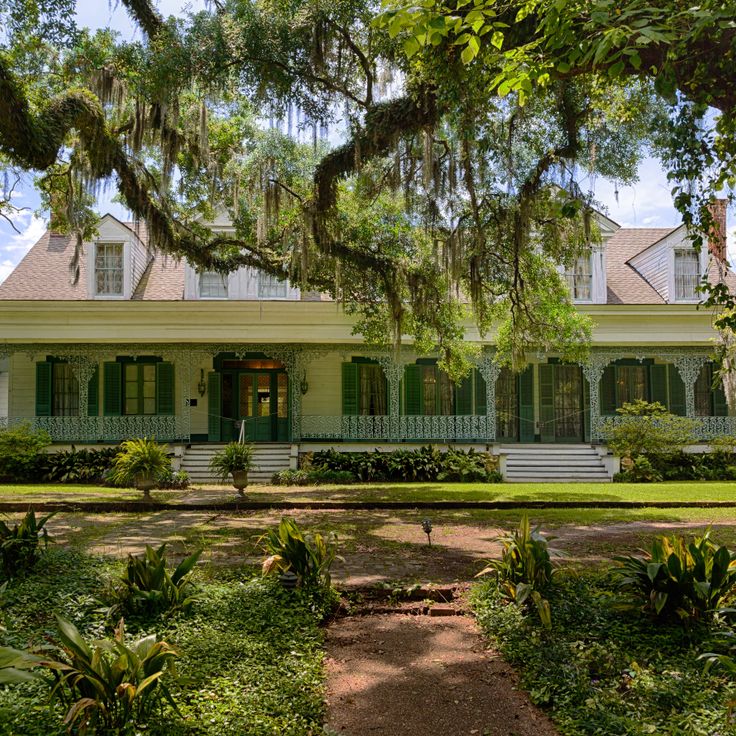
The Plantation des Myrtles is one of those Louisiana places where the past refuses to leave quietly. Built in 1796 near St. Francisville, this colonial house has been tied to ghost stories for as long as anyone remembers. Visitors speak of footsteps in empty hallways, shadows passing across the walls, and the figure of a woman who sometimes appears on the porch. Some mention a slave named Chloe who is said to have died here under tragic circumstances, others talk about children heard laughing at night. The house itself follows the classic design of plantation homes from that period, with wide wooden galleries and a garden shaded by old oaks. It is one of several Louisiana sites where the line between history and legend has become difficult to draw.
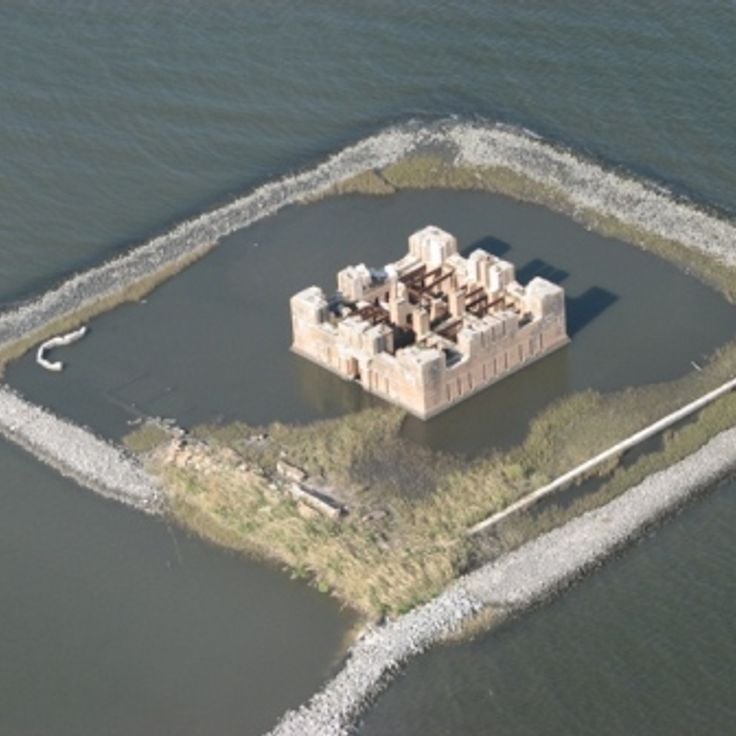
This 19th century military installation stands in Lake Borgne and belongs to the abandoned places that reveal Louisiana away from the usual routes. After several hurricanes, Fort Proctor can only be reached by kayak. The ruin sits on an island that floods partially at high tide, and its walls carry clear marks of the storms that swept through the area. You can still see masonry, arches, and some rooms where soldiers were once stationed, but much has collapsed or is washed by water. The place is deserted, and visitors move through a landscape where nature is slowly taking over. The fort recalls the military past of the state and shows how the elements along the coast gradually reclaim everything.
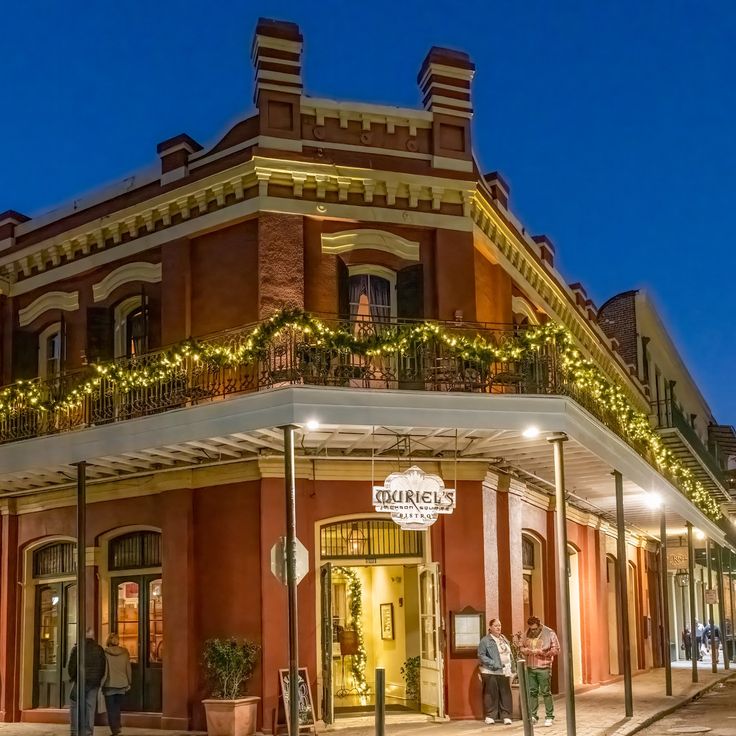
The restaurant Muriel's on Jackson Square keeps a table reserved every evening for the ghost of its former owner. Upstairs, this room for spiritual gatherings welcomes visitors to a space where staff report unexplained events: glasses moving on their own, sudden temperature drops, footsteps echoing through empty rooms. The seance room has a large table where visitors can join gatherings. The story goes back to the 19th century, when the owner lost the building in a poker game and took his own life. Since then, his spirit is said to haunt the place. Today, the restaurant serves Creole food while keeping this supernatural story alive. Some guests come for the dishes, others for the tales that hang in the air.
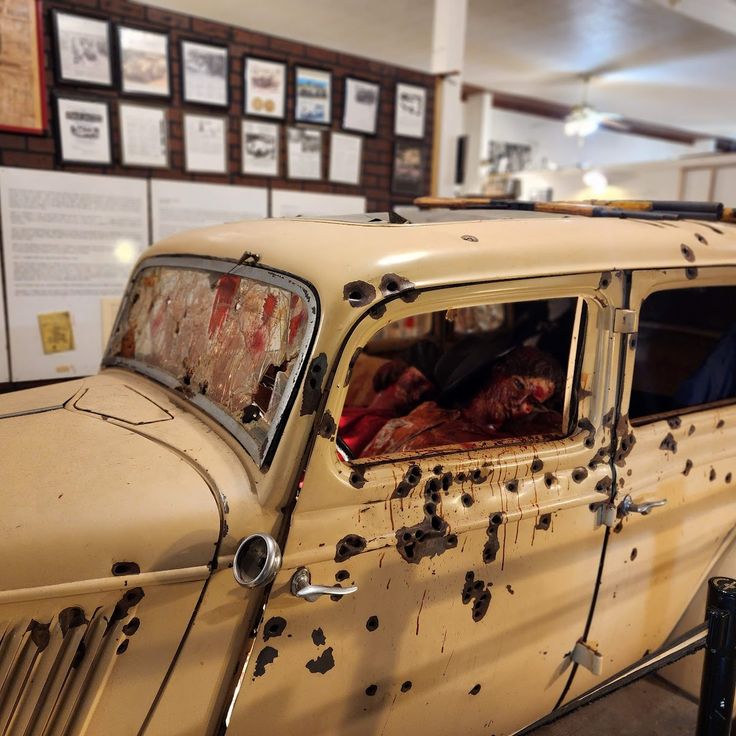
This museum keeps objects, photographs, and documents from the final hours of bank robbers Bonnie Parker and Clyde Barrow. The couple died in 1934 near Gibsland in a hail of bullets after police set up an ambush on their car. The building displays fragments from their vehicle, personal belongings, and newspaper articles from that time. You can see photos of the scene taken shortly after the event. The place recalls a time when gangsters became folk heroes despite their bank robberies and murders. The exhibit documents the chase across several states and the end of a story that marked America for a long time.
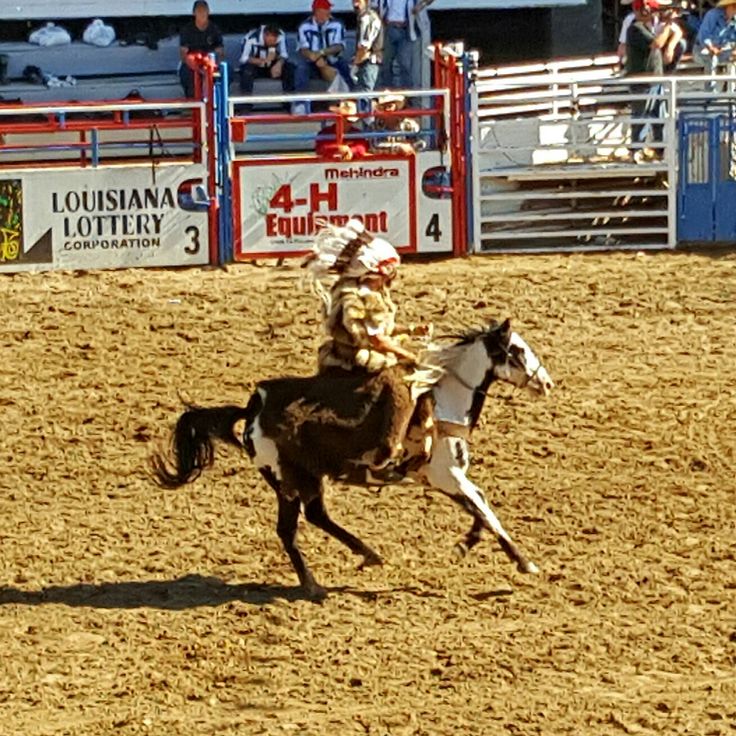
The Angola Prison Rodeo happens twice a year in one of the largest maximum-security prisons in the United States. Incarcerated men compete in classic rodeo events: bull riding, lasso throwing, barrel games in the arena. This event has existed since 1965 and draws thousands of visitors annually. Some inmates use their participation to earn a modest income they can spend in prison accounts. Spectators sit on wooden bleachers directly in front of the arena while prison guards monitor the grounds. Between competitions, other incarcerated men sell handmade items at outdoor stalls: woodwork, leatherwork, paintings.
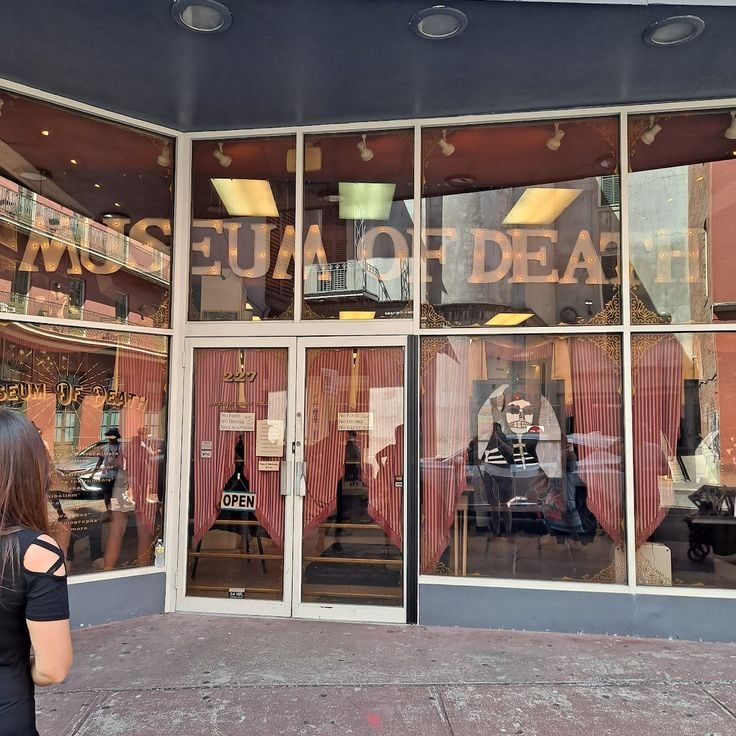
This museum keeps objects from autopsies, funeral homes and prisons. It holds old medical tools, letters from convicted people and items from real investigations. The rooms talk about the end of life without softening it. In Louisiana, this museum fits the tradition of looking at death without shyness, as in voodoo culture or jazz funerals. A place that surprises because it shows a subject that is usually hidden.
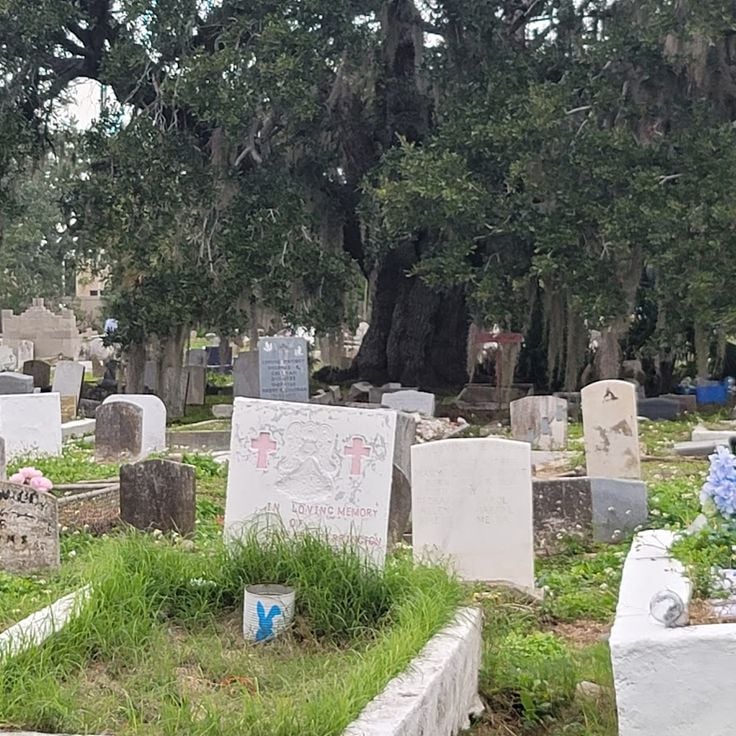
Holt Cemetery was established in 1879 and differs from the monumental cemeteries elsewhere in the city. People who could not afford family vaults were buried here. The dead rest in simple aboveground graves decorated by relatives themselves. You see wooden crosses, colorful ribbons, beads, toys, and everyday objects. Each gravesite tells the story of a family and how they choose to remember. The cemetery preserves a personal form of commemoration that has become rare. It belongs to the history of the African American community in New Orleans and shows how burials were organized in the past without large resources.
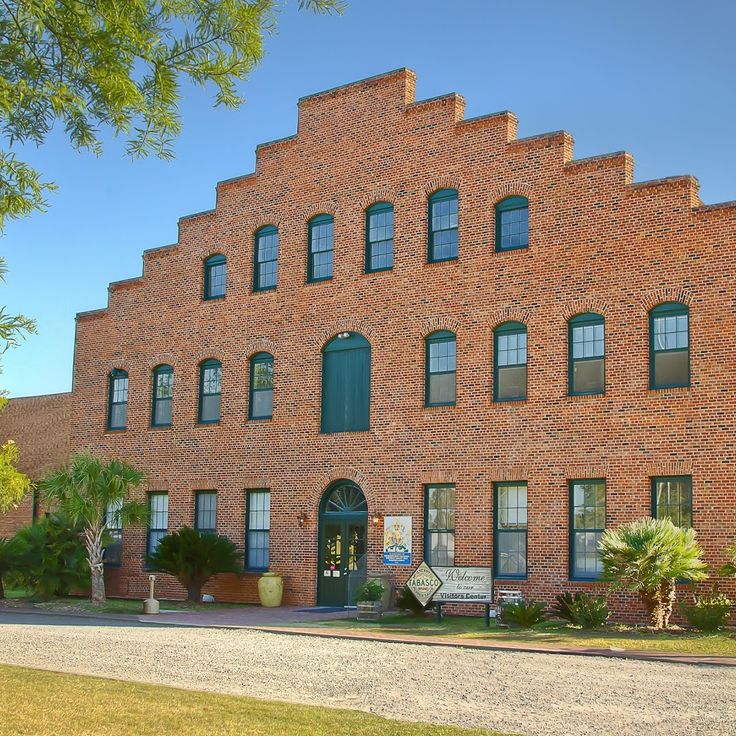
On Avery Island sits the factory where Tabasco sauce has been made since 1868. A small museum explains the steps, from growing the chili peppers to aging the mash in oak barrels. You walk past the fields where the plants grow, and a botanical garden displays native species. A bird sanctuary with herons, egrets and other species covers part of the grounds. The air smells of vinegar and spice. A shop at the exit sells every variety of the sauce, including some rarely found elsewhere. The tour moves at a calm pace, leaving time to watch each stage of the process.
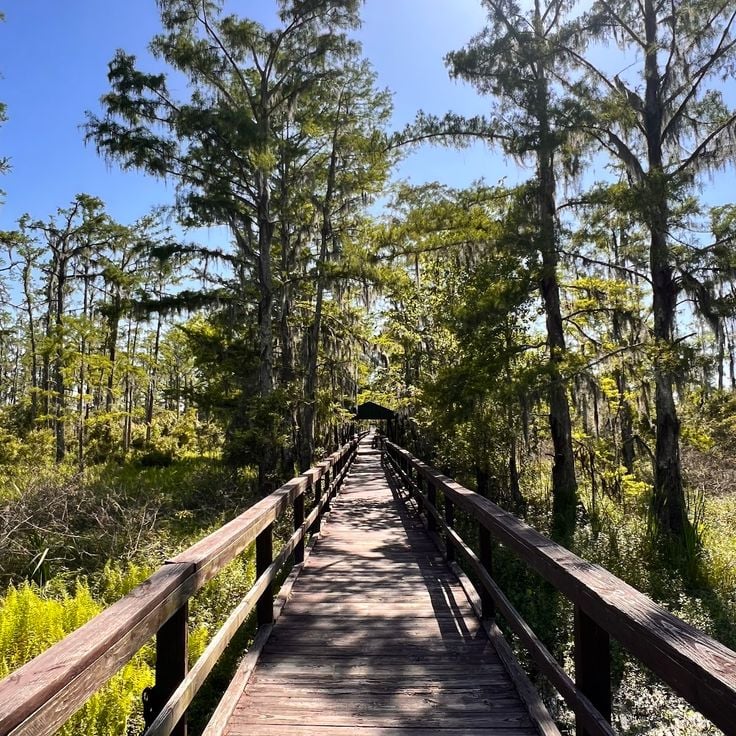
This swamp lies between Lake Pontchartrain and Lake Maurepas. Cypress trees draped in Spanish moss grow out of the water, and fog often rises from the ground. On boat tours, guides tell the story of Julia Brown, a voodoo priestess who supposedly predicted the destruction of the nearby village of Frenier in 1915. A few days after her death, a hurricane swept through and destroyed the village completely. Today you can still find foundations and old wooden posts in the water. Alligators and herons live among the trees. Some visitors report hearing unexplained sounds after sunset. The swamp serves as a backdrop for stories about ghosts and lost settlements.
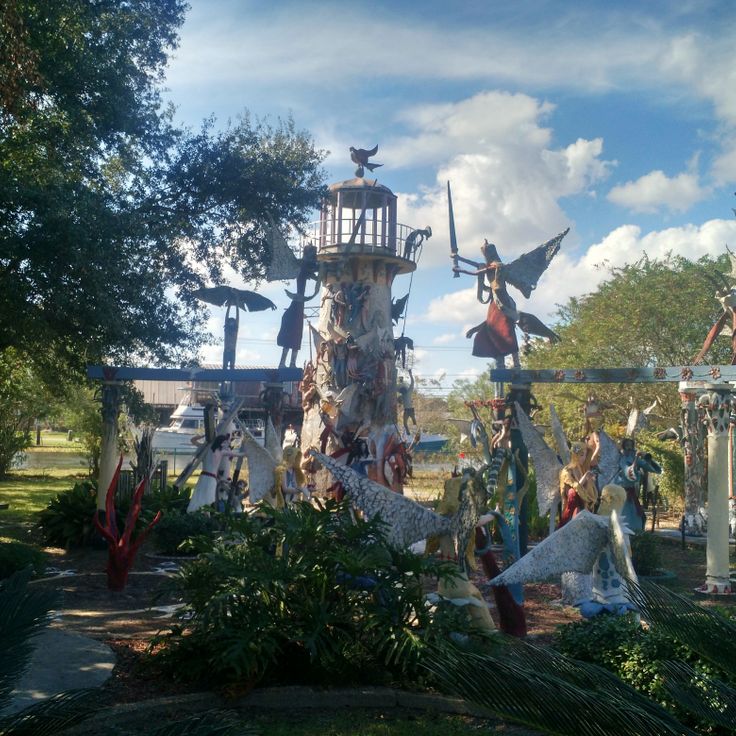
This sculpture garden displays over 100 painted concrete figures created by a self-taught local artist. You see saints next to aliens, mythical creatures alongside religious symbols. The statues stand among trees and grasses, some as tall as an adult, others smaller. Paint fades in places, giving the garden a timeless feel. The place blends Louisiana's religious folk traditions with a very personal vision from the artist, who worked here for years without formal training.
This church in Ruston is a metal structure from the 1930s. Ceiling, walls and arches are made entirely of steel plates bolted together. The design follows a Gothic style that was common for prefabricated kits at the time. Inside you can still see the original wooden pews, colored windows and an electric organ that has not been used for decades. When you speak, the acoustics carry every sound clearly to the back corners. The building has survived the humidity of bayou weather thanks to its metal framework, though rust shows in places. Today the chapel stands empty, the door is often locked, but from outside you can still see the architecture well. It is one of the few all-metal churches from the interwar period left in Louisiana.
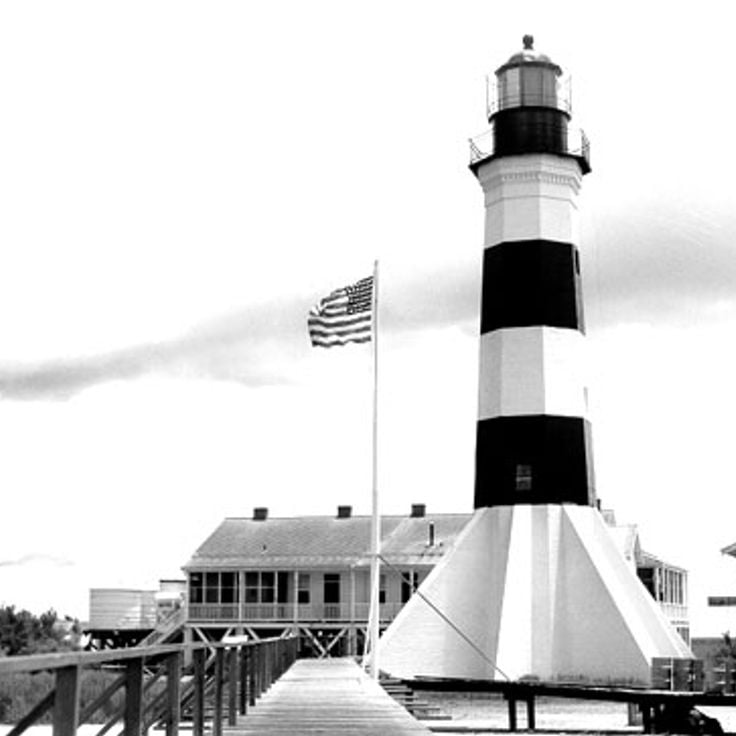
This lighthouse from 1857 stands cut off in tall grass and murky water, after several hurricanes reshaped the coast. It once marked a strategic point on the Texas border, serving as a navigation aid for ships passing through the narrow channel between open sea and inland waters. The design follows the typical mid-19th-century model of Gulf Coast towers: brick masonry, cylindrical shape, lantern room at the top. After various storms, it was left without access from land. Today you can reach it only by boat, when conditions allow. The surrounding terrain changed dramatically after the hurricanes, with shifting sandbars and currents. The structure shows cracks and weathering, but the form remains recognizable. It recalls a time when the pass was busy with traffic and the shoreline looked different.
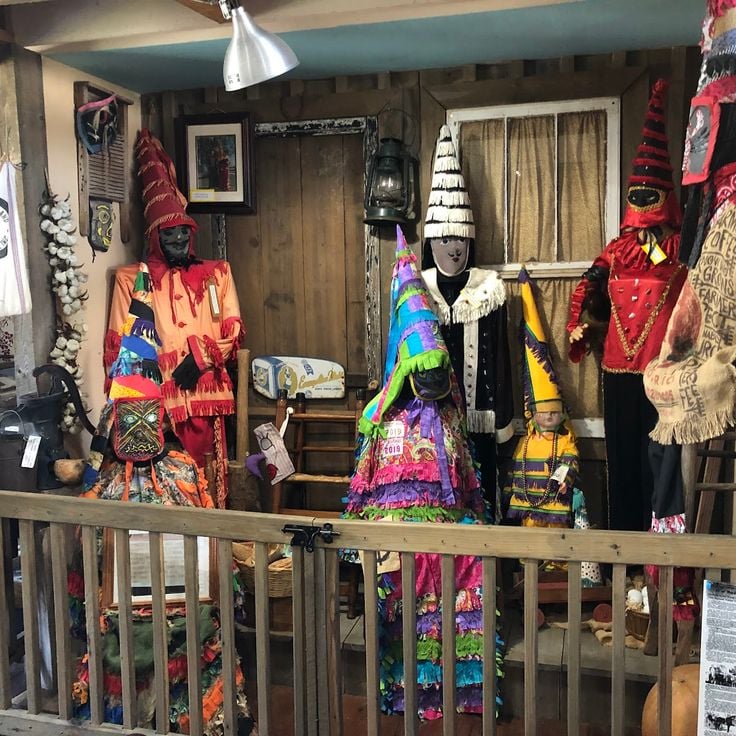
The Musée du Bric-à-Brac Rural brings together thousands of objects from the daily life of Cajun farmers, collected by a former farmer over four decades. You see tools, homemade inventions, household items and other traces of rural life in Louisiana. Each object tells of the inventiveness and resourcefulness of people who worked with what they had at hand. The museum shows how people lived, worked and solved their problems here, far from industrial production. The collection documents a world where repair and repurposing were part of everyday life.
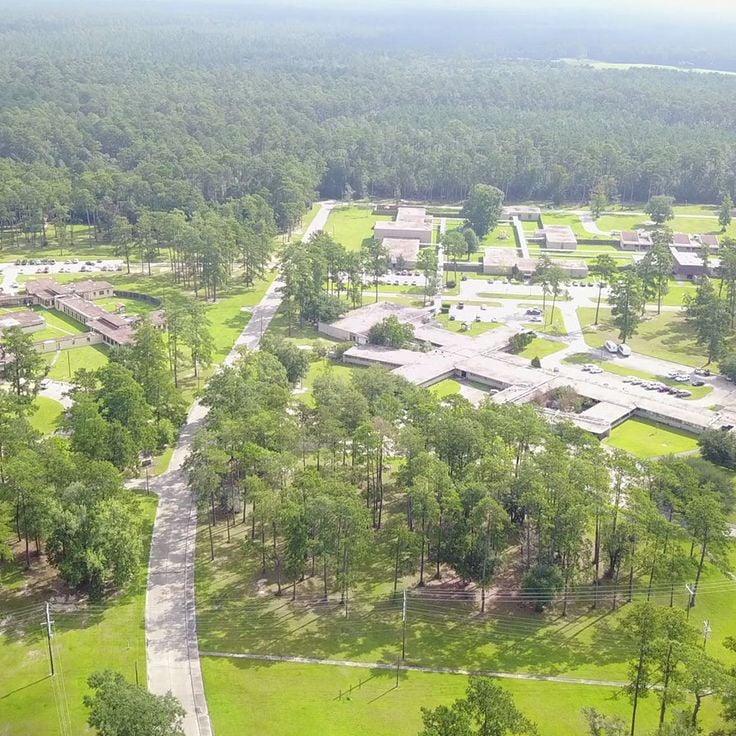
The abandoned Southeast Louisiana psychiatric hospital has stood empty for decades. The site shows decayed buildings, crumbling walls, and empty corridors covered in graffiti. Patients were once treated here, but today the place draws mainly those interested in old architecture or stories about hauntings. The location carries marks of its past: rusted beds, peeling paint, and the silence of abandoned rooms. Some people report unusual experiences, while others see only an old building. The atmosphere remains heavy and quiet, a witness to a time when psychiatric institutions operated differently than they do now.
The Fort St. John Railway Bridge is an abandoned steel railroad bridge that crosses Lake Pontchartrain and has not been used for decades. Its rusted structure stands alone in the water and disappears on foggy days into the moisture rising from the lake. You can reach it from the shore and watch how the metal beams slowly yield to weathering. The bridge recalls a time when trains ran directly over the lake before the route was abandoned. It belongs to those forgotten structures in Louisiana that tell of industrial history and change without anyone using them today.
The Parcours des Arbres Tordus de Lafitte follows a trail through swampland where trees grow in twisted and spiral shapes. Locals say the pirate Jean Lafitte buried treasure here and that the trees have grown this way ever since. The path winds between cypresses and palms, their trunks turning in odd directions. Water often stands just below the roots, and the ground is soft and damp. You hear birds and the quiet splash of water around the roots. The area stays calm, with few visitors coming through. The twisted trunks form natural sculptures rising above the dark water. Some locals still believe the legend of the pirate and his buried treasure. The path is unpaved and leads deep into the bayou, where nature takes over.
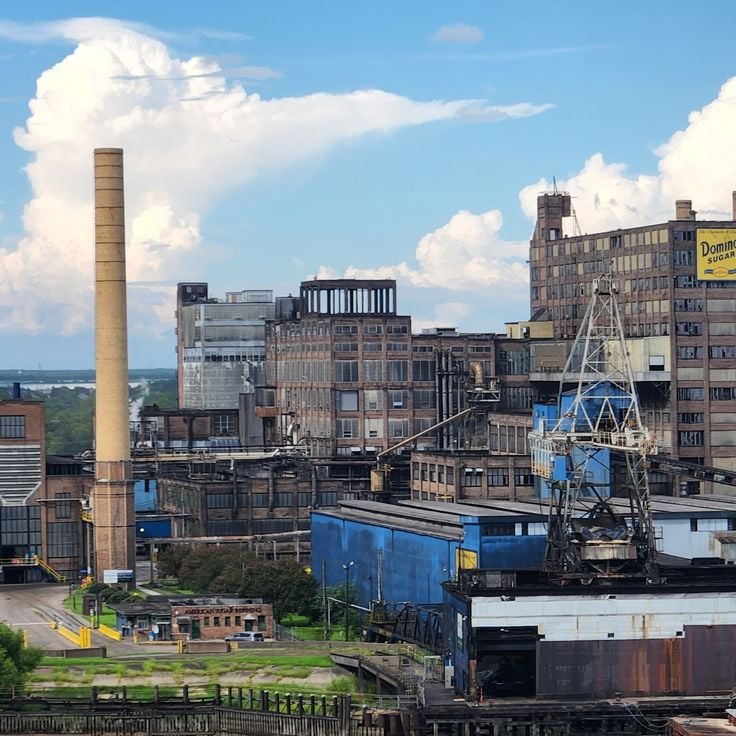
The former Domino Sugar refinery in Chalmette has stood partly idle since the 1970s. Sections of the plant were shut down as production declined, and buildings, silos, and machinery now rust under the Louisiana sun. Railroad tracks that once brought raw sugar from the plantations still run through the site, and conveyor belts that moved sugar through the halls remain frozen in place. Some parts have been demolished, others await reuse. The structure recalls a time when the region processed sugar in large quantities and the industry employed many families. Today the ruin bears witness to the economic shifts Louisiana experienced after the decline of sugar production.
Frenier Cemetery sits deep in swamp country and marks the place where Julia Brown is buried, a voodoo priestess who, according to local tradition, predicted her own death and the fate of the village weeks before the hurricane of 1915. The storm destroyed the village completely, and Frenier disappeared from the map. Vegetation has taken over the site, with trees and marsh plants growing between the graves. You can only reach the cemetery on foot along unpaved paths, surrounded by wetlands and still water. The story of Julia Brown belongs to local folklore and continues to circulate in the area.
This Tour Eiffel of New Orleans was built from original parts that came from the former restaurant of the Parisian monument. In the 1980s, the pieces were shipped to Louisiana after the restaurant at the top of the French tower was dismantled. The structure is about 60 feet tall (approximately 18 meters) and recalls the French roots of the city. It stands on private property and can only be viewed from the outside. The construction shows how historical fragments can find a new life in unexpected places. It connects Paris with New Orleans through a piece of European architectural history that continues here in a different context.
Lac Peigneur is a lake where an unusual industrial accident happened in 1980. That day, an oil rig drilled through the lakebed and accidentally pierced an underground salt mine. Water began flowing downward, turning the shallow lake into a giant whirlpool. Within hours, drilling platforms, barges, and parts of the shoreline disappeared into the water. The whirlpool was so powerful it reversed the flow of a nearby canal. The accident left deep craters along the shore and permanently changed the shape of the lake. Today, the altered landscape still shows what happened when a drilling mistake reshaped the geology of an entire area.
The Historical Museum and Museum of Cultural Arts in Kentwood brings two histories together under one roof. It displays memories of singer Britney Spears, who was born in this town: stage costumes, awards, and personal objects from her career. Alongside this, it preserves documents about Kentwood soldiers who fought in World War II: letters, uniforms, and photographs. The collection can be viewed in about half an hour and shows what has shaped the community. The building is modest and run by volunteers.
The abandoned Jazzland amusement park sits east of New Orleans and has been closed since Hurricane Katrina struck in 2005. Roller coasters, carousels, and buildings remain standing, some partly submerged, covered in rust and vegetation. The site recalls the force of the storm and how quickly a place full of people can turn into ruins. Some rides still stand upright, others are twisted or collapsed. Graffiti covers walls and facades, and mud has settled in the corners. The park shows how a disaster transforms everyday places and how nature reclaims abandoned spaces.
The Grace Episcopal Church stands among the historic buildings of St. Francisville from before the Civil War. Built in 1858, the church is known for an event in 1863 when opposing troops agreed to a truce to honor a fallen officer. During the Battle of Port Hudson, a Freemason died on the battlefield, and soldiers from both sides organized a joint funeral service inside the church. The ceremony followed Masonic lodge rules, regardless of political divisions. The building has kept its original nineteenth-century design, with plain wooden walls and traditional windows. The cemetery holds gravestones from the years before and after the war. This place shows how local communities tried to maintain human values despite military tensions.
This oak tree stands in City Park and holds several wind chimes of different sizes in its branches. When the wind blows, they create different notes that combine into a random melody. The sounds change depending on wind strength and direction, so each visit offers a different musical atmosphere. The place connects nature and sound art in a simple way and shows how Louisiana integrates music into daily life beyond the familiar jazz clubs.
The Abita Mystery House displays over 50,000 found objects, homemade inventions, and unusual artworks inside a former gas station. Visitors see everyday items reassembled into new constructions, self-built machines, and collections that took decades to form. The exhibition reflects a form of folk creativity where nothing is thrown away and everything can find a second use. This place belongs to those Louisiana museums that lie off the usual routes and document local traditions of collecting and tinkering.
This chapel dates back to 1876 and appeared after a yellow fever epidemic. The walls are covered with votive offerings left by the sick. You can see prosthetics, crutches and small plaques. The room feels plain. Light comes through tall windows. Visitors walk quietly through the chapel and look at the objects. Many come out of curiosity, others out of respect. The place shows how the city dealt with illness and hope.
The Plantation des Myrtles is one of those Louisiana places where the past refuses to leave quietly. Built in 1796 near St. Francisville, this colonial house has been tied to ghost stories for as long as anyone remembers. Visitors speak of footsteps in empty hallways, shadows passing across the walls, and the figure of a woman who sometimes appears on the porch. Some mention a slave named Chloe who is said to have died here under tragic circumstances, others talk about children heard laughing at night. The house itself follows the classic design of plantation homes from that period, with wide wooden galleries and a garden shaded by old oaks. It is one of several Louisiana sites where the line between history and legend has become difficult to draw.
This 19th century military installation stands in Lake Borgne and belongs to the abandoned places that reveal Louisiana away from the usual routes. After several hurricanes, Fort Proctor can only be reached by kayak. The ruin sits on an island that floods partially at high tide, and its walls carry clear marks of the storms that swept through the area. You can still see masonry, arches, and some rooms where soldiers were once stationed, but much has collapsed or is washed by water. The place is deserted, and visitors move through a landscape where nature is slowly taking over. The fort recalls the military past of the state and shows how the elements along the coast gradually reclaim everything.
The restaurant Muriel's on Jackson Square keeps a table reserved every evening for the ghost of its former owner. Upstairs, this room for spiritual gatherings welcomes visitors to a space where staff report unexplained events: glasses moving on their own, sudden temperature drops, footsteps echoing through empty rooms. The seance room has a large table where visitors can join gatherings. The story goes back to the 19th century, when the owner lost the building in a poker game and took his own life. Since then, his spirit is said to haunt the place. Today, the restaurant serves Creole food while keeping this supernatural story alive. Some guests come for the dishes, others for the tales that hang in the air.
This museum keeps objects, photographs, and documents from the final hours of bank robbers Bonnie Parker and Clyde Barrow. The couple died in 1934 near Gibsland in a hail of bullets after police set up an ambush on their car. The building displays fragments from their vehicle, personal belongings, and newspaper articles from that time. You can see photos of the scene taken shortly after the event. The place recalls a time when gangsters became folk heroes despite their bank robberies and murders. The exhibit documents the chase across several states and the end of a story that marked America for a long time.
The Angola Prison Rodeo happens twice a year in one of the largest maximum-security prisons in the United States. Incarcerated men compete in classic rodeo events: bull riding, lasso throwing, barrel games in the arena. This event has existed since 1965 and draws thousands of visitors annually. Some inmates use their participation to earn a modest income they can spend in prison accounts. Spectators sit on wooden bleachers directly in front of the arena while prison guards monitor the grounds. Between competitions, other incarcerated men sell handmade items at outdoor stalls: woodwork, leatherwork, paintings.
This museum keeps objects from autopsies, funeral homes and prisons. It holds old medical tools, letters from convicted people and items from real investigations. The rooms talk about the end of life without softening it. In Louisiana, this museum fits the tradition of looking at death without shyness, as in voodoo culture or jazz funerals. A place that surprises because it shows a subject that is usually hidden.
Holt Cemetery was established in 1879 and differs from the monumental cemeteries elsewhere in the city. People who could not afford family vaults were buried here. The dead rest in simple aboveground graves decorated by relatives themselves. You see wooden crosses, colorful ribbons, beads, toys, and everyday objects. Each gravesite tells the story of a family and how they choose to remember. The cemetery preserves a personal form of commemoration that has become rare. It belongs to the history of the African American community in New Orleans and shows how burials were organized in the past without large resources.
On Avery Island sits the factory where Tabasco sauce has been made since 1868. A small museum explains the steps, from growing the chili peppers to aging the mash in oak barrels. You walk past the fields where the plants grow, and a botanical garden displays native species. A bird sanctuary with herons, egrets and other species covers part of the grounds. The air smells of vinegar and spice. A shop at the exit sells every variety of the sauce, including some rarely found elsewhere. The tour moves at a calm pace, leaving time to watch each stage of the process.
This swamp lies between Lake Pontchartrain and Lake Maurepas. Cypress trees draped in Spanish moss grow out of the water, and fog often rises from the ground. On boat tours, guides tell the story of Julia Brown, a voodoo priestess who supposedly predicted the destruction of the nearby village of Frenier in 1915. A few days after her death, a hurricane swept through and destroyed the village completely. Today you can still find foundations and old wooden posts in the water. Alligators and herons live among the trees. Some visitors report hearing unexplained sounds after sunset. The swamp serves as a backdrop for stories about ghosts and lost settlements.
This sculpture garden displays over 100 painted concrete figures created by a self-taught local artist. You see saints next to aliens, mythical creatures alongside religious symbols. The statues stand among trees and grasses, some as tall as an adult, others smaller. Paint fades in places, giving the garden a timeless feel. The place blends Louisiana's religious folk traditions with a very personal vision from the artist, who worked here for years without formal training.
This church in Ruston is a metal structure from the 1930s. Ceiling, walls and arches are made entirely of steel plates bolted together. The design follows a Gothic style that was common for prefabricated kits at the time. Inside you can still see the original wooden pews, colored windows and an electric organ that has not been used for decades. When you speak, the acoustics carry every sound clearly to the back corners. The building has survived the humidity of bayou weather thanks to its metal framework, though rust shows in places. Today the chapel stands empty, the door is often locked, but from outside you can still see the architecture well. It is one of the few all-metal churches from the interwar period left in Louisiana.
This lighthouse from 1857 stands cut off in tall grass and murky water, after several hurricanes reshaped the coast. It once marked a strategic point on the Texas border, serving as a navigation aid for ships passing through the narrow channel between open sea and inland waters. The design follows the typical mid-19th-century model of Gulf Coast towers: brick masonry, cylindrical shape, lantern room at the top. After various storms, it was left without access from land. Today you can reach it only by boat, when conditions allow. The surrounding terrain changed dramatically after the hurricanes, with shifting sandbars and currents. The structure shows cracks and weathering, but the form remains recognizable. It recalls a time when the pass was busy with traffic and the shoreline looked different.
The Musée du Bric-à-Brac Rural brings together thousands of objects from the daily life of Cajun farmers, collected by a former farmer over four decades. You see tools, homemade inventions, household items and other traces of rural life in Louisiana. Each object tells of the inventiveness and resourcefulness of people who worked with what they had at hand. The museum shows how people lived, worked and solved their problems here, far from industrial production. The collection documents a world where repair and repurposing were part of everyday life.
The abandoned Southeast Louisiana psychiatric hospital has stood empty for decades. The site shows decayed buildings, crumbling walls, and empty corridors covered in graffiti. Patients were once treated here, but today the place draws mainly those interested in old architecture or stories about hauntings. The location carries marks of its past: rusted beds, peeling paint, and the silence of abandoned rooms. Some people report unusual experiences, while others see only an old building. The atmosphere remains heavy and quiet, a witness to a time when psychiatric institutions operated differently than they do now.
The Fort St. John Railway Bridge is an abandoned steel railroad bridge that crosses Lake Pontchartrain and has not been used for decades. Its rusted structure stands alone in the water and disappears on foggy days into the moisture rising from the lake. You can reach it from the shore and watch how the metal beams slowly yield to weathering. The bridge recalls a time when trains ran directly over the lake before the route was abandoned. It belongs to those forgotten structures in Louisiana that tell of industrial history and change without anyone using them today.
The Parcours des Arbres Tordus de Lafitte follows a trail through swampland where trees grow in twisted and spiral shapes. Locals say the pirate Jean Lafitte buried treasure here and that the trees have grown this way ever since. The path winds between cypresses and palms, their trunks turning in odd directions. Water often stands just below the roots, and the ground is soft and damp. You hear birds and the quiet splash of water around the roots. The area stays calm, with few visitors coming through. The twisted trunks form natural sculptures rising above the dark water. Some locals still believe the legend of the pirate and his buried treasure. The path is unpaved and leads deep into the bayou, where nature takes over.
The former Domino Sugar refinery in Chalmette has stood partly idle since the 1970s. Sections of the plant were shut down as production declined, and buildings, silos, and machinery now rust under the Louisiana sun. Railroad tracks that once brought raw sugar from the plantations still run through the site, and conveyor belts that moved sugar through the halls remain frozen in place. Some parts have been demolished, others await reuse. The structure recalls a time when the region processed sugar in large quantities and the industry employed many families. Today the ruin bears witness to the economic shifts Louisiana experienced after the decline of sugar production.
Frenier Cemetery sits deep in swamp country and marks the place where Julia Brown is buried, a voodoo priestess who, according to local tradition, predicted her own death and the fate of the village weeks before the hurricane of 1915. The storm destroyed the village completely, and Frenier disappeared from the map. Vegetation has taken over the site, with trees and marsh plants growing between the graves. You can only reach the cemetery on foot along unpaved paths, surrounded by wetlands and still water. The story of Julia Brown belongs to local folklore and continues to circulate in the area.
This Tour Eiffel of New Orleans was built from original parts that came from the former restaurant of the Parisian monument. In the 1980s, the pieces were shipped to Louisiana after the restaurant at the top of the French tower was dismantled. The structure is about 60 feet tall (approximately 18 meters) and recalls the French roots of the city. It stands on private property and can only be viewed from the outside. The construction shows how historical fragments can find a new life in unexpected places. It connects Paris with New Orleans through a piece of European architectural history that continues here in a different context.
Lac Peigneur is a lake where an unusual industrial accident happened in 1980. That day, an oil rig drilled through the lakebed and accidentally pierced an underground salt mine. Water began flowing downward, turning the shallow lake into a giant whirlpool. Within hours, drilling platforms, barges, and parts of the shoreline disappeared into the water. The whirlpool was so powerful it reversed the flow of a nearby canal. The accident left deep craters along the shore and permanently changed the shape of the lake. Today, the altered landscape still shows what happened when a drilling mistake reshaped the geology of an entire area.
The Historical Museum and Museum of Cultural Arts in Kentwood brings two histories together under one roof. It displays memories of singer Britney Spears, who was born in this town: stage costumes, awards, and personal objects from her career. Alongside this, it preserves documents about Kentwood soldiers who fought in World War II: letters, uniforms, and photographs. The collection can be viewed in about half an hour and shows what has shaped the community. The building is modest and run by volunteers.
The abandoned Jazzland amusement park sits east of New Orleans and has been closed since Hurricane Katrina struck in 2005. Roller coasters, carousels, and buildings remain standing, some partly submerged, covered in rust and vegetation. The site recalls the force of the storm and how quickly a place full of people can turn into ruins. Some rides still stand upright, others are twisted or collapsed. Graffiti covers walls and facades, and mud has settled in the corners. The park shows how a disaster transforms everyday places and how nature reclaims abandoned spaces.
The Grace Episcopal Church stands among the historic buildings of St. Francisville from before the Civil War. Built in 1858, the church is known for an event in 1863 when opposing troops agreed to a truce to honor a fallen officer. During the Battle of Port Hudson, a Freemason died on the battlefield, and soldiers from both sides organized a joint funeral service inside the church. The ceremony followed Masonic lodge rules, regardless of political divisions. The building has kept its original nineteenth-century design, with plain wooden walls and traditional windows. The cemetery holds gravestones from the years before and after the war. This place shows how local communities tried to maintain human values despite military tensions.
This oak tree stands in City Park and holds several wind chimes of different sizes in its branches. When the wind blows, they create different notes that combine into a random melody. The sounds change depending on wind strength and direction, so each visit offers a different musical atmosphere. The place connects nature and sound art in a simple way and shows how Louisiana integrates music into daily life beyond the familiar jazz clubs.
The Abita Mystery House displays over 50,000 found objects, homemade inventions, and unusual artworks inside a former gas station. Visitors see everyday items reassembled into new constructions, self-built machines, and collections that took decades to form. The exhibition reflects a form of folk creativity where nothing is thrown away and everything can find a second use. This place belongs to those Louisiana museums that lie off the usual routes and document local traditions of collecting and tinkering.
This chapel dates back to 1876 and appeared after a yellow fever epidemic. The walls are covered with votive offerings left by the sick. You can see prosthetics, crutches and small plaques. The room feels plain. Light comes through tall windows. Visitors walk quietly through the chapel and look at the objects. Many come out of curiosity, others out of respect. The place shows how the city dealt with illness and hope.
The Plantation des Myrtles is one of those Louisiana places where the past refuses to leave quietly. Built in 1796 near St. Francisville, this colonial house has been tied to ghost stories for as long as anyone remembers. Visitors speak of footsteps in empty hallways, shadows passing across the walls, and the figure of a woman who sometimes appears on the porch. Some mention a slave named Chloe who is said to have died here under tragic circumstances, others talk about children heard laughing at night. The house itself follows the classic design of plantation homes from that period, with wide wooden galleries and a garden shaded by old oaks. It is one of several Louisiana sites where the line between history and legend has become difficult to draw.
This 19th century military installation stands in Lake Borgne and belongs to the abandoned places that reveal Louisiana away from the usual routes. After several hurricanes, Fort Proctor can only be reached by kayak. The ruin sits on an island that floods partially at high tide, and its walls carry clear marks of the storms that swept through the area. You can still see masonry, arches, and some rooms where soldiers were once stationed, but much has collapsed or is washed by water. The place is deserted, and visitors move through a landscape where nature is slowly taking over. The fort recalls the military past of the state and shows how the elements along the coast gradually reclaim everything.
The restaurant Muriel's on Jackson Square keeps a table reserved every evening for the ghost of its former owner. Upstairs, this room for spiritual gatherings welcomes visitors to a space where staff report unexplained events: glasses moving on their own, sudden temperature drops, footsteps echoing through empty rooms. The seance room has a large table where visitors can join gatherings. The story goes back to the 19th century, when the owner lost the building in a poker game and took his own life. Since then, his spirit is said to haunt the place. Today, the restaurant serves Creole food while keeping this supernatural story alive. Some guests come for the dishes, others for the tales that hang in the air.
This museum keeps objects, photographs, and documents from the final hours of bank robbers Bonnie Parker and Clyde Barrow. The couple died in 1934 near Gibsland in a hail of bullets after police set up an ambush on their car. The building displays fragments from their vehicle, personal belongings, and newspaper articles from that time. You can see photos of the scene taken shortly after the event. The place recalls a time when gangsters became folk heroes despite their bank robberies and murders. The exhibit documents the chase across several states and the end of a story that marked America for a long time.
The Angola Prison Rodeo happens twice a year in one of the largest maximum-security prisons in the United States. Incarcerated men compete in classic rodeo events: bull riding, lasso throwing, barrel games in the arena. This event has existed since 1965 and draws thousands of visitors annually. Some inmates use their participation to earn a modest income they can spend in prison accounts. Spectators sit on wooden bleachers directly in front of the arena while prison guards monitor the grounds. Between competitions, other incarcerated men sell handmade items at outdoor stalls: woodwork, leatherwork, paintings.
This museum keeps objects from autopsies, funeral homes and prisons. It holds old medical tools, letters from convicted people and items from real investigations. The rooms talk about the end of life without softening it. In Louisiana, this museum fits the tradition of looking at death without shyness, as in voodoo culture or jazz funerals. A place that surprises because it shows a subject that is usually hidden.
Holt Cemetery was established in 1879 and differs from the monumental cemeteries elsewhere in the city. People who could not afford family vaults were buried here. The dead rest in simple aboveground graves decorated by relatives themselves. You see wooden crosses, colorful ribbons, beads, toys, and everyday objects. Each gravesite tells the story of a family and how they choose to remember. The cemetery preserves a personal form of commemoration that has become rare. It belongs to the history of the African American community in New Orleans and shows how burials were organized in the past without large resources.
On Avery Island sits the factory where Tabasco sauce has been made since 1868. A small museum explains the steps, from growing the chili peppers to aging the mash in oak barrels. You walk past the fields where the plants grow, and a botanical garden displays native species. A bird sanctuary with herons, egrets and other species covers part of the grounds. The air smells of vinegar and spice. A shop at the exit sells every variety of the sauce, including some rarely found elsewhere. The tour moves at a calm pace, leaving time to watch each stage of the process.
This swamp lies between Lake Pontchartrain and Lake Maurepas. Cypress trees draped in Spanish moss grow out of the water, and fog often rises from the ground. On boat tours, guides tell the story of Julia Brown, a voodoo priestess who supposedly predicted the destruction of the nearby village of Frenier in 1915. A few days after her death, a hurricane swept through and destroyed the village completely. Today you can still find foundations and old wooden posts in the water. Alligators and herons live among the trees. Some visitors report hearing unexplained sounds after sunset. The swamp serves as a backdrop for stories about ghosts and lost settlements.
This sculpture garden displays over 100 painted concrete figures created by a self-taught local artist. You see saints next to aliens, mythical creatures alongside religious symbols. The statues stand among trees and grasses, some as tall as an adult, others smaller. Paint fades in places, giving the garden a timeless feel. The place blends Louisiana's religious folk traditions with a very personal vision from the artist, who worked here for years without formal training.
This church in Ruston is a metal structure from the 1930s. Ceiling, walls and arches are made entirely of steel plates bolted together. The design follows a Gothic style that was common for prefabricated kits at the time. Inside you can still see the original wooden pews, colored windows and an electric organ that has not been used for decades. When you speak, the acoustics carry every sound clearly to the back corners. The building has survived the humidity of bayou weather thanks to its metal framework, though rust shows in places. Today the chapel stands empty, the door is often locked, but from outside you can still see the architecture well. It is one of the few all-metal churches from the interwar period left in Louisiana.
This lighthouse from 1857 stands cut off in tall grass and murky water, after several hurricanes reshaped the coast. It once marked a strategic point on the Texas border, serving as a navigation aid for ships passing through the narrow channel between open sea and inland waters. The design follows the typical mid-19th-century model of Gulf Coast towers: brick masonry, cylindrical shape, lantern room at the top. After various storms, it was left without access from land. Today you can reach it only by boat, when conditions allow. The surrounding terrain changed dramatically after the hurricanes, with shifting sandbars and currents. The structure shows cracks and weathering, but the form remains recognizable. It recalls a time when the pass was busy with traffic and the shoreline looked different.
The Musée du Bric-à-Brac Rural brings together thousands of objects from the daily life of Cajun farmers, collected by a former farmer over four decades. You see tools, homemade inventions, household items and other traces of rural life in Louisiana. Each object tells of the inventiveness and resourcefulness of people who worked with what they had at hand. The museum shows how people lived, worked and solved their problems here, far from industrial production. The collection documents a world where repair and repurposing were part of everyday life.
The abandoned Southeast Louisiana psychiatric hospital has stood empty for decades. The site shows decayed buildings, crumbling walls, and empty corridors covered in graffiti. Patients were once treated here, but today the place draws mainly those interested in old architecture or stories about hauntings. The location carries marks of its past: rusted beds, peeling paint, and the silence of abandoned rooms. Some people report unusual experiences, while others see only an old building. The atmosphere remains heavy and quiet, a witness to a time when psychiatric institutions operated differently than they do now.
The Fort St. John Railway Bridge is an abandoned steel railroad bridge that crosses Lake Pontchartrain and has not been used for decades. Its rusted structure stands alone in the water and disappears on foggy days into the moisture rising from the lake. You can reach it from the shore and watch how the metal beams slowly yield to weathering. The bridge recalls a time when trains ran directly over the lake before the route was abandoned. It belongs to those forgotten structures in Louisiana that tell of industrial history and change without anyone using them today.
The Parcours des Arbres Tordus de Lafitte follows a trail through swampland where trees grow in twisted and spiral shapes. Locals say the pirate Jean Lafitte buried treasure here and that the trees have grown this way ever since. The path winds between cypresses and palms, their trunks turning in odd directions. Water often stands just below the roots, and the ground is soft and damp. You hear birds and the quiet splash of water around the roots. The area stays calm, with few visitors coming through. The twisted trunks form natural sculptures rising above the dark water. Some locals still believe the legend of the pirate and his buried treasure. The path is unpaved and leads deep into the bayou, where nature takes over.
The former Domino Sugar refinery in Chalmette has stood partly idle since the 1970s. Sections of the plant were shut down as production declined, and buildings, silos, and machinery now rust under the Louisiana sun. Railroad tracks that once brought raw sugar from the plantations still run through the site, and conveyor belts that moved sugar through the halls remain frozen in place. Some parts have been demolished, others await reuse. The structure recalls a time when the region processed sugar in large quantities and the industry employed many families. Today the ruin bears witness to the economic shifts Louisiana experienced after the decline of sugar production.