Fort Proctor, 19th century coastal fort in St. Bernard Parish, Louisiana, US
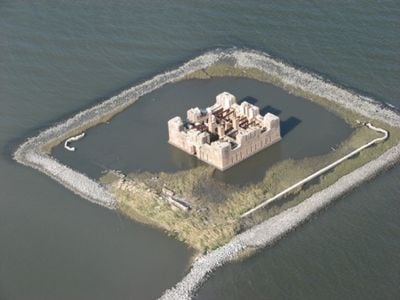
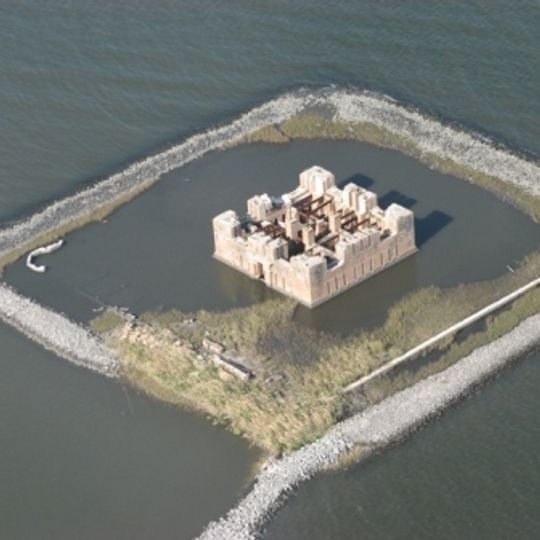
Fort Proctor is a ruined tan masonry fort on a low island in Lake Borgne, built as a hollow square with thick crenellated outer walls whose top edges are partly broken away. Inside the courtyard, exposed reddish-brown iron beams and framework stand upright in a grid above the walls. Loose gray rocks ring the vegetated patch on which the structure rests.
Construction began in 1856 under General P.G.T. Beauregard's direction to defend water passages leading toward New Orleans from military threats. The fort was part of a broader coastal defense strategy developed during that era.
The fort's names honour P.G.T. Beauregard, who supervised construction with architect J.G. Totten, and the vanished railroad port of Proctorville beside it. In the 1940s and 1950s, before the lake swallowed the site, local teenagers used the ruins as a gathering spot away from supervision.
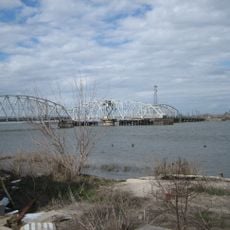
The fort stands in about one foot of water, and the Mississippi River-Gulf Outlet Canal, dug in the 1960s, cut off all land access, so it is seen at a distance from Shell Beach. The one small dry patch inside the walls was gone after Hurricane Katrina. Approach by boat only with checked conditions.
The fort's design was unusual for its time in two ways: it included comfortable living quarters with bathrooms, and it relied extensively on structural iron. Visitors can still see the exposed reddish-brown iron beams and framework standing in the courtyard, a rare surviving example of mid-19th-century iron military construction.
The community of curious travelers
AroundUs brings together thousands of curated places, local tips, and hidden gems, enriched daily by 93,783 contributors worldwide.