Mississippi River – Gulf Outlet Canal, Navigation canal in Louisiana, United States.
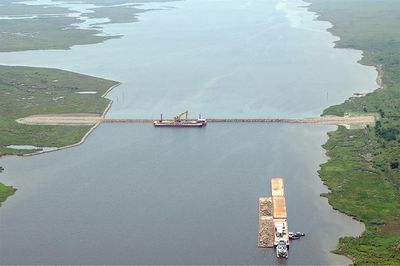
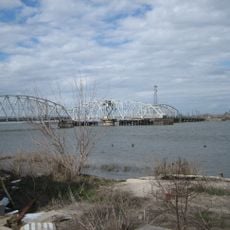
The Mississippi River–Gulf Outlet Canal is a 76-mile (122 km) channel built by the U.S. Army Corps of Engineers that runs from just west of I-510's crossing of the Gulf Intracoastal Waterway in New Orleans East, southeast through St. Bernard Parish wetlands west of Lake Borgne, to the Gulf of Mexico near Gardner Island. Constructed 650 feet (200 m) wide at the surface, it had widened to as much as 3,000 feet in places by 2005 due to marsh erosion.
The United States Congress approved construction in 1956, and the Army Corps of Engineers completed the channel in 1968. The project was designed to provide faster access to the harbor for ocean-going vessels and boost commerce for the region.
The canal's nickname, "Hurricane Highway," dates from Katrina, when surge funnelled through it is blamed for levee breaches along its banks and the Industrial Canal. The Dock Board first proposed the route in 1943 as the "Alexander Seaway," after board member Col. Lester F. Alexander. St. Bernard Parish voters, whom the canal was meant to benefit, later joined calls for its closure.
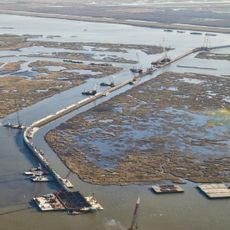
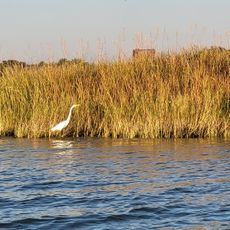
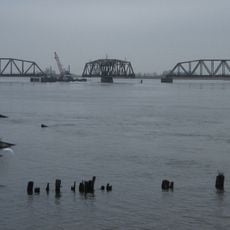
A surge barrier built in 2009 now blocks maritime traffic through the canal, making direct shipping access impossible. The surrounding marshlands remain accessible by boat or from nearby viewpoints on land.
The canal was derisively nicknamed the "Hurricane Highway" after Katrina, because it funneled storm surge into Greater New Orleans. Levees along the MRGO and the Intracoastal Waterway were breached in roughly 20 places, flooding most of St. Bernard Parish and New Orleans East.
The community of curious travelers
AroundUs brings together thousands of curated places, local tips, and hidden gems, enriched daily by 93,783 contributors worldwide.