In the heart of Brittany, Brest shares its story through its fortifications, museums, and a harbor that is always busy, where past and present constantly communicate.
Brest is a port city in Brittany with deep roots in seafaring and military history. After World War II, the city rebuilt itself and now combines modern architecture with preserved landmarks like Tanguy Tower and Saint-Malo Street. Visitors can explore Océanopolis, an ocean discovery center, tour the National Maritime Museum, and walk through the busy harbor that remains the city's heartbeat. Green spaces like Penfeld Park and Keroual Woods offer quiet retreats, while beaches such as Moulin Blanc provide places to unwind. The city also features theaters, art galleries, and a network of forts that tell the story of its strategic importance. With a cable car, historic bridges, and cultural spaces like Les Ateliers des Capucins, there is something to discover for those interested in history, nature, and culture.
In the heart of Brittany, Brest shares its story through its fortifications, museums, and a harbor that is always busy, where past and present constantly communicate.
Brest is a port city in Brittany with deep roots in seafaring and military history. After World War II, the city rebuilt itself and now combines modern architecture with preserved landmarks like Tanguy Tower and Saint-Malo Street. Visitors can explore Océanopolis, an ocean discovery center, tour the National Maritime Museum, and walk through the busy harbor that remains the city's heartbeat. Green spaces like Penfeld Park and Keroual Woods offer quiet retreats, while beaches such as Moulin Blanc provide places to unwind. The city also features theaters, art galleries, and a network of forts that tell the story of its strategic importance. With a cable car, historic bridges, and cultural spaces like Les Ateliers des Capucins, there is something to discover for those interested in history, nature, and culture.
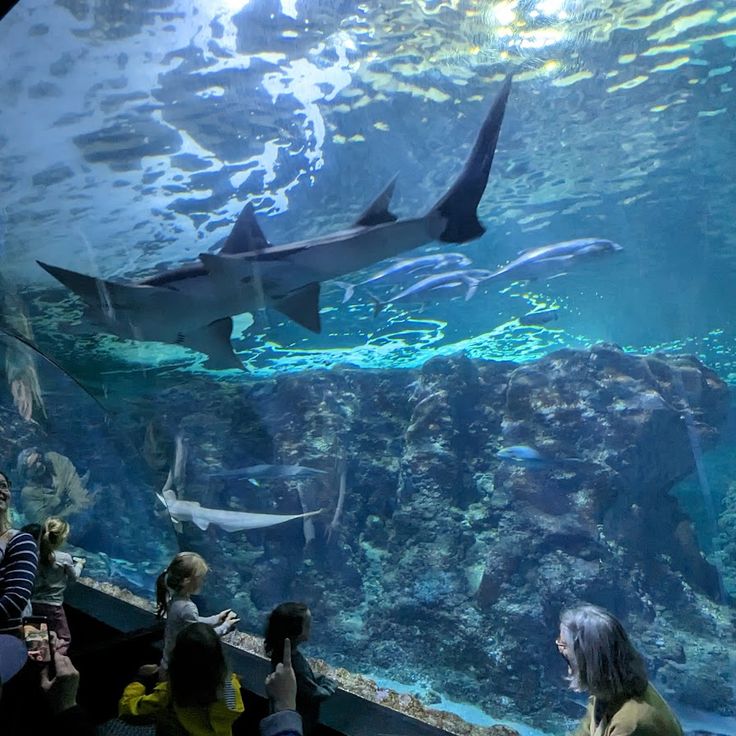
Océanopolis is a science center in Brest dedicated to ocean life and reinforces the maritime character of this port city. The facility houses three pavilions, each representing different ocean environments: temperate, polar, and tropical seas. Visitors can experience the diversity of ocean ecosystems firsthand and understand why the sea remains central to Brest's identity.
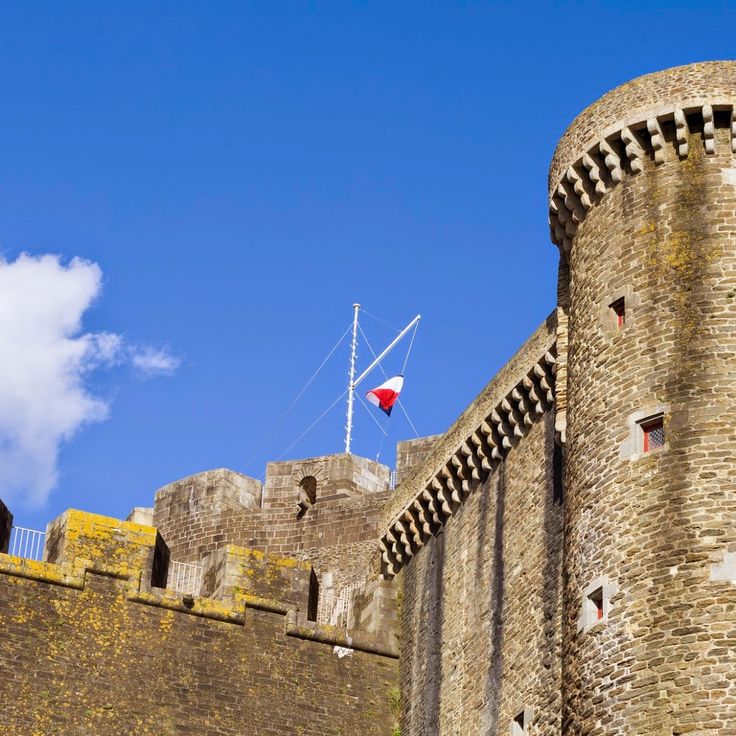
The National Maritime Museum in Brest displays objects, models, and documents spanning five centuries of naval history within the city's castle. The museum shows military uniforms, navigation instruments, and artifacts that illustrate the maritime importance of this port city. As you discover the tourist sites of Brest, this museum helps you understand the naval and military heritage that has shaped the city as a major harbor.
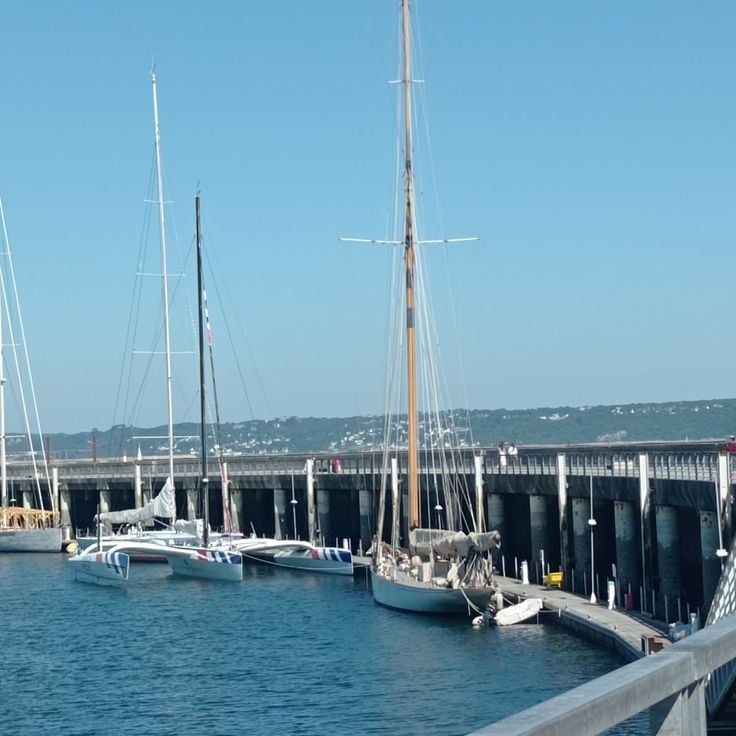
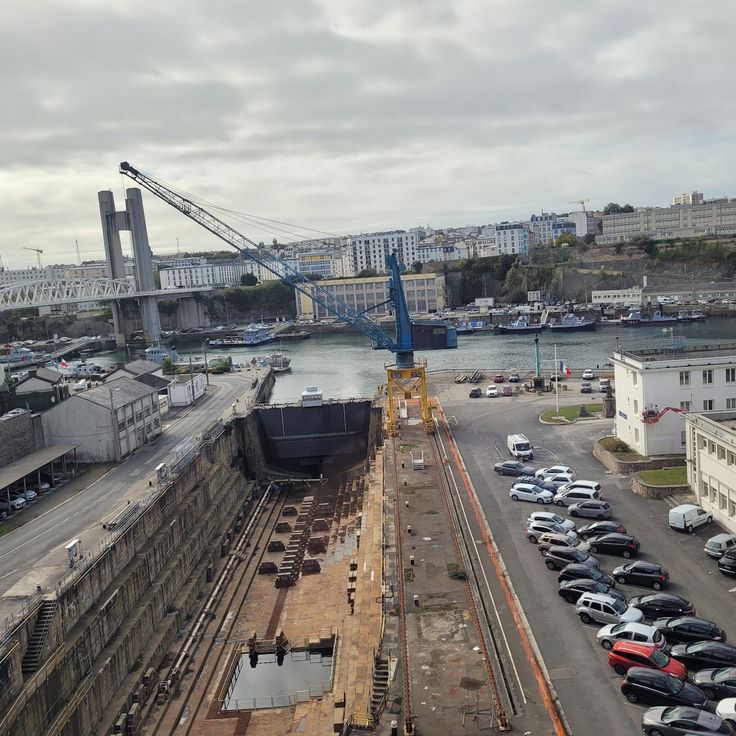
The Port de Brest is the heart of this Breton port city. From the waterfront, you can see cargo ships, navy vessels, and pleasure boats side by side. The port runs every day: ships arrive and depart, sailors walk the docks, cranes move overhead. This constant activity is a reminder that Brest has been one of France's most important naval cities for centuries.
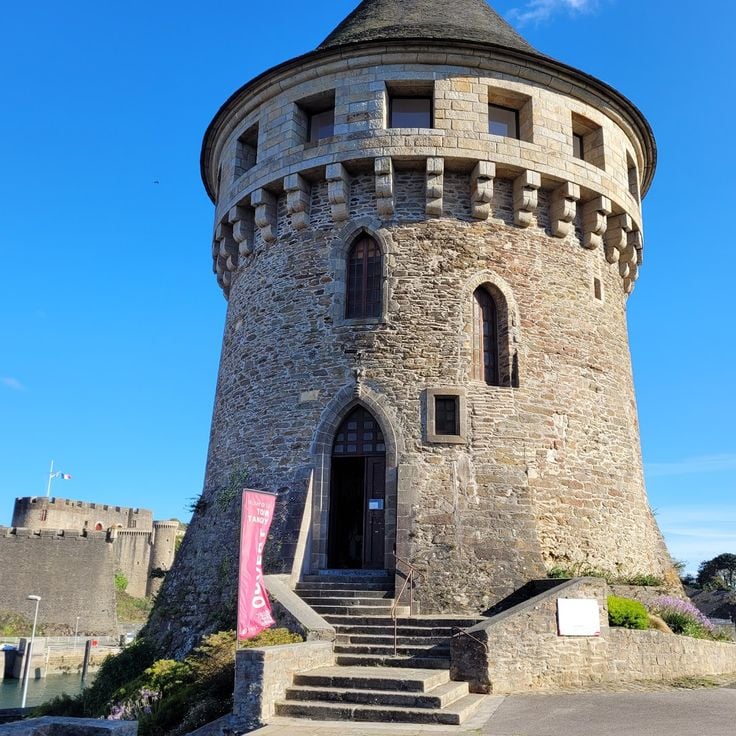
The Tanguy Tower in Brest is a 14th-century keep that rises from a rock overlooking the Penfeld river. Inside, rooms display dioramas showing how the city looked before the 1944 bombings. This tower helps visitors understand Brest's appearance before its wartime destruction. It offers a direct connection to the city's seafaring and military past, showing what the port city was like before its complete rebuilding.
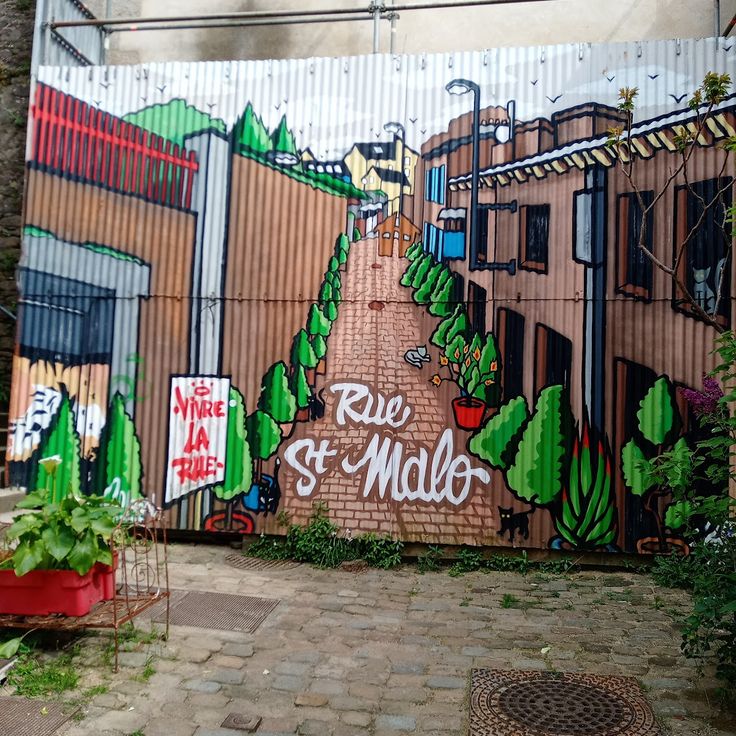
Rue Saint-Malo is one of the few streets in Brest that survived the bombings of World War II. It is lined with half-timbered houses from the 17th century and paved with cobblestones. Walking through it gives a clear sense of what Brest looked like before its destruction. The street shows how people built and lived here centuries ago, and it ties directly to the city's long history as a port.
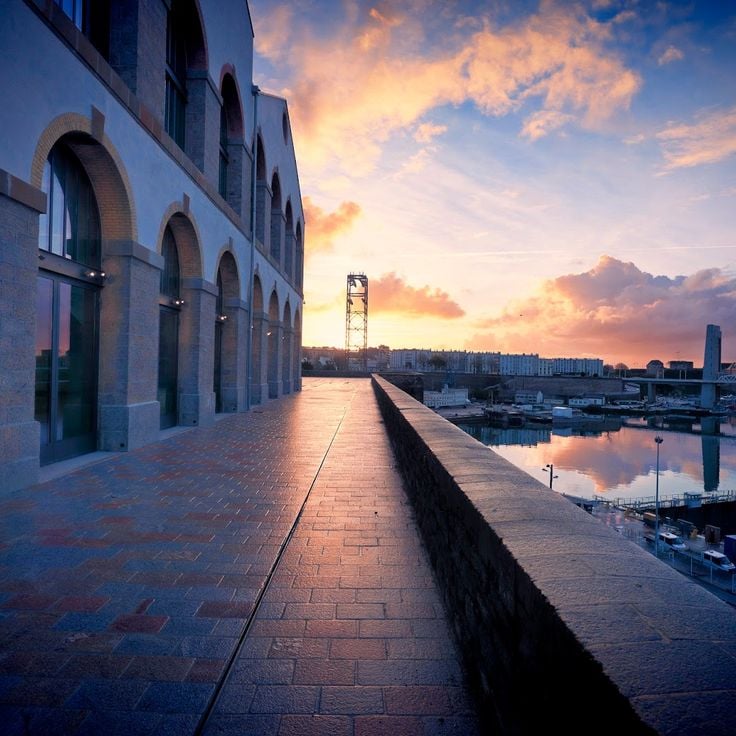
Les Ateliers des Capucins is a former naval manufacturing site in Brest that now houses a media library, restaurants, shops, and exhibition spaces. This place shows how the city has transformed its maritime industrial heritage into a vibrant cultural and commercial hub. Within Brest's tourist sites, Les Ateliers des Capucins demonstrates how modern uses breathe new life into historic spaces.
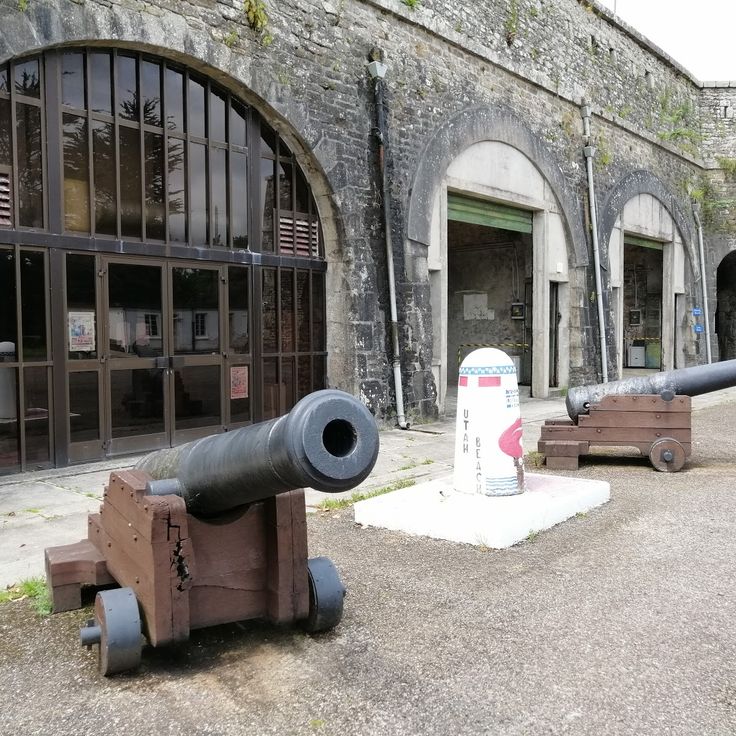
Fort Montbarey is a military fortification built in 1780 in Brest, a port city with important maritime and military heritage. The fort now hosts a museum dedicated to Second World War history in the Finistère region, helping visitors understand this significant period of the area's past. As part of discovering Brest's tourist sites, this fort reveals the city's strategic importance and its role in French defensive history.
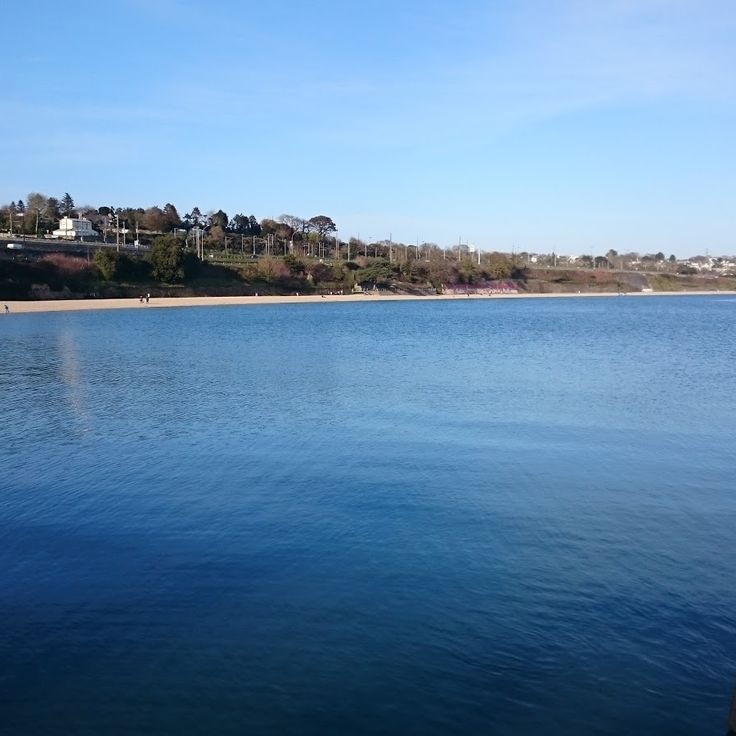
Moulin Blanc Beach in this Breton port city offers a natural place to relax and enjoy water activities. The sandy beach stretches along Brest harbor and provides room for swimming, water sports, and seaside walks. The waters are sheltered by the natural bay, making them comfortable during warmer months. Local families and visitors come here regularly. The shoreline backs onto grassy areas and small facilities, and the beach is easily reached from the city center. From this location, you can see the maritime activity that defines Brest, with boats and movement across the water.
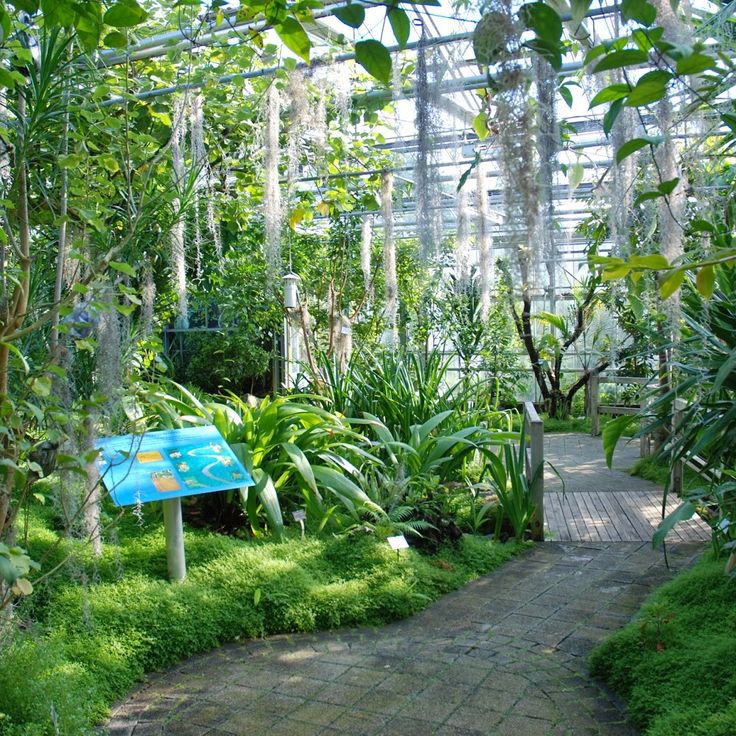
The National Botanical Conservatory in Brest is a scientific institution dedicated to preserving rare plant species of France. It fits naturally into this port city's heritage, protecting natural treasures alongside maritime and military sites. The conservatory features laboratories and exhibition spaces where visitors can explore the botanical diversity that defines French ecosystems.
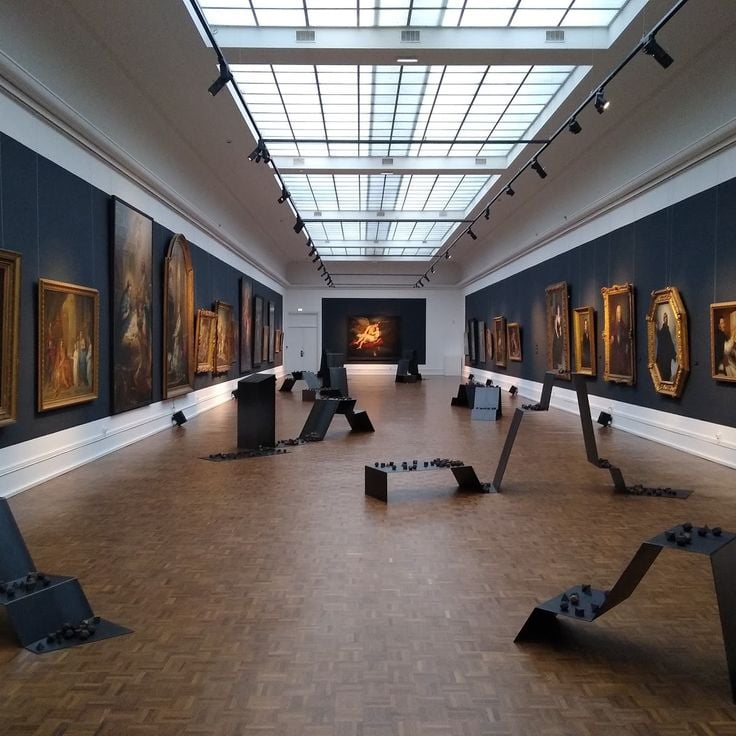
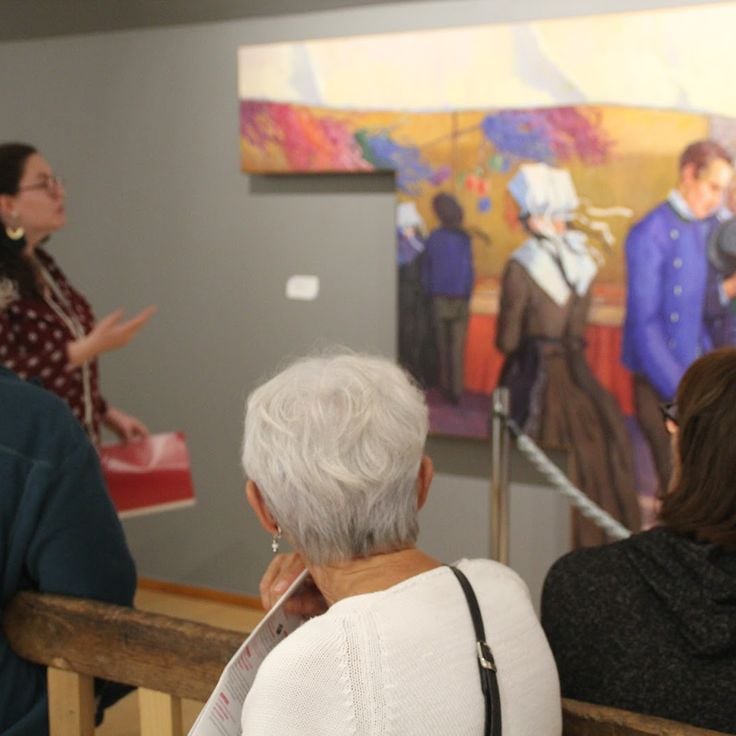
The Musée des Beaux-Arts in Brest displays European paintings spread across three floors. The collection brings together works from the Italian school and French painters that are part of the city's artistic history. Walking through the rooms, you get a sense of how Brest, though known mainly for its port and naval past, has long held a place in European painting traditions.
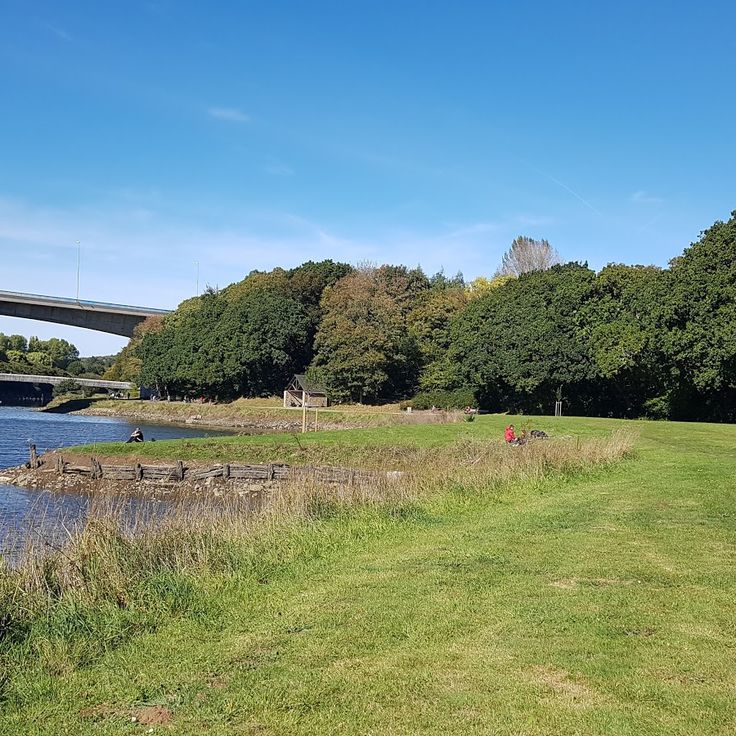
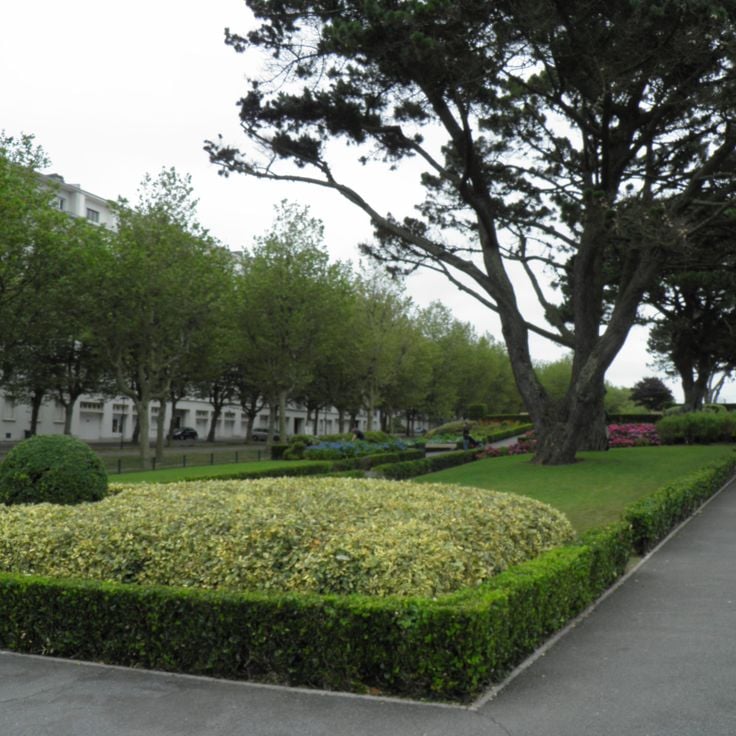
Penfeld Park is a green space in Brest that offers a quiet retreat from the busy harbor while reflecting the city's connection to nature and recreation. This park provides open areas for residents and visitors to walk along paths, use playgrounds, and access sports fields, complementing Brest's maritime character with peaceful surroundings.
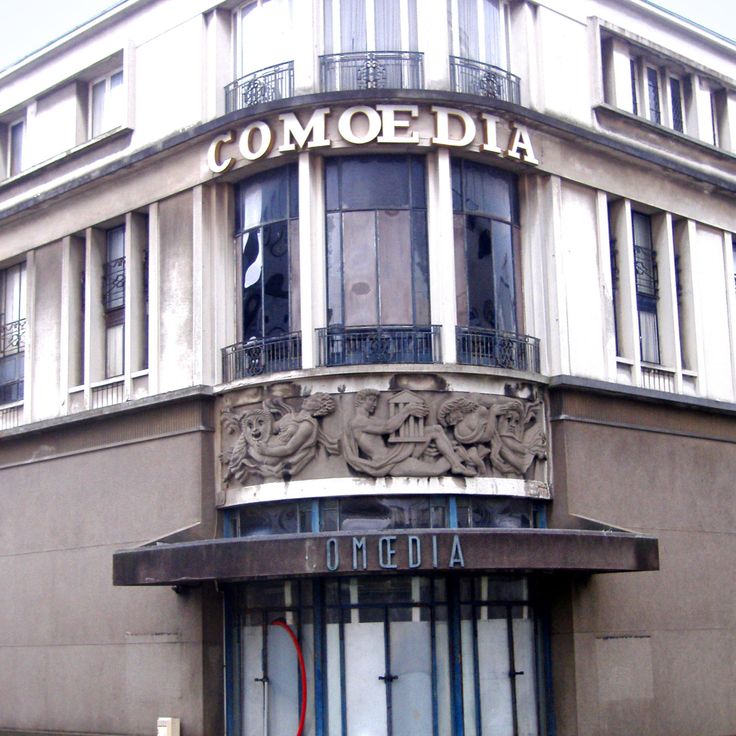
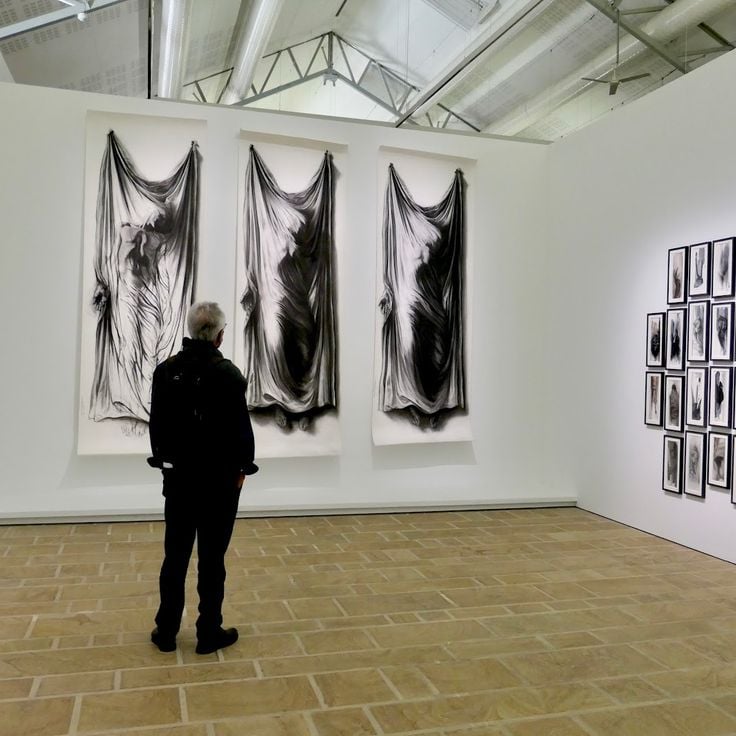
The Comoedia is a cultural space in Brest housed in an art deco building from the 1950s. It presents temporary exhibitions of contemporary artists throughout the year and contributes to the city's cultural life alongside other cultural institutions like Les Ateliers des Capucins. This venue fits naturally into Brest's cultural landscape, a port city that combines modern architecture with preserved landmarks and offers many ways to discover history, nature, and culture.
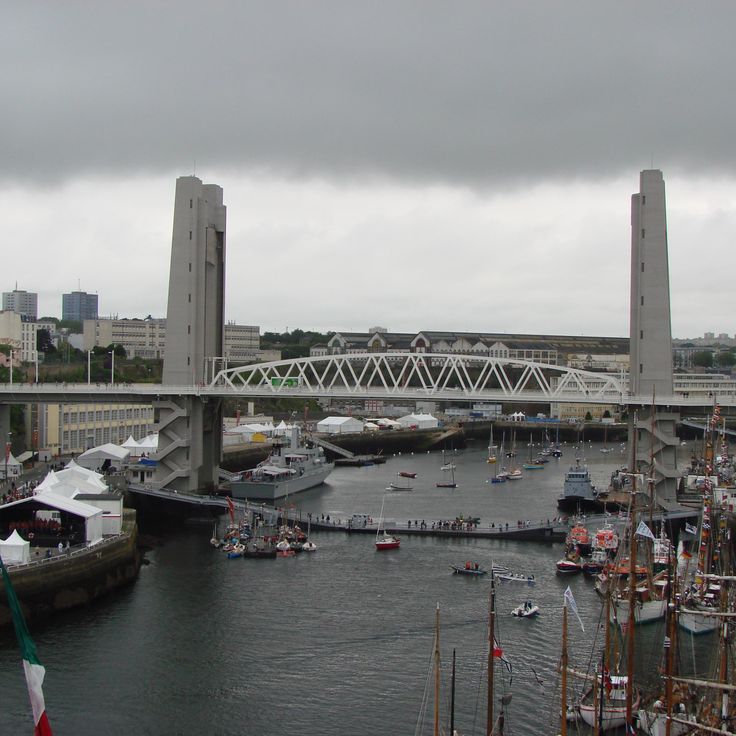
The Recouvrance Bridge is a double lifting metal bridge built in 1954 to allow ships to pass through the Penfeld. It stands as a symbol of this port city's maritime heritage and connects modern infrastructure with Brest's rich past as a major shipping and military port. The bridge is a key landmark when exploring Brest's historical and technical attractions.
The Cours Dajot is a tree-lined promenade in Brest, built on top of an 18th-century military fortification. Linden and elm trees shade the paths while views of the harbor open up along the way. This place shows how Brest turned its old defensive structures into a space where locals and visitors come to walk and enjoy the view.
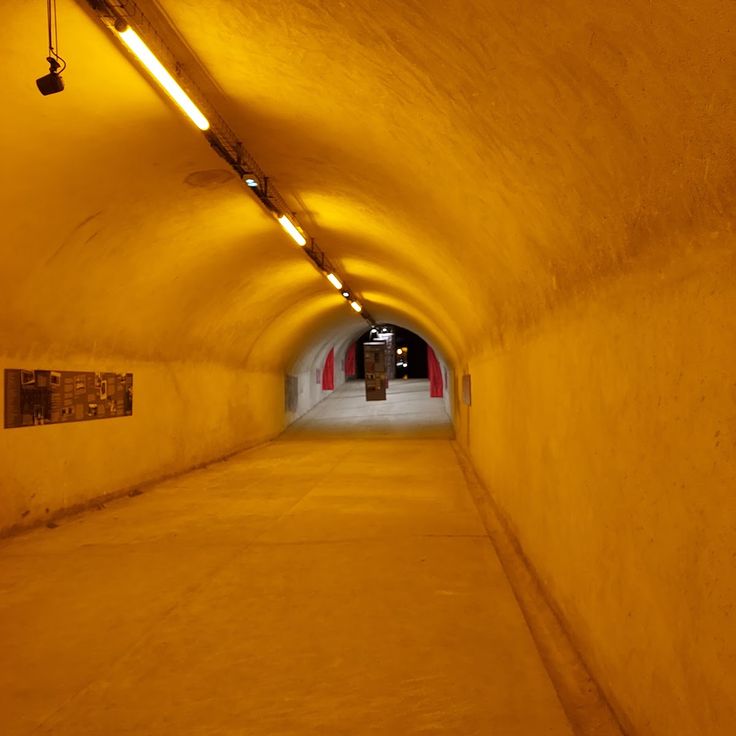
The Sadi Carnot Shelter is an underground bunker from 1942 in Brest that served as a refuge during World War II bombings. This classified historic monument shows how the residents of this port city experienced the destruction of the war. The bunker offers visitors insight into daily life during the bombardments and is part of Brest's preserved military heritage. When exploring Brest's historic sites, this bunker reveals how the city rebuilt itself after the war.
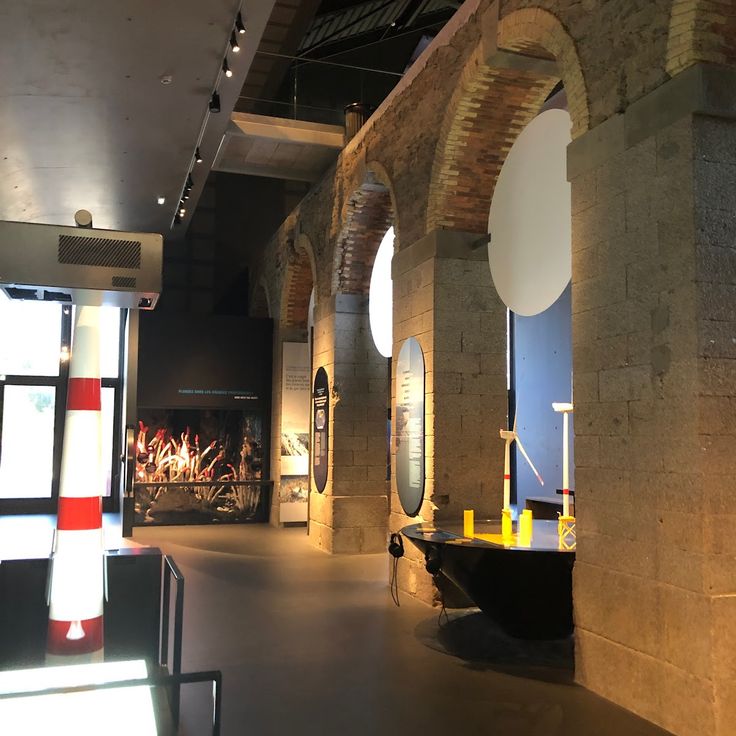
The 70.8 Gallery is an exhibition center in Brest dedicated to maritime innovation and oceanography. Located in a former industrial workshop, it offers space where visitors can discover how the ocean and marine technology have shaped this port city's identity. The gallery fits naturally into Brest's cultural scene alongside the National Maritime Museum, Océanopolis, and other spaces like Les Ateliers des Capucins. It serves as another window into the maritime heritage that defines this city in Finistère.
Keroual Woods is a woodland area in Brest that forms part of the city's tourist sites. This forest features walking trails winding through ancient trees and a variety of local and foreign plant species. The site offers visitors a place to experience nature while exploring Brest's maritime and military heritage.
The Strawberry and Heritage Museum in Brest documents the history of strawberry cultivation in Plougastel from the 18th century onward. The permanent collection shows traditional farming methods, Breton clothing, and everyday objects from the region. Within Brest's story of maritime and cultural traditions, this museum helps visitors understand how local heritage developed over time.
The Hélène and Edouard Leclerc Fund in this guide to Brest is a contemporary art center located in Landerneau within a former Capuchin convent. It hosts rotating exhibitions that showcase both international and national artists, enriching the cultural life of the Brest region. Visitors can explore works of contemporary art and engage with modern artistic expression in this transformed historic space.
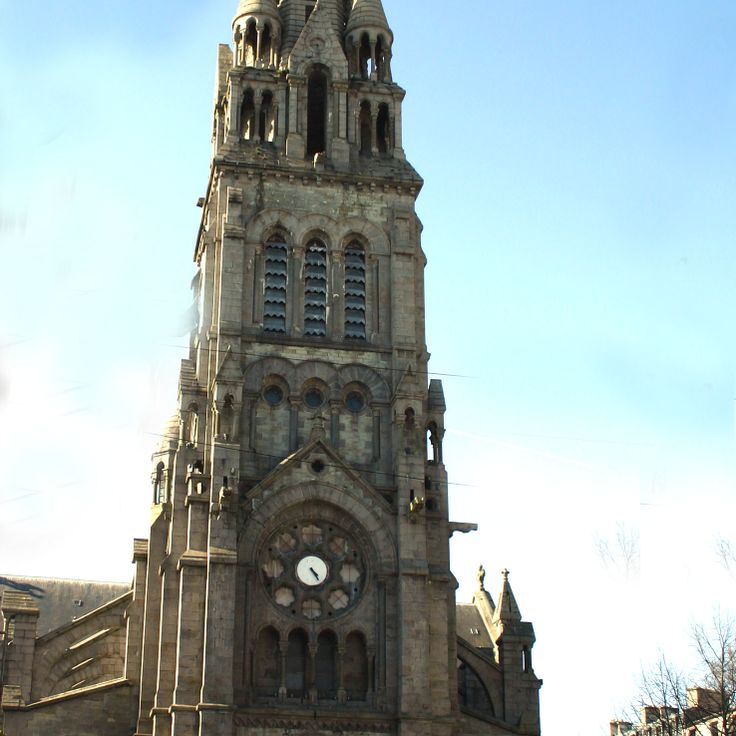
Saint Martin Church is a place of worship in Brest, a port city shaped by seafaring and military history. Built in 1881 in neo-Gothic style, this church displays stained glass windows from 1957 that depict biblical scenes. In Brest, visitors can experience this church alongside Océanopolis, the National Maritime Museum, historical forts that shaped the city's strategic role, and cultural spaces like Les Ateliers des Capucins.
The Brest Cable Car is a modern aerial transport system that has connected the Capucins plateau to the city center since 2016, spanning across the Penfeld valley. In this port city known for its maritime heritage and military fortifications, it serves as a contemporary link between important destinations, including cultural spaces like Les Ateliers des Capucins.
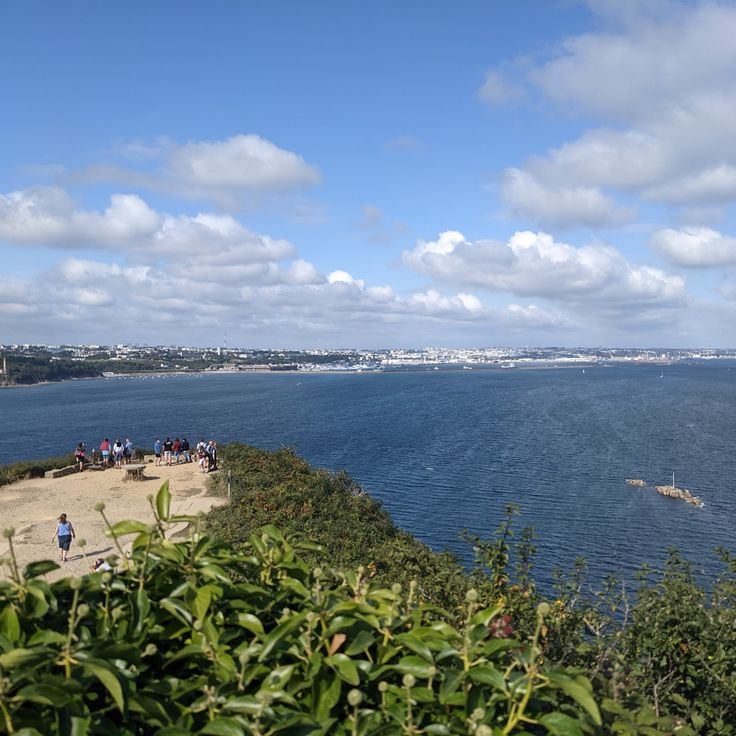
The Pointe des Espagnols is a maritime fortification from the 19th century built on a rocky promontory in Roscanvel as part of Brest's strategic defense. This fortress guards the entrance to the port of Brest and faces the Fort Bertheaume on the other side of the water. The fortification shows how the city protected one of France's most important ports and remains a record of Brest's military and maritime history.
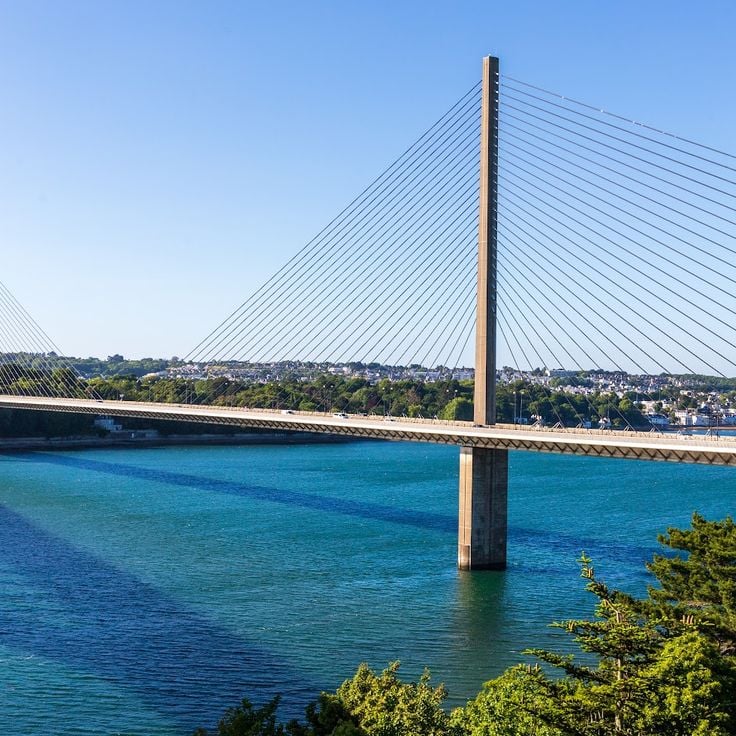
The Pont de l'Iroise is a suspension bridge that crosses the Elorn river, linking Brest to Plougastel. Opened in 1994, it has shaped the skyline of this port city ever since. Standing on or near it, you get a clear sense of how the water connects Brest to the surrounding region, and how the harbor has long been at the heart of the city's daily life.
Océanopolis is a science center in Brest dedicated to ocean life and reinforces the maritime character of this port city. The facility houses three pavilions, each representing different ocean environments: temperate, polar, and tropical seas. Visitors can experience the diversity of ocean ecosystems firsthand and understand why the sea remains central to Brest's identity.
The National Maritime Museum in Brest displays objects, models, and documents spanning five centuries of naval history within the city's castle. The museum shows military uniforms, navigation instruments, and artifacts that illustrate the maritime importance of this port city. As you discover the tourist sites of Brest, this museum helps you understand the naval and military heritage that has shaped the city as a major harbor.
The Port de Brest is the heart of this Breton port city. From the waterfront, you can see cargo ships, navy vessels, and pleasure boats side by side. The port runs every day: ships arrive and depart, sailors walk the docks, cranes move overhead. This constant activity is a reminder that Brest has been one of France's most important naval cities for centuries.
The Tanguy Tower in Brest is a 14th-century keep that rises from a rock overlooking the Penfeld river. Inside, rooms display dioramas showing how the city looked before the 1944 bombings. This tower helps visitors understand Brest's appearance before its wartime destruction. It offers a direct connection to the city's seafaring and military past, showing what the port city was like before its complete rebuilding.
Rue Saint-Malo is one of the few streets in Brest that survived the bombings of World War II. It is lined with half-timbered houses from the 17th century and paved with cobblestones. Walking through it gives a clear sense of what Brest looked like before its destruction. The street shows how people built and lived here centuries ago, and it ties directly to the city's long history as a port.
Les Ateliers des Capucins is a former naval manufacturing site in Brest that now houses a media library, restaurants, shops, and exhibition spaces. This place shows how the city has transformed its maritime industrial heritage into a vibrant cultural and commercial hub. Within Brest's tourist sites, Les Ateliers des Capucins demonstrates how modern uses breathe new life into historic spaces.
Fort Montbarey is a military fortification built in 1780 in Brest, a port city with important maritime and military heritage. The fort now hosts a museum dedicated to Second World War history in the Finistère region, helping visitors understand this significant period of the area's past. As part of discovering Brest's tourist sites, this fort reveals the city's strategic importance and its role in French defensive history.
Moulin Blanc Beach in this Breton port city offers a natural place to relax and enjoy water activities. The sandy beach stretches along Brest harbor and provides room for swimming, water sports, and seaside walks. The waters are sheltered by the natural bay, making them comfortable during warmer months. Local families and visitors come here regularly. The shoreline backs onto grassy areas and small facilities, and the beach is easily reached from the city center. From this location, you can see the maritime activity that defines Brest, with boats and movement across the water.
The National Botanical Conservatory in Brest is a scientific institution dedicated to preserving rare plant species of France. It fits naturally into this port city's heritage, protecting natural treasures alongside maritime and military sites. The conservatory features laboratories and exhibition spaces where visitors can explore the botanical diversity that defines French ecosystems.
The Musée des Beaux-Arts in Brest displays European paintings spread across three floors. The collection brings together works from the Italian school and French painters that are part of the city's artistic history. Walking through the rooms, you get a sense of how Brest, though known mainly for its port and naval past, has long held a place in European painting traditions.
Penfeld Park is a green space in Brest that offers a quiet retreat from the busy harbor while reflecting the city's connection to nature and recreation. This park provides open areas for residents and visitors to walk along paths, use playgrounds, and access sports fields, complementing Brest's maritime character with peaceful surroundings.
The Comoedia is a cultural space in Brest housed in an art deco building from the 1950s. It presents temporary exhibitions of contemporary artists throughout the year and contributes to the city's cultural life alongside other cultural institutions like Les Ateliers des Capucins. This venue fits naturally into Brest's cultural landscape, a port city that combines modern architecture with preserved landmarks and offers many ways to discover history, nature, and culture.
The Recouvrance Bridge is a double lifting metal bridge built in 1954 to allow ships to pass through the Penfeld. It stands as a symbol of this port city's maritime heritage and connects modern infrastructure with Brest's rich past as a major shipping and military port. The bridge is a key landmark when exploring Brest's historical and technical attractions.
The Cours Dajot is a tree-lined promenade in Brest, built on top of an 18th-century military fortification. Linden and elm trees shade the paths while views of the harbor open up along the way. This place shows how Brest turned its old defensive structures into a space where locals and visitors come to walk and enjoy the view.
The Sadi Carnot Shelter is an underground bunker from 1942 in Brest that served as a refuge during World War II bombings. This classified historic monument shows how the residents of this port city experienced the destruction of the war. The bunker offers visitors insight into daily life during the bombardments and is part of Brest's preserved military heritage. When exploring Brest's historic sites, this bunker reveals how the city rebuilt itself after the war.
The 70.8 Gallery is an exhibition center in Brest dedicated to maritime innovation and oceanography. Located in a former industrial workshop, it offers space where visitors can discover how the ocean and marine technology have shaped this port city's identity. The gallery fits naturally into Brest's cultural scene alongside the National Maritime Museum, Océanopolis, and other spaces like Les Ateliers des Capucins. It serves as another window into the maritime heritage that defines this city in Finistère.
Keroual Woods is a woodland area in Brest that forms part of the city's tourist sites. This forest features walking trails winding through ancient trees and a variety of local and foreign plant species. The site offers visitors a place to experience nature while exploring Brest's maritime and military heritage.
The Strawberry and Heritage Museum in Brest documents the history of strawberry cultivation in Plougastel from the 18th century onward. The permanent collection shows traditional farming methods, Breton clothing, and everyday objects from the region. Within Brest's story of maritime and cultural traditions, this museum helps visitors understand how local heritage developed over time.
The Hélène and Edouard Leclerc Fund in this guide to Brest is a contemporary art center located in Landerneau within a former Capuchin convent. It hosts rotating exhibitions that showcase both international and national artists, enriching the cultural life of the Brest region. Visitors can explore works of contemporary art and engage with modern artistic expression in this transformed historic space.
Saint Martin Church is a place of worship in Brest, a port city shaped by seafaring and military history. Built in 1881 in neo-Gothic style, this church displays stained glass windows from 1957 that depict biblical scenes. In Brest, visitors can experience this church alongside Océanopolis, the National Maritime Museum, historical forts that shaped the city's strategic role, and cultural spaces like Les Ateliers des Capucins.
The Brest Cable Car is a modern aerial transport system that has connected the Capucins plateau to the city center since 2016, spanning across the Penfeld valley. In this port city known for its maritime heritage and military fortifications, it serves as a contemporary link between important destinations, including cultural spaces like Les Ateliers des Capucins.
The Pointe des Espagnols is a maritime fortification from the 19th century built on a rocky promontory in Roscanvel as part of Brest's strategic defense. This fortress guards the entrance to the port of Brest and faces the Fort Bertheaume on the other side of the water. The fortification shows how the city protected one of France's most important ports and remains a record of Brest's military and maritime history.
The Pont de l'Iroise is a suspension bridge that crosses the Elorn river, linking Brest to Plougastel. Opened in 1994, it has shaped the skyline of this port city ever since. Standing on or near it, you get a clear sense of how the water connects Brest to the surrounding region, and how the harbor has long been at the heart of the city's daily life.
Océanopolis is a science center in Brest dedicated to ocean life and reinforces the maritime character of this port city. The facility houses three pavilions, each representing different ocean environments: temperate, polar, and tropical seas. Visitors can experience the diversity of ocean ecosystems firsthand and understand why the sea remains central to Brest's identity.
The National Maritime Museum in Brest displays objects, models, and documents spanning five centuries of naval history within the city's castle. The museum shows military uniforms, navigation instruments, and artifacts that illustrate the maritime importance of this port city. As you discover the tourist sites of Brest, this museum helps you understand the naval and military heritage that has shaped the city as a major harbor.
The Port de Brest is the heart of this Breton port city. From the waterfront, you can see cargo ships, navy vessels, and pleasure boats side by side. The port runs every day: ships arrive and depart, sailors walk the docks, cranes move overhead. This constant activity is a reminder that Brest has been one of France's most important naval cities for centuries.
The Tanguy Tower in Brest is a 14th-century keep that rises from a rock overlooking the Penfeld river. Inside, rooms display dioramas showing how the city looked before the 1944 bombings. This tower helps visitors understand Brest's appearance before its wartime destruction. It offers a direct connection to the city's seafaring and military past, showing what the port city was like before its complete rebuilding.
Rue Saint-Malo is one of the few streets in Brest that survived the bombings of World War II. It is lined with half-timbered houses from the 17th century and paved with cobblestones. Walking through it gives a clear sense of what Brest looked like before its destruction. The street shows how people built and lived here centuries ago, and it ties directly to the city's long history as a port.
Les Ateliers des Capucins is a former naval manufacturing site in Brest that now houses a media library, restaurants, shops, and exhibition spaces. This place shows how the city has transformed its maritime industrial heritage into a vibrant cultural and commercial hub. Within Brest's tourist sites, Les Ateliers des Capucins demonstrates how modern uses breathe new life into historic spaces.
Fort Montbarey is a military fortification built in 1780 in Brest, a port city with important maritime and military heritage. The fort now hosts a museum dedicated to Second World War history in the Finistère region, helping visitors understand this significant period of the area's past. As part of discovering Brest's tourist sites, this fort reveals the city's strategic importance and its role in French defensive history.
Moulin Blanc Beach in this Breton port city offers a natural place to relax and enjoy water activities. The sandy beach stretches along Brest harbor and provides room for swimming, water sports, and seaside walks. The waters are sheltered by the natural bay, making them comfortable during warmer months. Local families and visitors come here regularly. The shoreline backs onto grassy areas and small facilities, and the beach is easily reached from the city center. From this location, you can see the maritime activity that defines Brest, with boats and movement across the water.
The National Botanical Conservatory in Brest is a scientific institution dedicated to preserving rare plant species of France. It fits naturally into this port city's heritage, protecting natural treasures alongside maritime and military sites. The conservatory features laboratories and exhibition spaces where visitors can explore the botanical diversity that defines French ecosystems.
The Musée des Beaux-Arts in Brest displays European paintings spread across three floors. The collection brings together works from the Italian school and French painters that are part of the city's artistic history. Walking through the rooms, you get a sense of how Brest, though known mainly for its port and naval past, has long held a place in European painting traditions.
Penfeld Park is a green space in Brest that offers a quiet retreat from the busy harbor while reflecting the city's connection to nature and recreation. This park provides open areas for residents and visitors to walk along paths, use playgrounds, and access sports fields, complementing Brest's maritime character with peaceful surroundings.
The Comoedia is a cultural space in Brest housed in an art deco building from the 1950s. It presents temporary exhibitions of contemporary artists throughout the year and contributes to the city's cultural life alongside other cultural institutions like Les Ateliers des Capucins. This venue fits naturally into Brest's cultural landscape, a port city that combines modern architecture with preserved landmarks and offers many ways to discover history, nature, and culture.
The Recouvrance Bridge is a double lifting metal bridge built in 1954 to allow ships to pass through the Penfeld. It stands as a symbol of this port city's maritime heritage and connects modern infrastructure with Brest's rich past as a major shipping and military port. The bridge is a key landmark when exploring Brest's historical and technical attractions.
The Cours Dajot is a tree-lined promenade in Brest, built on top of an 18th-century military fortification. Linden and elm trees shade the paths while views of the harbor open up along the way. This place shows how Brest turned its old defensive structures into a space where locals and visitors come to walk and enjoy the view.
The Sadi Carnot Shelter is an underground bunker from 1942 in Brest that served as a refuge during World War II bombings. This classified historic monument shows how the residents of this port city experienced the destruction of the war. The bunker offers visitors insight into daily life during the bombardments and is part of Brest's preserved military heritage. When exploring Brest's historic sites, this bunker reveals how the city rebuilt itself after the war.
The 70.8 Gallery is an exhibition center in Brest dedicated to maritime innovation and oceanography. Located in a former industrial workshop, it offers space where visitors can discover how the ocean and marine technology have shaped this port city's identity. The gallery fits naturally into Brest's cultural scene alongside the National Maritime Museum, Océanopolis, and other spaces like Les Ateliers des Capucins. It serves as another window into the maritime heritage that defines this city in Finistère.
Keroual Woods is a woodland area in Brest that forms part of the city's tourist sites. This forest features walking trails winding through ancient trees and a variety of local and foreign plant species. The site offers visitors a place to experience nature while exploring Brest's maritime and military heritage.
The Strawberry and Heritage Museum in Brest documents the history of strawberry cultivation in Plougastel from the 18th century onward. The permanent collection shows traditional farming methods, Breton clothing, and everyday objects from the region. Within Brest's story of maritime and cultural traditions, this museum helps visitors understand how local heritage developed over time.
The Hélène and Edouard Leclerc Fund in this guide to Brest is a contemporary art center located in Landerneau within a former Capuchin convent. It hosts rotating exhibitions that showcase both international and national artists, enriching the cultural life of the Brest region. Visitors can explore works of contemporary art and engage with modern artistic expression in this transformed historic space.
Saint Martin Church is a place of worship in Brest, a port city shaped by seafaring and military history. Built in 1881 in neo-Gothic style, this church displays stained glass windows from 1957 that depict biblical scenes. In Brest, visitors can experience this church alongside Océanopolis, the National Maritime Museum, historical forts that shaped the city's strategic role, and cultural spaces like Les Ateliers des Capucins.
The Brest Cable Car is a modern aerial transport system that has connected the Capucins plateau to the city center since 2016, spanning across the Penfeld valley. In this port city known for its maritime heritage and military fortifications, it serves as a contemporary link between important destinations, including cultural spaces like Les Ateliers des Capucins.
The Pointe des Espagnols is a maritime fortification from the 19th century built on a rocky promontory in Roscanvel as part of Brest's strategic defense. This fortress guards the entrance to the port of Brest and faces the Fort Bertheaume on the other side of the water. The fortification shows how the city protected one of France's most important ports and remains a record of Brest's military and maritime history.
The Pont de l'Iroise is a suspension bridge that crosses the Elorn river, linking Brest to Plougastel. Opened in 1994, it has shaped the skyline of this port city ever since. Standing on or near it, you get a clear sense of how the water connects Brest to the surrounding region, and how the harbor has long been at the heart of the city's daily life.
Brest was rebuilt after World War II while keeping its past. Before you leave, check the schedule of port events: the city's life often centers around the arrivals of ships and marine activities that mark the seasons. The people will gladly tell you when it is best to walk along the quays and feel this energy from the sea that keeps coming alive.