Österlånggatan, Pedestrian street in Gamla Stan, Stockholm, Sweden
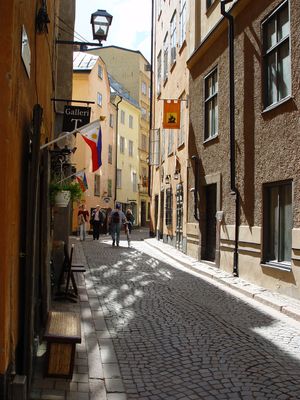
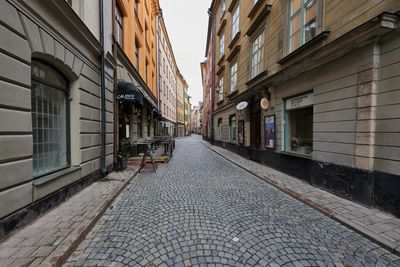
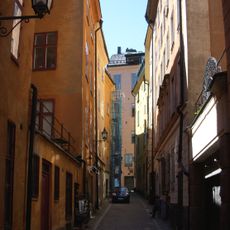
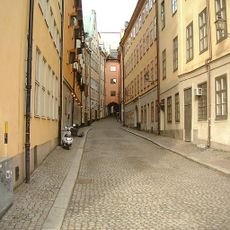
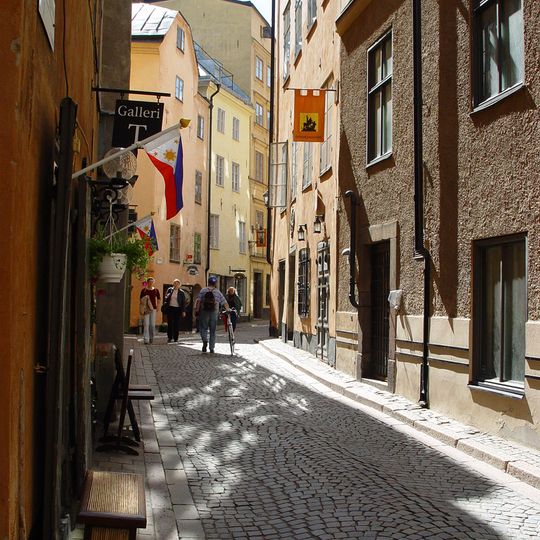
Österlånggatan is a narrow pedestrian street in Gamla Stan, Stockholm, running south from Slottsbacken to Järntorget. Its surface is laid with small grey cobblestones in overlapping arcs, with two reddish-brown stone strips along the left side. The street is flanked by tall ochre and stone facades; a dark wooden bench and a hanging sign reading "Hantverkare" stand near the northern end.
In the 13th century the street was little more than the eastern shoreline of Stockholm; excavations have uncovered the original beaten track about three metres below today's pavement. Land fillings of gravel and rubbish gradually pushed the shore eastward, and by the 14th century it had become the paved 'long street east of the wall' lined with workshops, shops and dwellings. When Skeppsbron was created in the 17th century, Österlånggatan lost its role as a main street.
The name Österlånggatan translates roughly to "Long Eastern Street", which reflects its position along the eastern edge of the old city. The street still follows the same path merchants used for trade, and the mix of small shops and eating places today echoes that long tradition of commerce.
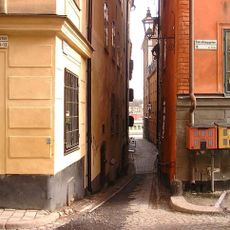
The street runs from Slottsbacken down to Järntorget, and its northern end is recessed in a corner of Slottsbacken, squeezed between tall facades, so it is easy to mistake for an alley. The paving is small grey cobblestones laid in arcs, with two reddish-brown stone strips along the left side. The surface is uneven, so sturdy shoes help.
Excavations under the street found that the original medieval road surface sits about 3 feet (1 meter) below today's cobblestones. Each layer of paving represents a different period in the city's growth, stacked one on top of the other over centuries.
The community of curious travelers
AroundUs brings together thousands of curated places, local tips, and hidden gems, enriched daily by 93,805 contributors worldwide.