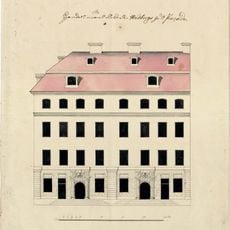
Flemingska palatset, Baroque castle in Gamla Stan, Stockholm, Sweden
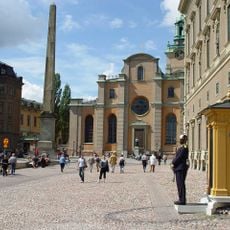
Flemingska palatset is a brick building of three storeys plus an attic at Slottsbacken 8 in Gamla stan, Stockholm. Its plastered facades have a rusticated ground floor in light reddish-brown and a yellow upper section divided by pilasters between the first and second floors. The copper roof is hipped with two round dormer windows facing Slottsbacken and a heavy dentil cornice.
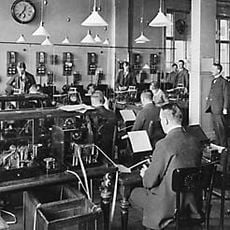
Erik Fleming, a member of the Privy Council, had the palace built in the 1650s; sources name either Nicodemus Tessin the Elder or Jean de la Vallée as architect. It was rebuilt in 1783 and again in 1863 for merchant Frans Theodor Berling, when the window surrounds took their present form. From 1891 the Telegraph Administration's pension fund owned it, and from 1907 it housed Stockholm's central telegraph station. Ivar Tengbom led a thorough restoration in 1957–1959, and the building was declared a listed monument in 1992.
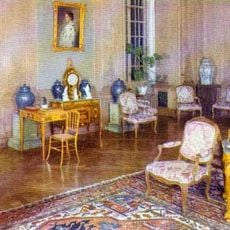
The palace's name comes from Erik Fleming, the riksråd who commissioned it in the 1650s. Inside, the stairwell and two rooms retain Gustavian interiors from the 1780s. Since 2006 the building has belonged to Fabege, and it now operates as the Helio Slottsbacken co-working space.
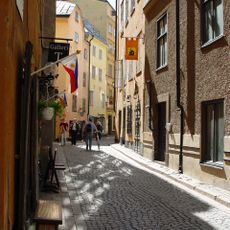
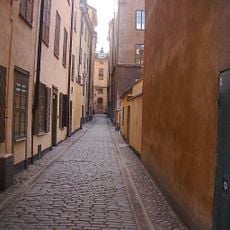
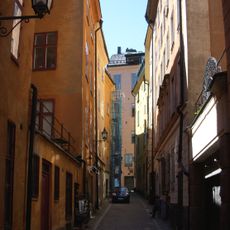
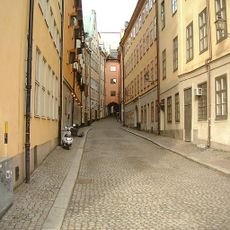
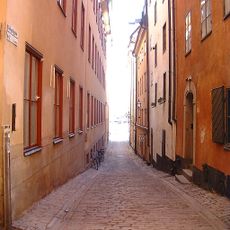
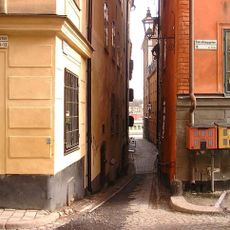
The building is easily reached on foot since it sits directly on Slottsbacken street in the heart of the old town, not far from the Royal Palace. Visitors can view the palace's exterior features from the street and explore the surrounding lanes.
The facade features rustication at the base and vertical pilasters that extend between the first and second floors, a hallmark of baroque design from that era. These details reveal the visual language that wealthy Swedish families used to display their status and taste.
The community of curious travelers
AroundUs brings together thousands of curated places, local tips, and hidden gems, enriched daily by 93,455 contributors worldwide.