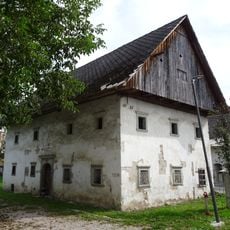
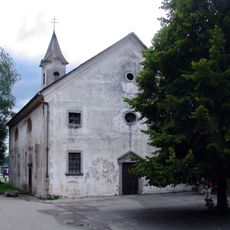
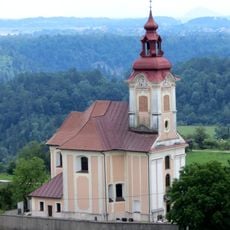
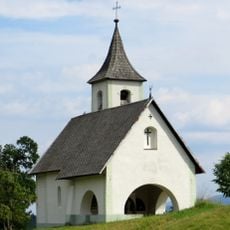
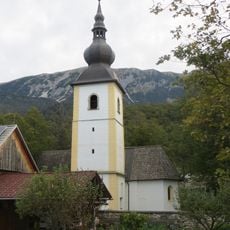
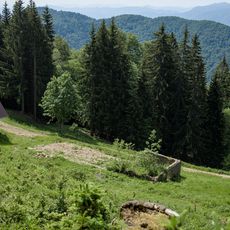
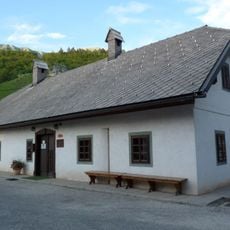
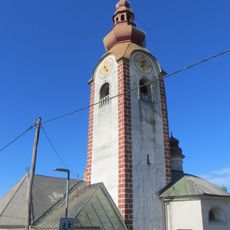
Ajdna, Archaeological site at Karavanke mountain range, Slovenia.
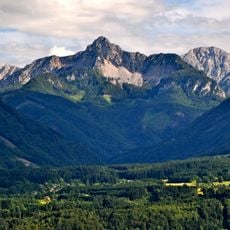
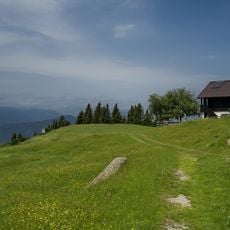
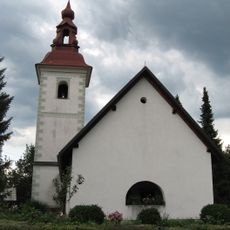
Ajdna is a rocky peak at 1,064 m on the southern slope of Stol in the Karawanks, in the Municipality of Žirovnica. Just below the summit and on the ridge lie the remains of a late Antique settlement: about 25 dwellings partly cut into the rock, and an early Christian single-nave church with a narthex and a small two-room annex, possibly a baptistery. The church has been conserved and roofed over.
A stone axe found on the summit dates the earliest occupation to the 3rd or 2nd millennium BC. The hilltop was resettled in late Antiquity, when a defended settlement from the 5th and 6th centuries served valley dwellers fleeing Germanic and Slavic migrations. It was inhabited again in the 9th century, when Frankish and Slavic military equipment and jewellery were left behind. Excavations began in 1973.
The excavated temple and burial sites reveal how early inhabitants lived through everyday objects like pottery, tools, and ornaments they left behind. These finds show a community where religious practice and daily work were closely connected.
All approaches to the summit are steep at least in their upper sections, and the easiest starts from the village of Potoki; routes also lead up from the Završnica valley and from Koroška Bela. The eastern, northern and partly southern walls drop precipitously into the Upper Sava Valley. The conserved church remains are roofed over and open to visitors.
At 1,046 m, Ajdna is the highest late Antique hilltop settlement found in Slovenia, with occupation layers from the 5th–6th centuries and again in the 9th century. Finds include a Germanic potsherd and an Ostrogothic silver coin dated 534–536, now kept in the Gorenjski muzej in Kranj.
The community of curious travelers
AroundUs brings together thousands of curated places, local tips, and hidden gems, enriched daily by 94,035 contributors worldwide.