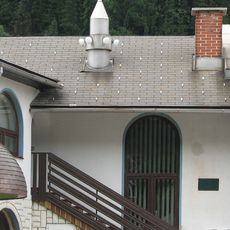
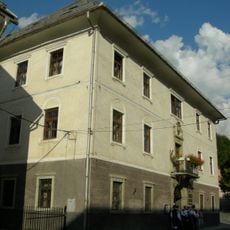
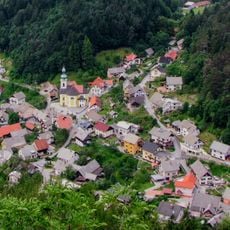
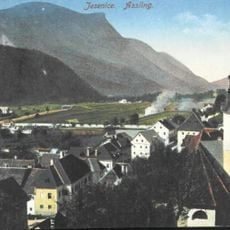
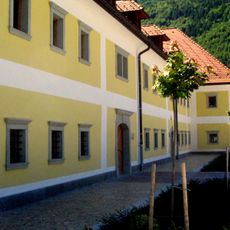
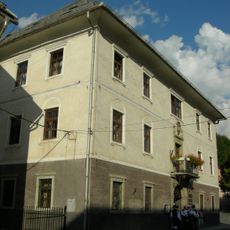
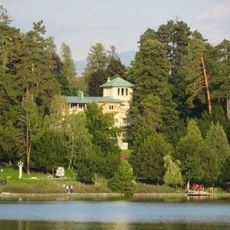
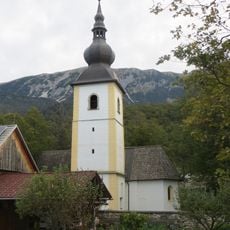
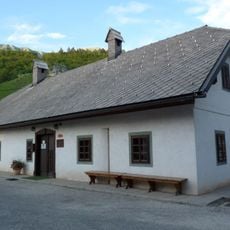
Ruard Manor, Manor house in the Sava neighbourhood of Jesenice, Slovenia.
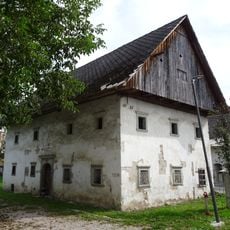
Ruard Manor, also called the Bucellini–Ruard Manor, is a 16th-century manor house at 45 France Prešeren Street in the Sava neighbourhood of Jesenice. It was built in 1538 by Bernardo Bucellini and rebuilt in the Neoclassical style in 1831. Since 1954 it has housed the Upper Sava Museum, with exhibits on the iron and steel industry, Palaeozoic fossils of the western Karawanks and a mineral collection.
The manor was built in 1538 by Italian merchant Bernardo Bucellini from Bergamo and gained its current name in 1766 when Belgian trader Valentin Ruard purchased the property. It survived the region's industrial transformation and remains one of the few buildings from that early trading period.
The manor's name recalls two families: the Bucellinis, who built it in 1538 and were ennobled as von Reichenberg, and Valentin Ruard, who bought the estate in 1766. Since 1954 it has housed the Upper Sava Museum, whose exhibits include motorised maquettes of the region's ironworks.
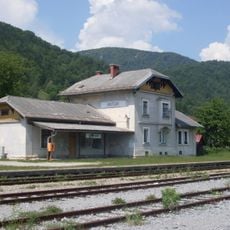
The manor stands at Cesta Franceta Prešerna 45 in the Sava neighbourhood, on the north side of Jesenice. It is a short walk from the Sava railway stop and the town centre. The exhibitions occupy several rooms, so allow enough time to see the iron-industry models and the fossil and mineral collections.
The manor is one of only two surviving ironworks castles from the original four that existed as separate settlements before 1929. This rare survival makes it a valuable record of the area's early industrial history.
The community of curious travelers
AroundUs brings together thousands of curated places, local tips, and hidden gems, enriched daily by 93,904 contributors worldwide.