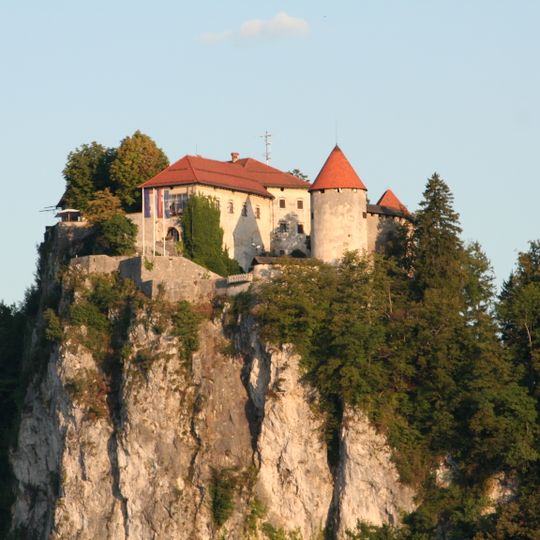
Bled Castle, Medieval castle in Bled, Slovenia
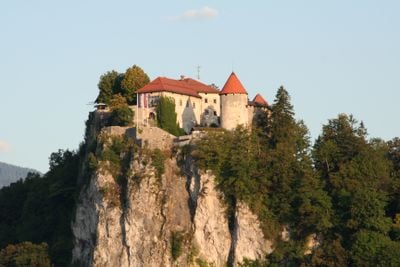
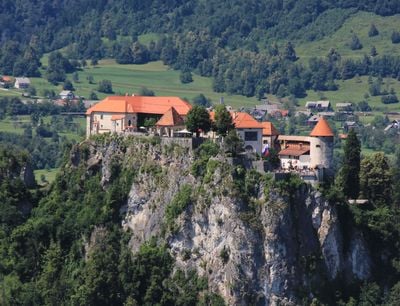
Bled Castle stands on a 139-metre rock above Lake Bled. Its oldest part is the Romanesque tower; later towers and walls were added, and the buildings around the two courtyards, linked by a staircase, are largely Renaissance. The upper courtyard holds the 16th-century chapel, and a drawbridge crosses the moat.
Bled Castle was first documented on 22 May 1011, when Emperor Henry II granted the castle, called castellum Veldes, to Bishop Adalbero of Brixen; an earlier 1004 deed names only the estate Ueldes, not a castle. The bishops of Brixen held it for about eight centuries, though it was pledged to the Carinthian lords of Kraig from 1370 to 1588. An earthquake on 26 March 1511 damaged it heavily, and much of the present fabric dates from the rebuilding. In 1838 it was sold to Viktor Ruard, owner of the Jesenice ironworks, and it passed into state ownership in 1937.
The castle's name appears in Latin records as castellum Veldes vocatum, from which the Slovene Blejski grad and German Burg Veldes derive. The chapel in the upper courtyard, built in the 16th century and repainted with illusionist frescoes around 1700, is where this name history sits alongside the bishops of Brixen's eight-century residence.
The climb from Bled town follows a steep path up the cliff, and the German source notes that vehicles can drive directly via Grjaska cesta. On foot, allow time for the ascent and wear sturdy shoes, as the path can be slippery in wet weather.
The 1511 earthquake damaged the castle so badly that most of what stands today dates from the rebuilding; the Romanesque tower is the oldest surviving part. The buildings are grouped around two courtyards joined by a staircase, with the residential range in the upper courtyard and service buildings in the lower one.
The community of curious travelers
AroundUs brings together thousands of curated places, local tips, and hidden gems, enriched daily by 94,018 contributors worldwide.