Lake Bled, Glacial lake in Upper Carniola, Slovenia
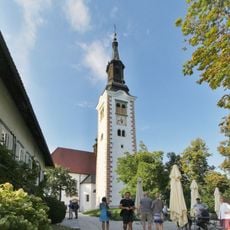
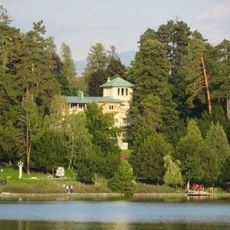
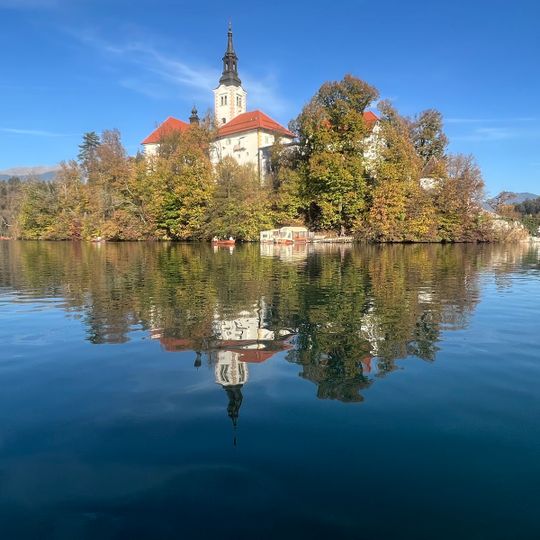
Lake Bled is a mixed glacial and tectonic lake in the Julian Alps of Upper Carniola, Slovenia, measuring 2,120 m long and 1,380 m wide with a maximum depth of 29.5 m. Near its centre lies Bled Island, the only natural island in Slovenia, with a cluster of red-roofed buildings and a 52 m bell tower with a pointed spire. The shore curves inward at the lower left and right, forming a pale turquoise band along the water's edge.
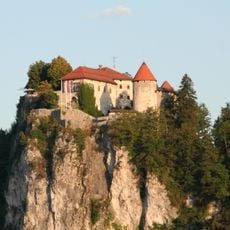
Lake Bled was a cult centre in the Bronze Age; gold appliqués from the 13th–12th century BC, found in a shore deposit, carry embossed solar and lunar year motifs. Emperor Henry II built Bled Castle in 1004 and conferred the lake as an estate. The pilgrimage church on Bled Island took its current form near the end of the 17th century, retaining Gothic frescos from around 1470 in the chancel.
The pletna boatmen's role dates to 1740, when Maria Theresa of Austria granted 22 local families the exclusive right to ferry pilgrims to Bled Island; many oarsmen today descend from those families. The boats seat 20 passengers, are still made by hand, and are rowed standing with two oars. Grooms traditionally carry their brides up the 99 stone steps of the Baroque stairway of 1655 before ringing the wishing bell in the church.
A paved path runs continuously around the shore for roughly six kilometers, suitable for walking or cycling. Early morning or late afternoon visits offer quieter conditions and softer light across the water.
A thermal spring entering at 23 °C helps warm the surface to 22–26 °C in midsummer, which is why swimming and paddleboarding are common. The lake has hosted the World Rowing Championships in 1966, 1979, 1989 and 2011.
The community of curious travelers
AroundUs brings together thousands of curated places, local tips, and hidden gems, enriched daily by 93,359 contributors worldwide.