Uluburun shipwreck, Bronze Age shipwreck site near Kas, Antalya Province, Turkey.
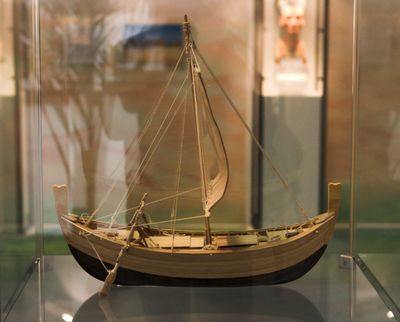
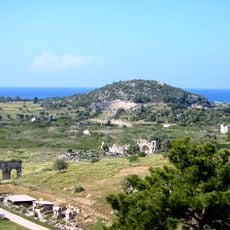
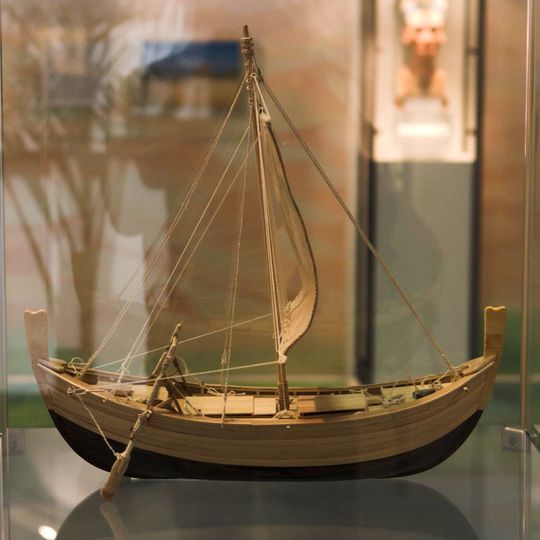
The Uluburun shipwreck lies on a slope 60 metres off the eastern shore of the Uluburun promontory, 8.5 km southeast of Kaş, at depths reaching 61 metres. The hull, about 15 to 16 metres long, was built shell-first from Lebanese cedar planks joined with oak mortise-and-tenon joints, with a keel-plank rather than a true keel. It carried 24 stone anchors. The recovered cargo is displayed at the Bodrum Museum of Underwater Archaeology.
The vessel sank around 1320 BCE and was discovered in 1982 by a sponge diver, making it one of the oldest known merchant wrecks. Scientific examination from 1984 to 1994 revealed trade relationships between distant Bronze Age cultures.
The cargo reveals trade networks connecting Egypt, Canaan, the eastern Mediterranean, and the Baltic region through copper, tin, glass, and amber. Ancient peoples from distant lands exchanged their most valuable goods, showing how interconnected the world was even thousands of years ago.
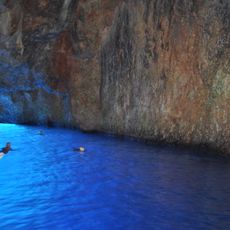
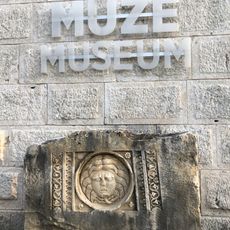
The wreck lies at great depth, so only experienced diving is possible; visitors can view the recovered items at the museum instead. The museum provides an organized exhibition with all major objects and explanations about ancient seafaring and the vessel.
The cargo held 354 oxhide-shaped copper ingots, about ten tons, and 121 plano-convex tin ingots, roughly one ton. Lead isotope analysis traced the copper to Cyprus. The oxhide shape made the metal easy to tie onto pack animals and load aboard ship.
The community of curious travelers
AroundUs brings together thousands of curated places, local tips, and hidden gems, enriched daily by 94,623 contributors worldwide.