Wall Street, Financial street in Manhattan, US
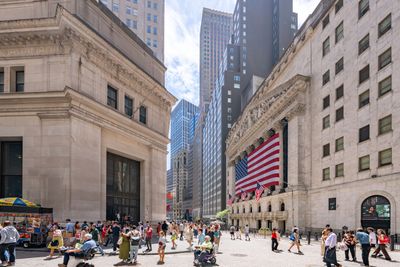
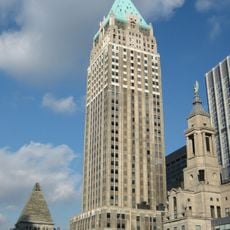
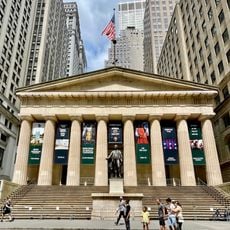
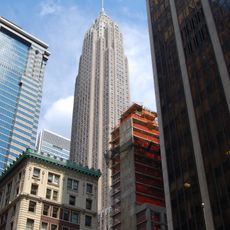
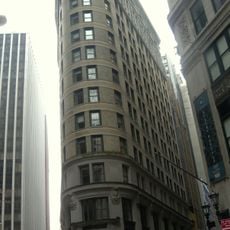
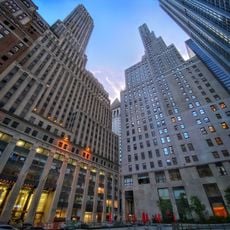
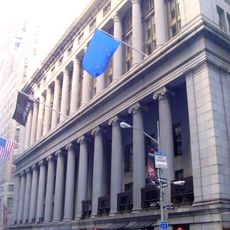
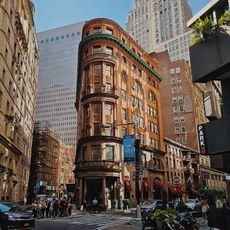
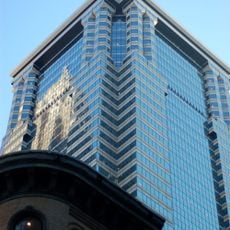
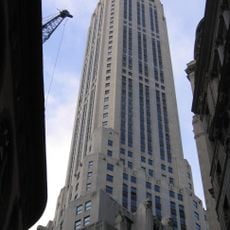
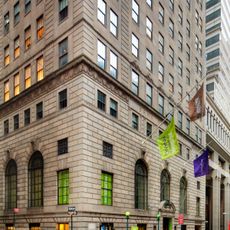
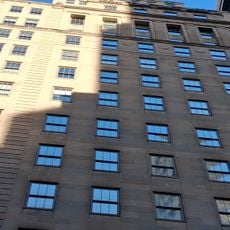
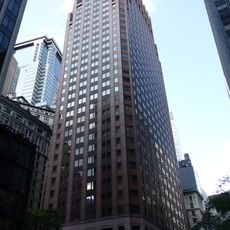
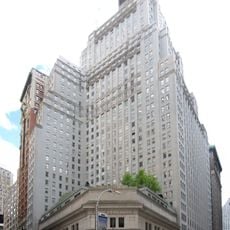
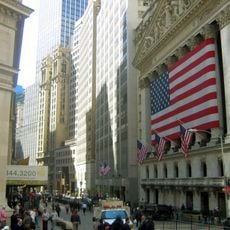
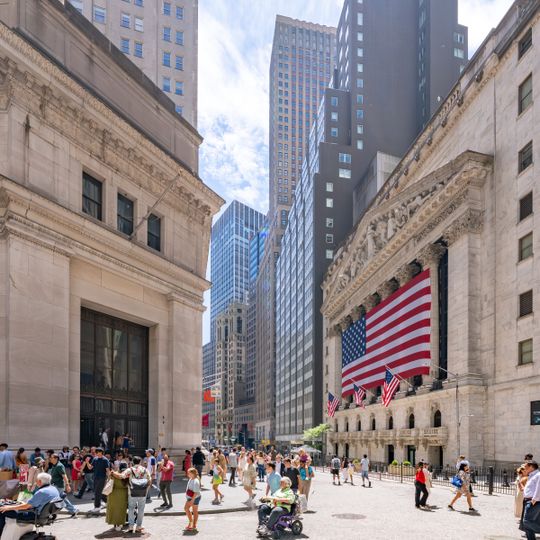
Wall Street runs eight blocks, just under 2,000 feet, from Broadway west to South Street and the East River in Lower Manhattan. The New York Stock Exchange and Federal Hall stand along it, and 40 Wall Street, once the world's tallest building, rises among the early skyscrapers. Photographs show a narrow stone-paved street between tall masonry buildings, with a large American flag hung across a classical facade.
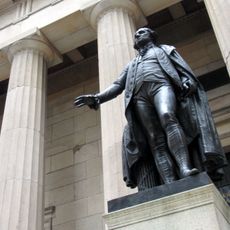
Peter Stuyvesant ordered a ditch and wooden palisade built in 1653 along the settlement's northern edge, using the labor of enslaved Africans and white colonists; the wall was removed in 1699. A new City Hall rose at Wall and Nassau in 1700, and George Washington took the first U.S. presidential oath on its balcony on April 30, 1789. The Buttonwood Agreement of 1792 formalized securities trading under a buttonwood tree at the street's foot, origin of the New York Stock Exchange.
Bankers, brokers and tourists fill the street on weekdays while guides explain financial history and economic turning points. On weekends the area quiets down, and visitors can observe the architecture and monuments at a more relaxed pace.
Several subway lines stop nearby, including stations on Lines 2, 3, 4 and 5, providing easy access to the street. Most buildings are accessible during business hours, while the district becomes noticeably quieter and emptier on weekends.
A bomb attack on September 16, 1920 near the intersection with Broad Street killed more than 30 people and left marks on the stone walls still visible today. The scars were deliberately left unrepaired and serve as a silent reminder of the event.
The community of curious travelers
AroundUs brings together thousands of curated places, local tips, and hidden gems, enriched daily by 92,050 contributors worldwide.