Bronx–Whitestone Bridge, Suspension bridge between Bronx and Queens, United States
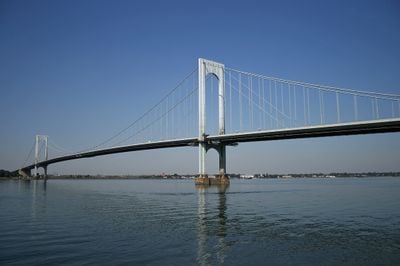
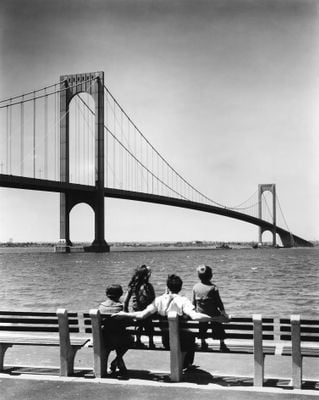
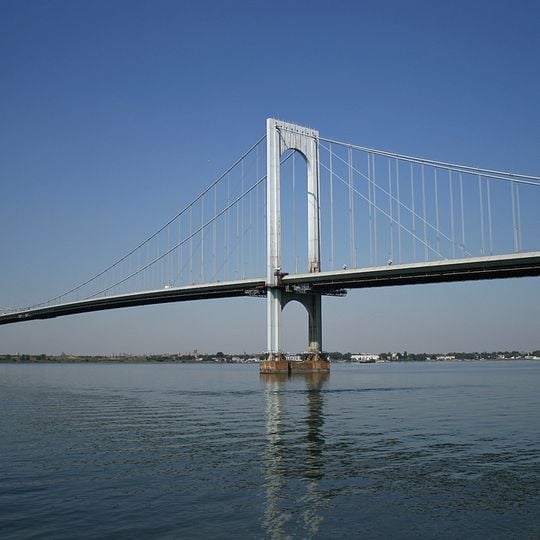
The Bronx–Whitestone Bridge is a steel suspension bridge over the East River between the Bronx and Queens, with a 2,300-foot (700 m) main span and a deck 150 feet (46 m) above mean high water. Its two towers rise 377 feet (115 m) from concrete piers; each tower has two legs joined by an arch near the top, and the deck passes through the tower above a large lower arch. Two main cables carry thin vertical suspenders down to the flat deck.
Construction began in 1936 after decades of proposals dating back to 1905, with Othmar Ammann leading the design. The opening on April 29, 1939, took place alongside the New York World's Fair.
The structure serves as a daily commuter link between two boroughs, connecting residential neighborhoods with business districts across the water. Its name refers to Whitestone, a Queens community on the southern shore where the roadway touches land.
Crossing requires a cashless toll payment, so an electronic payment system is necessary. Traffic flows across six lanes, with peak hours in the morning and evening potentially slowing passage.
In the 1940s, stiffening trusses were added to prevent oscillations observed in similar structures. This modification changed the originally slender appearance of the span considerably.
The community of curious travelers
AroundUs brings together thousands of curated places, local tips, and hidden gems, enriched daily by 94,696 contributors worldwide.