Niagara Falls Suspension Bridge, Suspension bridge in Niagara Falls
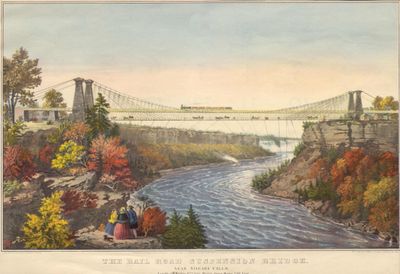
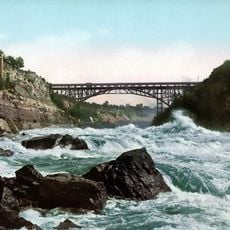
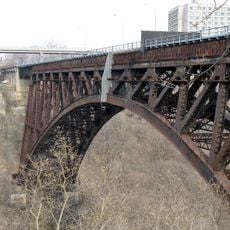
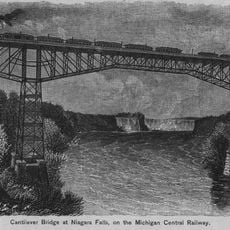
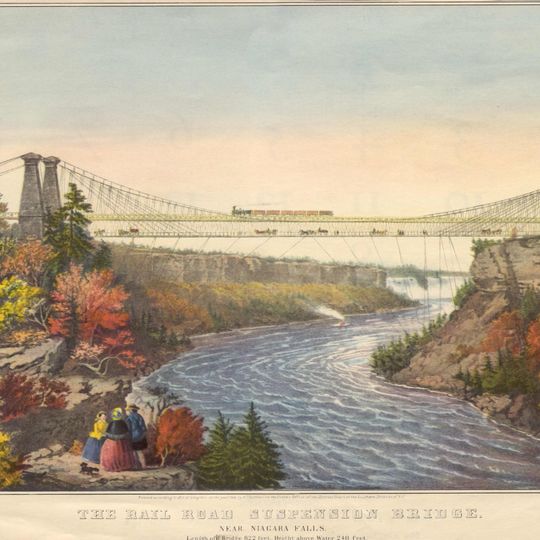
The Niagara Falls Suspension Bridge was a cable-stayed structure built across the gorge of the Niagara River between 1855 and 1897, pioneering railway use of this design. The span measured 251 meters and carried both trains and pedestrians, creating a direct link between the United States and Canada.
Designed by engineer John Augustus Roebling, the bridge opened in 1855 as a revolutionary achievement in demonstrating that suspension designs could safely support heavy rail traffic. Its success paved the way for later innovations in bridge engineering across North America.
The bridge served as a crossing point between nations, allowing people and goods to move freely between the United States and Canada. It represented the connection between two countries and the flow of commerce and people across the river.
The site today is accessible as a historical location where visitors can walk the grounds and view the Niagara gorge landscape. Interpretive markers and local information help explain the engineering approach that made this bridge significant.
The bridge facilitated journeys for people seeking freedom, serving as a safe passage toward Canada during the 19th century. Few realize that this engineering landmark also carried human hopes of escape and new beginnings.
The community of curious travelers
AroundUs brings together thousands of curated places, local tips, and hidden gems, enriched daily by 90,897 contributors worldwide.