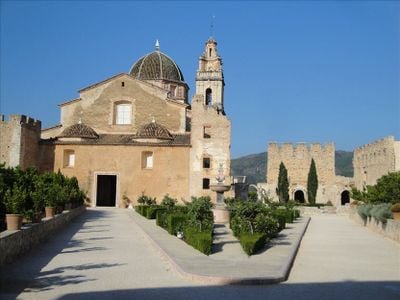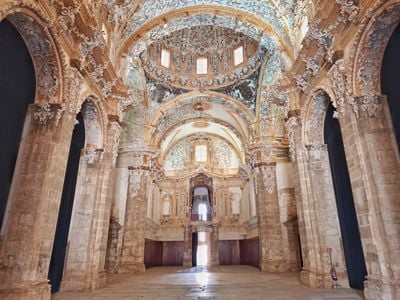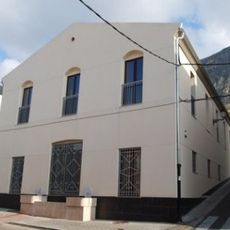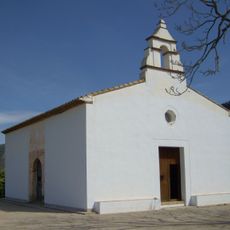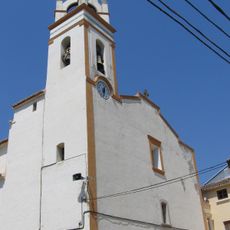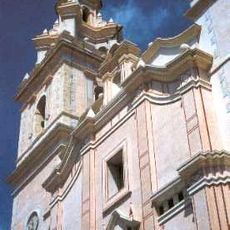
Monastery of Santa María de la Valldigna, 13th century Cistercian monastery in Simat de la Valldigna, Spain.
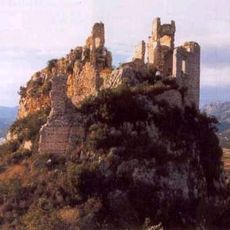
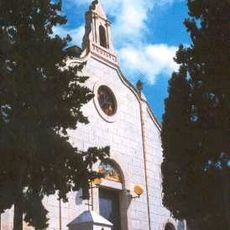
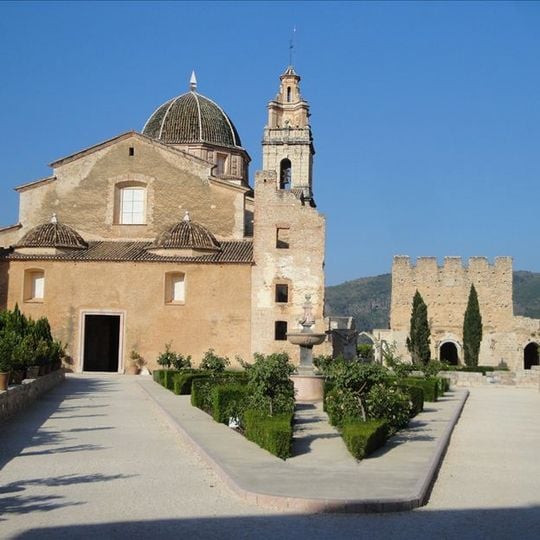
The Monastery of Santa María de la Valldigna is a Cistercian complex from the 13th century featuring a main church, cloister, refectory, and numerous auxiliary buildings arranged around courtyards. The Gothic stone structures remain largely intact, though portions show signs of renovation from later periods.
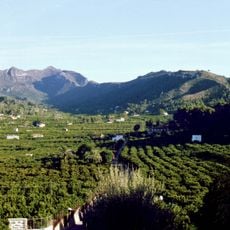
King James II of Aragon founded the monastery in 1298, granting the Cistercian monks authority over the entire Valldigna valley through a royal charter. This establishment marked the beginning of the site's development as a major religious and economic center.
The monastery shaped the social and economic life of the Valldigna valley for centuries, serving as a spiritual center for the surrounding communities. Its influence extended beyond religious practice to farming, craft production, and local commerce.
The complex is best explored on foot, as the various buildings and courtyards require walking through different sections. Wear comfortable shoes and allow sufficient time to see the full extent of the structures.
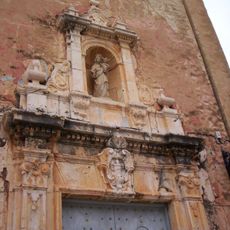
The complex was rebuilt after major earthquakes in the 14th and 17th centuries, creating a blend of Gothic and Baroque architectural styles throughout the structures. This layering of design periods is visible in various sections of the buildings.
The community of curious travelers
AroundUs brings together thousands of curated places, local tips, and hidden gems, enriched daily by 92,430 contributors worldwide.