Reserva Natural Especial del Malpaís de la Rasca, Protected nature reserve in southern Tenerife, Spain.
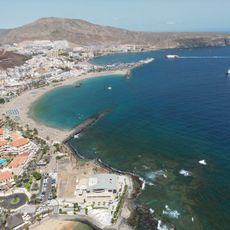
The Reserva Natural Especial del Malpaís de la Rasca is a 315.4-hectare protected area in Arona, southern Tenerife. It covers a volcanic malpaís of scoriaceous basalt flows that reach the sea along about three kilometres of coast, with three cones: Montaña Grande, 153 metres high and horseshoe-shaped, Montaña Aguzada and Montaña Pardela. The Faro Punta de Rasca, dating from 1898, stands within the reserve.
Guanche occupation left one of Tenerife's main archaeological sites: remains of huts, shell middens, pottery, lithic material and other structures. The reserve also holds ethnographic heritage such as barilla drying beds, abandoned terraces, caves, salt pans, goros and cisterns. The Faro Punta de Rasca lighthouse dates from 1898, and the archaeological zone is being processed for designation as a Bien de Interés Cultural.
Guanche presence in the reserve is considered one of the main archaeological treasures of Tenerife. Remains of huts, shell middens, pottery fragments and stone tools document the aboriginal habitat, alongside ethnographic elements such as barilla drying beds, abandoned terraces, caves, salt pans, goros and cisterns. Chronicles and archaeology record that a living child was thrown from Punta de Rasca at sunrise on the summer solstice, sometimes brought from as far as the menceyato of Anaga.
The reserve lies in the municipality of Arona, at the southern tip of Tenerife, and its lava flows run about three kilometres along the coast to the Punta de Rasca. There are no marked trails or car park: access is on foot over rough, open scoriaceous ground with no shade, and the protected area is exposed to coastal spray. Uncontrolled movement inside the reserve, shellfish gathering and grazing are listed as threats, so stay on established paths and carry water.
Guanche chronicles record that a living child was thrown from Punta de Rasca at sunrise on the summer solstice, sometimes brought from as far as the menceyato of Anaga. Archaeologists have confirmed the practice at the site. The reserve also holds the 1898 Faro Punta de Rasca and old barilla-drying works.
The community of curious travelers
AroundUs brings together thousands of curated places, local tips, and hidden gems, enriched daily by 94,984 contributors worldwide.