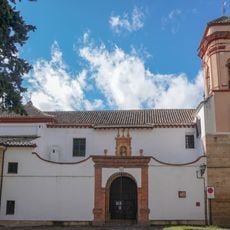
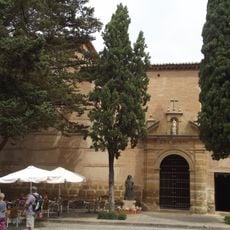
Puerta del Almocábar, Medieval gate in Ronda, Spain
The Almocábar Gate in Ronda is a fortified structure with three consecutive passages flanked by two semicircular towers. The complex was designed to defend and control access to the city.
The gate was built in the 13th century under Moorish rule and modified in the time of Charles V, who gave the complex a Renaissance style and added his imperial eagle coat of arms. On 20 May 1485 the Castilian troops commanded by the Marquis of Cádiz gathered on the Plaza de San Francisco outside the gate, ending Arab rule over Ronda and its mountains. It was restored in 1961.
The gate's name comes from an Arabic word referring to a cemetery that once lay outside the city walls. This historical name has survived in the gate's designation to the present day.
The gate is located near Plazuela Arquitecto Francisco Pons Sorolla and is easily accessible on foot. Visitors can walk through the area and view the structure from various angles.
The gate's name comes from the Arabic "Al-maqabir", meaning cemetery, because it stood beside the old Muslim burial ground outside the walls; the word "macabre" is traced to this same root. The two semicircular side towers housed the guard. The complex was restored in 1961.
The community of curious travelers
AroundUs brings together thousands of curated places, local tips, and hidden gems, enriched daily by 93,837 contributors worldwide.