Pico del Caballo, Mountain summit in Sierra Nevada, Spain
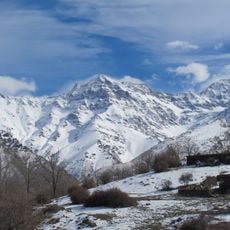
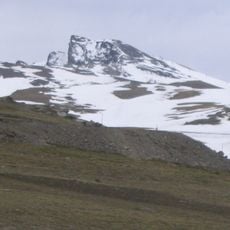
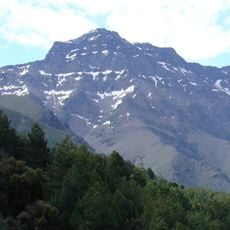
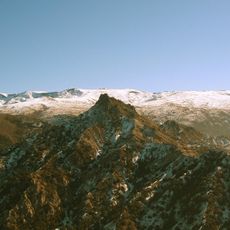
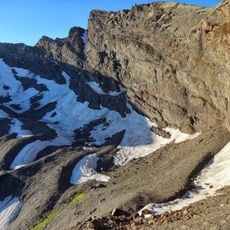
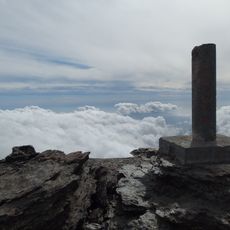
Pico del Caballo, also called Cerro del Caballo, is a 3,011-metre summit at the western end of the Sierra Nevada in Granada province. It is the westernmost and southernmost three-thousander of the Iberian Peninsula. Its rocks belong to the Nevadofilábride Complex, mainly mica schists, quartz schists and quartzites. A small perennial lagoon and a bivouac hut for eight people sit near the top.
The sources record no Moorish-era role for the peak itself. The documented history is twentieth-century: on the southwestern slope, beside a mountain path, lie the small foundations of a building linked to the reforestation and high-altitude forestry experiments carried out in the valley in the first half of the 20th century. From there a path descends a large stone field and, via the PR-A 34 trail, connects with Ventura, Tello and finally Lanjarón.
The peak's name, "Caballo" (horse), is the everyday name used by walkers from Lanjarón and Dúrcal, who reach it by the PR-A 34 trail via Tello and Ventura. On the summit stands a small year-round bivouac hut for eight people beside a small perennial lagoon, and the old Elorrieta forest house on Tajos de la Virgen serves as a rough shelter.
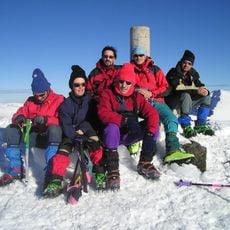
Winter ascents require crampons and ice axes, while summer visits demand carrying substantial water because natural sources are scarce on the mountain. Visitors should prepare for alpine conditions and rapidly changing weather patterns.
The summit holds a small perennial lagoon, and a free eight-person bivouac hut stands on the east side at 2,800 m. Southwest of the top, low foundations mark forest experiments carried out in the valley in the first half of the 20th century.
The community of curious travelers
AroundUs brings together thousands of curated places, local tips, and hidden gems, enriched daily by 93,523 contributors worldwide.