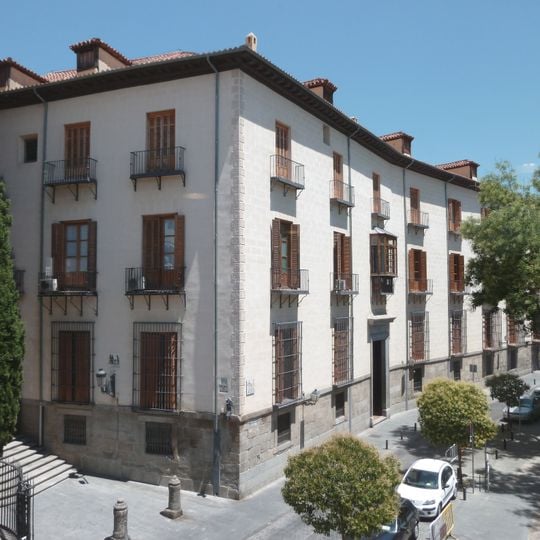
Archbishop's Palace, Madrid, Archbishop's palace in Madrid, Spain
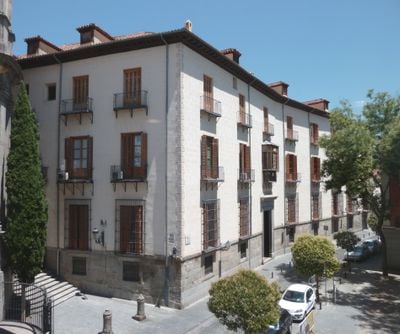
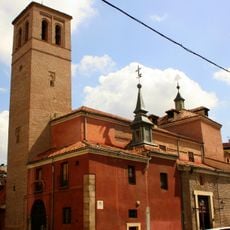
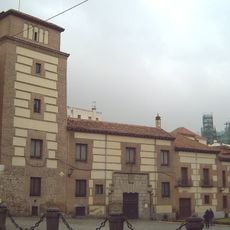
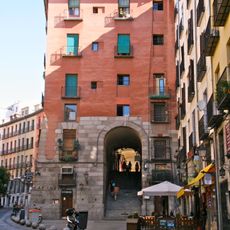
The Palacio Arzobispal occupies a triangular block in Madrid's historic centre. Its rendered facades rise three or four storeys above granite plinths, topped by dormered roofs; windows have dark wooden shutters and small wrought-iron balconies. The most artistic element is the doorway on the Panecillo passage, beside the Basílica Pontificia de San Miguel, with the eared mouldings typical of Madrid Baroque.
The palace was built in the second third of the 18th century, during the reign of Carlos III, when Madrid was not yet an independent diocese. It served as the Madrid residence of the Archbishop of Toledo, commissioned by Cardinal-Infante Luis Antonio de Borbón y Farnesio and Cardinal Francisco Antonio de Lorenzana. In 1885, with the creation of the Madrid-Alcalá diocese, it became the residence of Narciso Martínez Izquierdo, its first bishop, who lived there until his assassination in 1886. Until 1907 it housed the Conciliar Seminary of Madrid, and it was restored in 2004 by the City Council with funds from the Cajamadrid Foundation.
The building's access on Calle de la Pasa gave rise to a Madrid saying: "el que no pasa por la calle de la Pasa, no se casa" — whoever does not pass through Calle de la Pasa does not marry — referring to the church requirements for a Catholic wedding. The palace also keeps the diocesan archive and the offices of the ecclesiastical province.
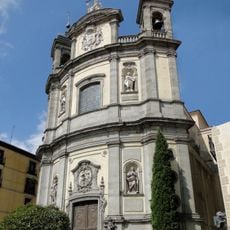
The palace occupies a triangular block bounded by the Plaza del Conde de Barajas, the streets of la Pasa and San Justo, the Panecillo passage and the Plaza de Puerta Cerrada. Its most valuable element, the doorway on the Panecillo passage beside the Basílica Pontificia de San Miguel, is best seen from that narrow lane. The site slopes, so the building rises three or four storeys depending on the side.
The most valuable element is the doorway on the Panecillo passage, beside the Pontifical Basilica of San Miguel, whose mouldings carry the orecchioni ("ears") typical of Madrid Baroque. A local saying held that whoever does not pass through the Calle de la Pasa, where the palace has its access, does not marry.
The community of curious travelers
AroundUs brings together thousands of curated places, local tips, and hidden gems, enriched daily by 94,774 contributors worldwide.