San Vicente of Oviedo, Romanesque monastery and church in Oviedo, Spain
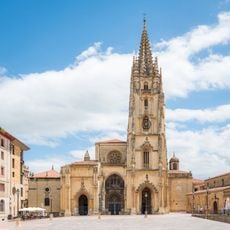
San Vicente of Oviedo is a church and monastery complex in the old town, Romanesque in style though reworked in the 11th and 12th centuries. Its 16th-century Gothic-Renaissance cloister, attributed to Juan de Badajoz "el Joven", has twenty vaulted arches on the lower floor and Plateresque columns with mascarons and medallions above. The cloister houses the Archaeological Museum of Asturias; the church of San Vicente remains the only part still in ecclesiastical hands.
The monastery's foundation is recorded in a charter dated 25 November 781, which describes how the monks Máximo and Fromestano had settled twenty years earlier, in 761, at a place called Oveto and founded a basilica in honour of Saint Vincent. This charter, known as the Pacto monástico de Oviedo, is considered the earliest document on the monarchy of the Kingdom of Asturias, though its veracity is debated because the monastery, also called Antealtares in the Middle Ages, is not mentioned again until 969. The first abbot, Oveco, is documented between 969 and 978, and the earliest reference to the Benedictine Rule dates from 1042. Rebuilt in the 11th and 12th centuries with royal and noble support, it was dissolved in 1836.
The monastery was also called Antealtares in the Middle Ages. Its cloister, built in the first third of the 16th century in Gothic-Renaissance style by Juan de Badajoz "the Younger", replaced a Romanesque predecessor. The upper floor, added in the mid-16th century, is Plateresque, with capitals and corbels carved with masks and medallions.
The building operates today as a museum open to visitors during regular hours. The collection spans multiple periods of regional history, allowing visitors to explore artifacts from different eras in a single location.
The Pacto monástico document created at the monastery's foundation is one of the oldest written records from Asturian history, offering insight into early medieval monastic life. This rare document reveals how monks organized their community and their interactions with surrounding settlements.
The community of curious travelers
AroundUs brings together thousands of curated places, local tips, and hidden gems, enriched daily by 94,512 contributors worldwide.