Monastery of San Pelayo, Benedictine convent in Oviedo, Spain
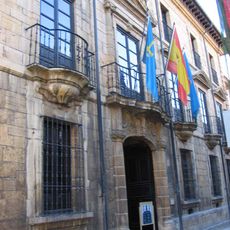
The Monastery of San Pelayo is a Benedictine monastery in Oviedo with a single-nave church built between 1592 and 1600, featuring three molded doors on its facade. The three-story cloister is supported by Tuscan columns and displays Gothic tracery details that echo the nearby Cathedral's design.
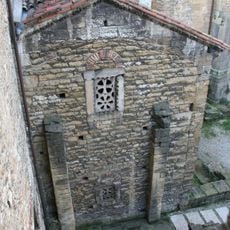
Founded by King Alfonso II of Asturias (r. 791–842) and first dedicated to John the Baptist, the monastery was rededicated to Saint Pelagius after receiving his relics in 994. Teresa Ansúrez, widow of Sancho I of León, is believed to have sponsored the church. Remodeled from 1590 onward, it lost most of its Romanesque elements.
The monastery is still a Benedictine convent for women. Its name comes from Pelagius, a boy from Albeos in Galicia who was held hostage in Córdoba and martyred on 26 June 925 for refusing to renounce his faith. His relics reached Oviedo in 994, and the community took his name.
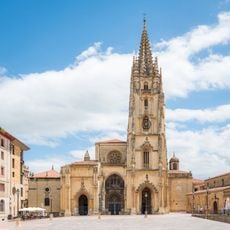
The monastery stands in Oviedo's pre-Romanesque quarter, beside the cathedral and San Tirso. The entrance on Calle del Águila leads to the headquarters of the Academy of the Asturian Language; until 2010 the same street gave access to the Historical Archive of Asturias. The complex is a closed Benedictine convent, so visits depend on the community.
The monastery's church was rebuilt in 1590 by Leonardo de la Cajiga, and its towers were added in 1650 by Melchor de Velasco Agüero. The Vicaría, begun in 1703, has a facade modelled on Baroque palaces and was designed by Fray Pedro de Cardeña. Romanesque remains of a cloister survive in the foundations.
The community of curious travelers
AroundUs brings together thousands of curated places, local tips, and hidden gems, enriched daily by 93,519 contributors worldwide.