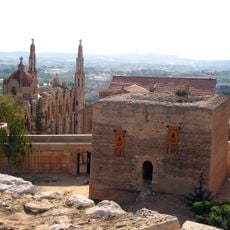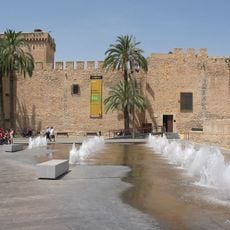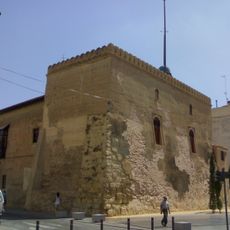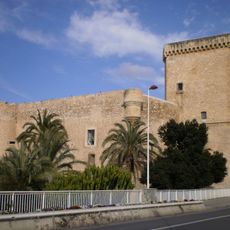
Castillo del Río, Medieval castle near Vinalopó River, Aspe, Spain
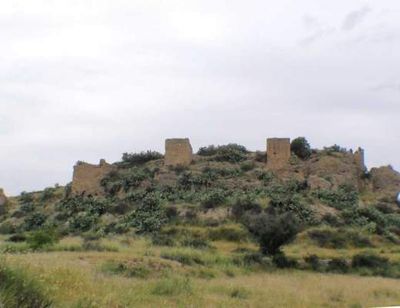
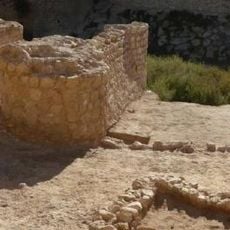
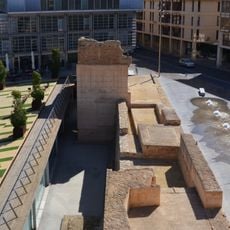
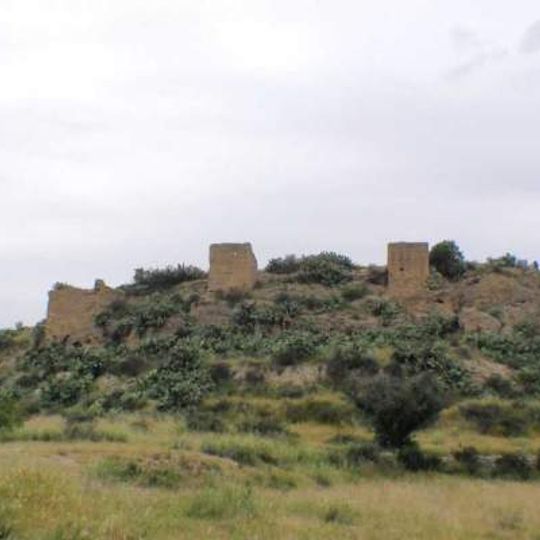
Castillo del Río is a ruined walled enclosure on the Tabayá hill near Aspe, close to where the Tarafa meets the Vinalopó. It has no keep; twelve towers stood along its walls, of which the bases of several square towers and stretches of walling remain. The walls rest on masonry up to 1.5 m, then rammed earth with rounded stones.
The castle was built in the first third of the 12th century, of Almoravid origin, and was the first settlement nucleus of Aspe, known as "Aspe el Viejo". It was abandoned in the 13th century. The site had earlier been occupied by Iberians, who called it Aspis, and was later left unpopulated.
The site's name, Aspe el Viejo, recalls that this was the first settlement of Aspe, settled from the early 12th century by a community of refugee farmers. Excavations yielded abundant 12th- and early 13th-century pottery and metalwork, but no coins. The walls are masonry at the base, with rammed earth and rounded stones above 1.5 m.
The ruins stand on the Tabayá mound about 3 km from Aspe's town centre, near where the Tarafa meets the Vinalopó. The site is reached by the road linking Aspe with the Madrid–Alicante motorway, so access by car is straightforward. From the enclosure you can make out the Mola castle at Novelda and the Monforte del Cid tower.
Archaeological excavations at the site uncovered one of only two Arabic plows ever discovered in Spain. The artifact is now displayed in the Provincial Archaeological Museum in Alicante.
The community of curious travelers
AroundUs brings together thousands of curated places, local tips, and hidden gems, enriched daily by 94,976 contributors worldwide.