Monastery of Santa María la Real in Aguilar de Campoo, Romanesque monastery in Aguilar de Campoo, Spain
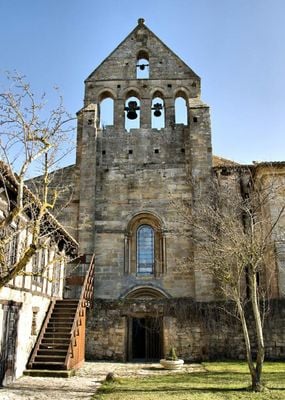
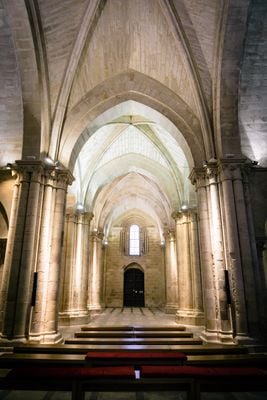
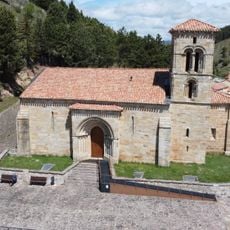
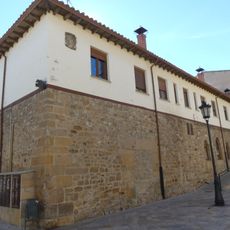
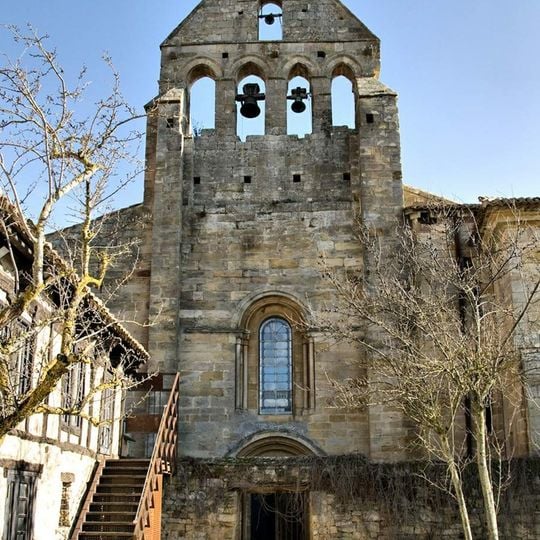
The Monastery of Santa María la Real is a Premonstratensian abbey in Aguilar de Campoo, built between the 12th and 13th centuries in a transitional Romanesque-Gothic style. Its church, consecrated in 1222, has a nave with pointed arches and ribbed vaulting supported by clustered columns with carved capitals. The stone facade includes a bell gable with three arched openings and a round-arched doorway.
The monastery was founded in the 9th century and gained renewed prominence in 1169 when King Alfonso VIII transferred it to the Premonstratensian Order. This change marked a turning point that shaped the community for centuries to come.
The monastery's name, Santa María la Real, signals its royal link to King Alfonso VIII of Castile, who handed it to the Premonstratensian order in 1169. In 1871 most of the cloister capitals, carved around 1200, were taken to the National Archaeological Museum in Madrid, so the arcades visitors walk today no longer hold the original carvings.
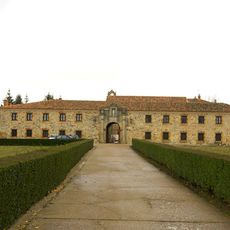
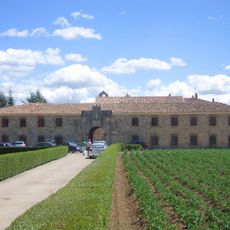
The site now hosts a secondary school, a UNED center, and museums, so visits are limited by scheduled activities. Plan your visit in advance and respect the areas where classes and events take place.
In 1871 most of the cloister capitals, carved around 1200, were taken to the National Archaeological Museum in Madrid; the monastery had stood empty since the 1835–1836 Mendizábal confiscations and found no buyer. Locals reportedly carried off sacks of books and documents to fuel winter stoves, and some may still survive in private houses in Aguilar de Campoo.
The community of curious travelers
AroundUs brings together thousands of curated places, local tips, and hidden gems, enriched daily by 95,032 contributors worldwide.