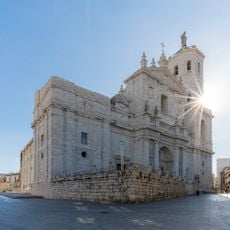
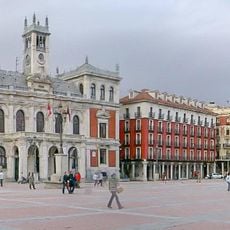
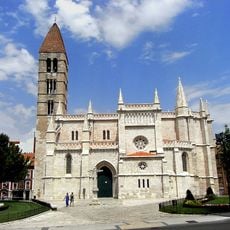
Walls of Valladolid, Medieval defensive walls in Valladolid, Spain.
The Walls of Valladolid are a stone fortification system running through the city center with well-preserved sections featuring gates and watchtowers from different periods of construction. These structures show how the city's defense evolved across several centuries through different building phases.
Construction of the walls began in the 12th century to protect Valladolid from attacks, and they were enlarged and repaired in later centuries as threats changed. These repeated modifications show how the city adapted its defenses in response to different conflicts throughout the Middle Ages.
The wall's name in local usage is simply la cerca, and its gates served fiscal and sanitary roles: they closed during epidemics to keep the sick out. The chronicler Juan Antolínez de Burgos, writing in the 17th century, described an oval wall of about 1.5 km starting from the alcázar at the confluence of the Esgueva and Pisuerga rivers.
The documented wall dates from the late 12th and early 13th centuries, when Valladolid was a frontier city between León and Castile. Its layout is known from the 17th-century account of Juan Antolínez de Burgos, who described an oval perimeter of about 1.5 km starting from the alcázar at the confluence of the Esgueva and Pisuerga. Look for the old castle site and the line of the former gates.
Several preserved gates within the wall system once served as toll collection points where merchants had to pay duties on their goods before entering the city. These gates were therefore more than defensive structures, also functioning as economic checkpoints that shaped medieval urban life.
The community of curious travelers
AroundUs brings together thousands of curated places, local tips, and hidden gems, enriched daily by 94,795 contributors worldwide.