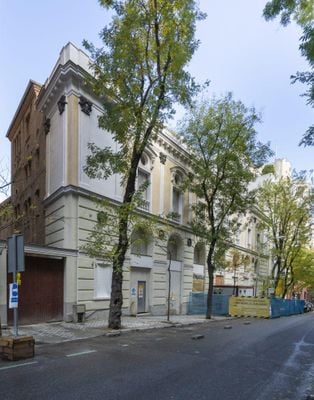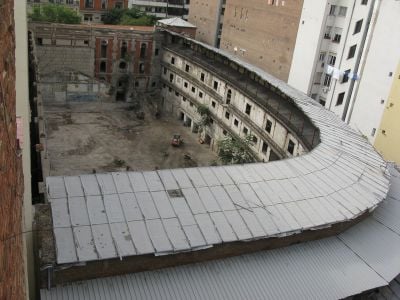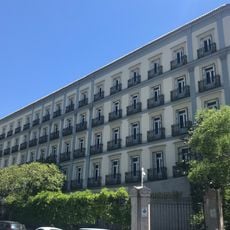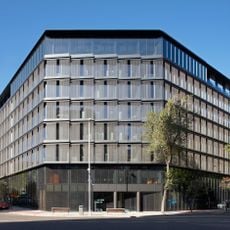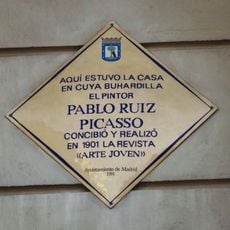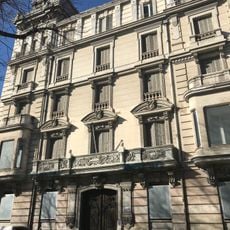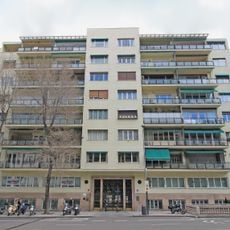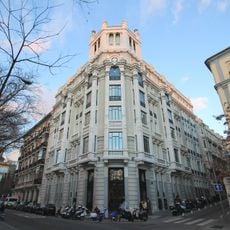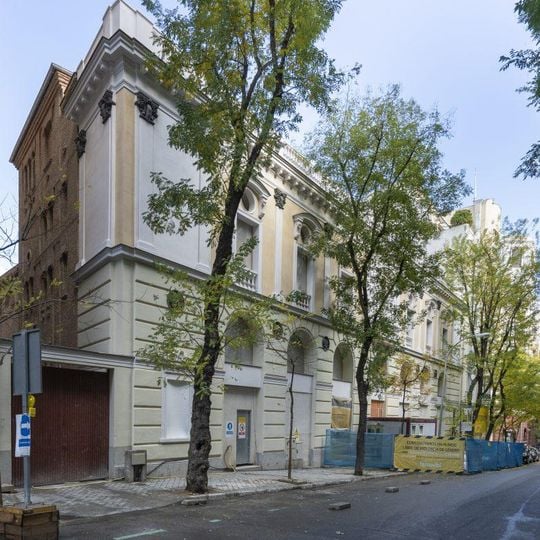
Beti Jai fronton, Historic fronton in Chamberí district, Madrid, Spain
Beti Jai is a fronton for Basque pelota in the Chamberí neighborhood of Madrid. The elliptical structure shows curved side facades with cast-iron columns and a spectator grandstand above a 67-meter (220-foot) playing court.
Designed by architect Joaquín Rucoba for promoter José Arana, the fronton opened in 1894 and hosted its last game in 1919. Leonardo Torres Quevedo used it between 1904 and 1906 as a centre for testing aeronautical devices. During the Civil War it became a police station, and under early Francoism it served as a rehearsal site for Falange-linked bands. Citroën later used it as a repair workshop, and it was declared a Bien de Interés Cultural in 2011.
The name Beti Jai means "always party" or "always festival" in Basque, not "always forward". The venue opened in 1894 as the fourth Basque pelota fronton in Madrid, following Jai Alai, Fiesta Alegre and Euskal Jai. Other frontons with the same name existed in Barcelona, San Sebastián and Logroño; the San Sebastián one later became a circus theatre and burned down in 1913.
The fronton site sits on Marqués de Riscal Street 7 and opens on weekends from July through October. Guided visits run from 10 AM to 2 PM and allow access to the grandstand and playing court.
Traces of original frescoes remain visible on the roof surfaces. This fronton is the last surviving 19th-century venue for Basque pelota in Madrid.
The community of curious travelers
AroundUs brings together thousands of curated places, local tips, and hidden gems, enriched daily by 93,689 contributors worldwide.