Roman Theatre of Italica, Roman theatre in Santiponce, Spain
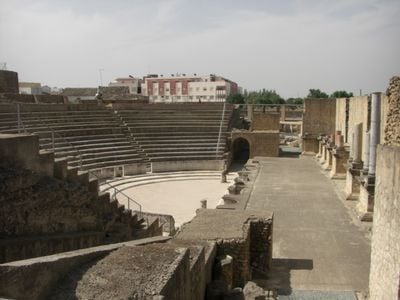
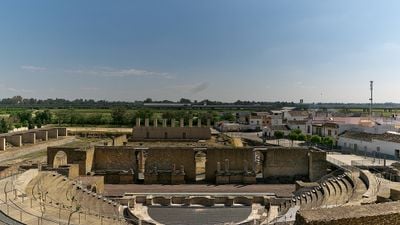
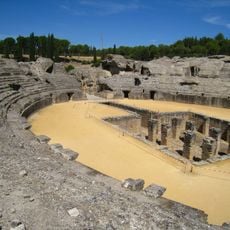
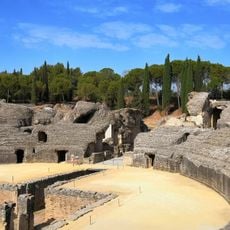
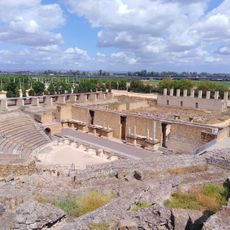
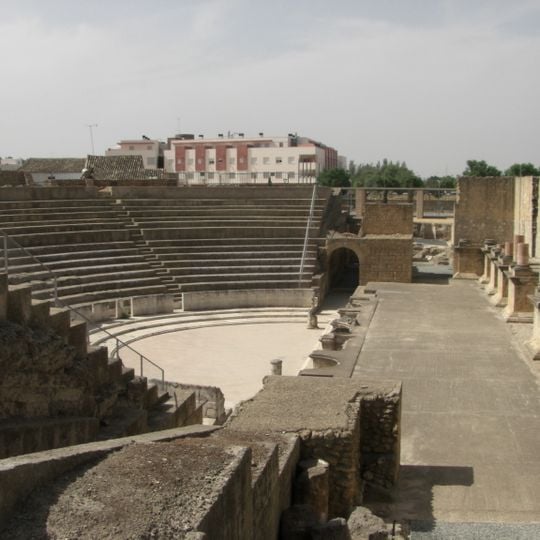
The Roman Theatre of Italica stands on the Cerro de San Antonio in Santiponce, built into the hillside above the Baetis. Its cavea is about 71 m in diameter, with a semicircular orchestra of dark grey slabs, tiered seating divided by stepped aisles, and a tall tan stone wall pierced by three arched doorways behind the stage area. Yellowish and grey limestone, concrete, brick and white and polychrome marble were used.
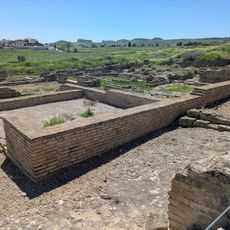
Built between the 1st century BC and the 1st century AD on the Cerro de San Antonio, the theatre is the oldest known civil work in Italica after the probable curia remains found in 1984. Its use lasted until at least the 5th century, when it fell into disuse and was filled by Guadalquivir floods. Excavated in 1970–1973 and restored from the 1980s, it now hosts the Festival de Teatro de Itálica.
The seating sections of the theatre were divided according to social rank, so the closer you sat to the stage, the higher your status in society. Visitors today can still read this social order in the stone tiers that remain.
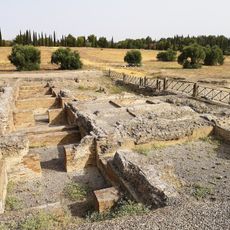
The site has uneven ground and many stone steps throughout, so sturdy footwear makes the visit more comfortable. The theatre is fully open to the sky, so going early in the morning is a good idea during hot months.
Behind the stage stood a portico facing the Guadalquivir, where inscribed pedestals from different periods were found. Hadrian had a small sanctuary to Isis built there between 117 and 137, with foot-sole stelae like those in the amphitheatre's Nemeseion.
The community of curious travelers
AroundUs brings together thousands of curated places, local tips, and hidden gems, enriched daily by 94,864 contributors worldwide.