Castle of Blanca, castillo en España
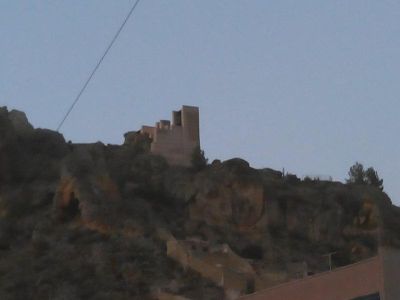
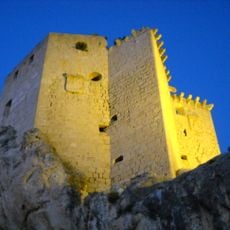
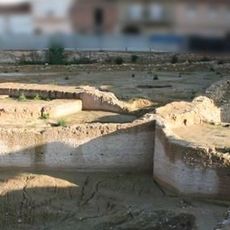
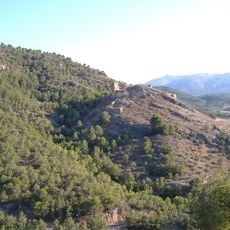
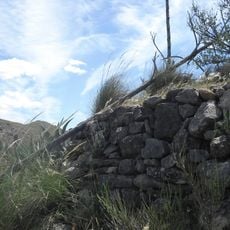
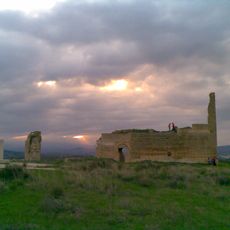
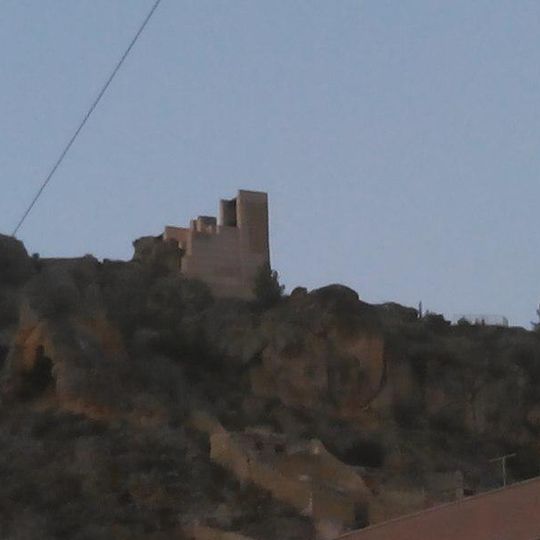
The Castle of Blanca is a 12th-century fortress on a hill above the town of Blanca, in Murcia. Of the original building, three towers joined by two curtain walls remain, made of rammed earth with lime mortar and stone (tapial). The towers show the putlog holes where wooden beams were inserted during construction, and according to historian Serafín Alonso they reached 12 metres in height.
The castle dates from the 12th century and its construction is attributed to the Murcian emir Muhammad ibn Mardanis, the Wolf King. As a ḥiṣn it overlooked the alquería of Blanca and the route between Ḥiṣn Mulīna and Madinat Siyāsa through the Ricote Valley. In the 13th century it was enlarged during Ibn Hud's rebellion against the Almohads. In 1281 it passed to the Order of Santiago, was briefly granted to Bernardo de Sarriá under Jaime II of Aragon, and declined after 1609.
The name Blanca reflects the region's shifting history between Muslim and Christian rulers. Today, the townspeople regard the ruins as part of their local heritage, connecting them to centuries when the fortress protected the valley and served as a symbol of authority over the land.
The site sits on a hill outside town and is reachable on foot, with good views of the surrounding countryside. Informational signs at the location help visitors understand the ruins and their historical importance.
In 1448 the fortress was besieged and captured during a conflict between two nobles, largely because defenders inside ran out of water and could not hold out any longer. This event shows how everyday challenges like water supply sometimes mattered more than wall strength in deciding the outcome of sieges.
The community of curious travelers
AroundUs brings together thousands of curated places, local tips, and hidden gems, enriched daily by 95,440 contributors worldwide.