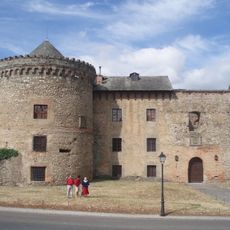
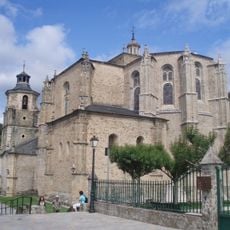
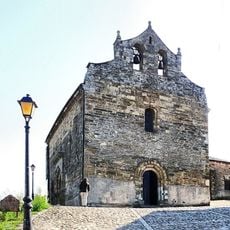
Castillo de Sarracín, Medieval castle in Vega de Valcarce, Spain.
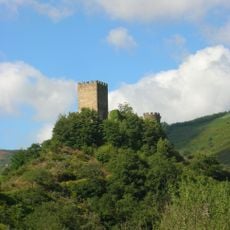
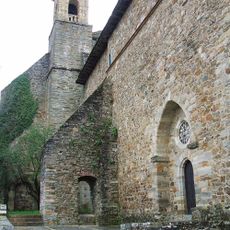
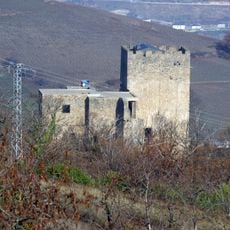
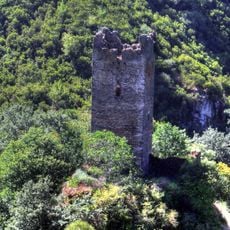
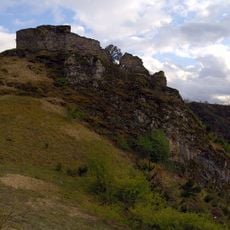
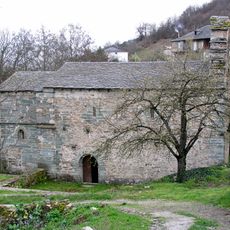
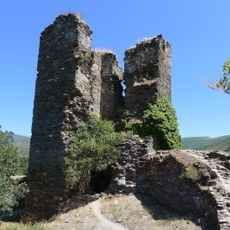
Castillo de Sarracín is a stone fortress positioned on Mount Vilela, featuring an arched entrance and multiple chambers within its defensive walls. The structure overlooks the Bierzo region and displays the typical medieval layout designed to control passage through the valley.
The first castle was reportedly destroyed by Musa, governor of the Umayyad Caliphate, in 714. Rebuilding began at the end of the 9th century after the Reconquista. One theory attributes its construction around 850 to Count Gatón for his son Sarracino Gatónez, lord of Sarracín; another holds that Sarracino himself built it between 852 and 885. It was declared a Bien de Interés Cultural on 22 April 1949.
The castle's name is linked to Sarracino Gatónez, son of Count Gatón and lord of Sarracín, count of Bierzo and Astorga, who according to one tradition gave the fortress its name around 850. Local lore also recalls the legend of the five stakes, a tale of a long siege that visitors may hear from people in the valley.
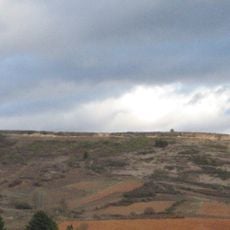
The ruins stand on a rocky peak on the slope of Monte de la Vilela (Villaus), above Vega de Valcarce. Emergency works in May 2014 shored up walls at risk of collapse and cleared rubble from the inner enclosure, restoring its original levels. The site is a Bien de Interés Cultural since 22 April 1949 and is being restored by the Junta de Castilla y León.
The castle appears as item no. 1911 in the Retrospective Inventory of Associated Components that Spain submitted to UNESCO in 2015, when the Way of Saint James in Spain was extended as a World Heritage listing. The Monte de la Vilela, the slope below the fortress, is named in the Codex Calixtinus.
The community of curious travelers
AroundUs brings together thousands of curated places, local tips, and hidden gems, enriched daily by 94,461 contributors worldwide.