Castelo de Doiras, Medieval castle in Vilarello, Spain
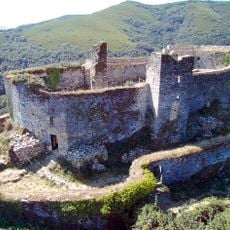
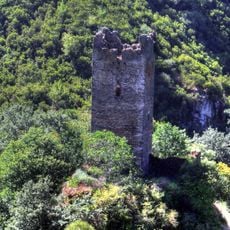
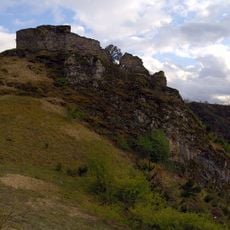
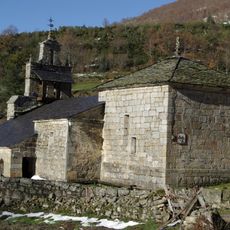
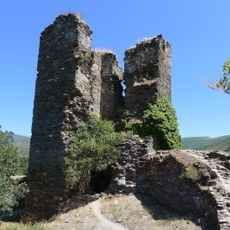
Castelo de Doiras is a medieval fortress on a slate outcrop above the Cancelada river in Vilarello, Cervantes. Its rectangular enclosure, about 25 by 21 metres, has slate masonry walls 1.5 metres thick and 8 metres high, uneven with the terrain. A rectangular keep 10 by 8 metres rises 14 metres with 2-metre walls; inside, halls retain badly damaged frescoes. A 4-metre wooden door opens to the parade ground, and a round-arched door leads to the inner courtyard.
Built in the second half of the 15th century, the castle guarded the entry into Galicia of the Camino de Santiago, which ran along the old Roman road XIX linking Astorga and Lugo. Its promoter was Diego Pérez-Osorio y Guzmán, first Lord of Cervantes and Villacid, of the Leonese House of Osorio. The Galician Wikipedia instead names Paio Guindós as founder. The title of Lord of Cervantes passed to the Count of Grajal de Campos and remained with the Duque de Sexto until 1909. In 2024 the Cervantes council bought the castle with help from the Deputación de Lugo.
The castle is also called Castelo da Ferrería or Torre da Ferreiría because it stands near the Ferrería de Fonquente. Its name may come from the Celtic root dwr, dur, meaning water. Two legends are set here: the maiden Aldara, turned into a hind and killed by her own brother, and a son cursed by his father to become a werewolf; Leandro Carré Alvarellos recorded the first in Las leyendas tradicionales gallegas.
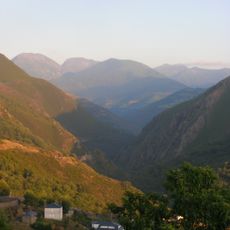
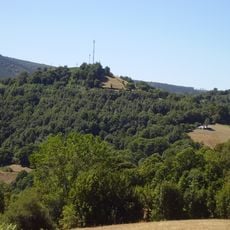
The castle stands on a rock above the Cancelada river, near the Fonquente forge, at about 700 m altitude; the climb is on foot and the ground uneven. The interior halls are in poor condition, with rubble and accumulated rubbish in places, so visiting is limited to the visible structures and the enclosure. The entrance is a wooden door about four metres high opening onto the parade ground.
The castle is also known as Castelo da Ferrería because it stands close to the Ferrería de Fonquente, an old ironworks by the Cancelada river. Its keep rises to 14 metres, while the curtain walls reach 8 metres, built of slate masonry one and a half metres thick.
The community of curious travelers
AroundUs brings together thousands of curated places, local tips, and hidden gems, enriched daily by 93,468 contributors worldwide.