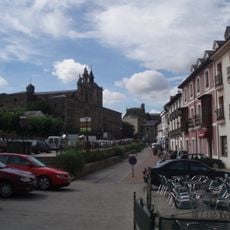
Iglesia de Santiago Apóstol, Romanesque church in Villafranca del Bierzo, Spain
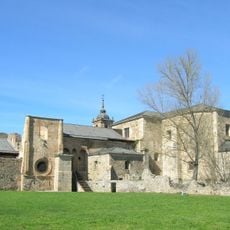
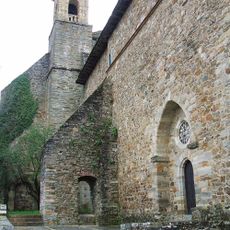
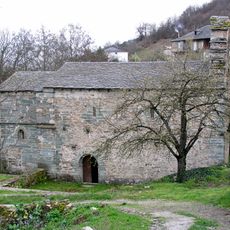
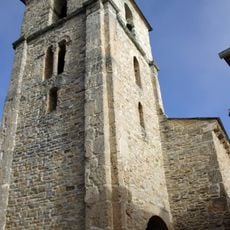
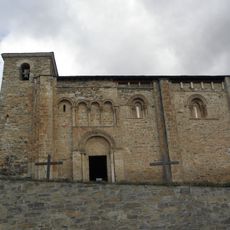
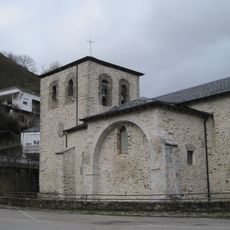
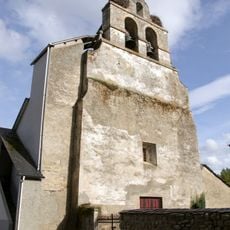
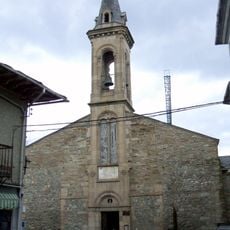
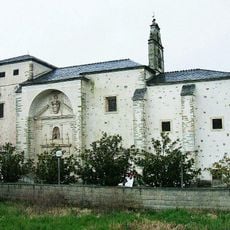
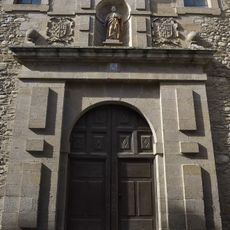
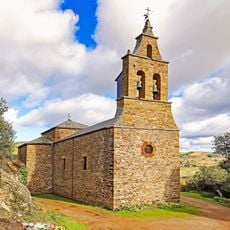
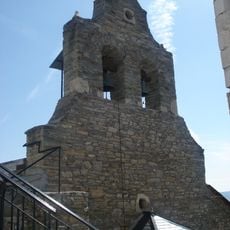
The Iglesia de Santiago Apóstol has a single rectangular nave under a barrel vault and a semicircular apse with three windows framed by Romanesque taqueado jaqués chequered stonework. A Baroque chapel and a lateral sacristy were added in the 18th century. The west facade has a plain round-arched portal, a window above it and a two-bell gable bell tower.
The church is documented in 1186, when Bishop Fernando of Astorga established it; its Romanesque apse with three windows in the taqueado jaqués technique dates from that period. In the 18th century a Baroque side chapel and sacristy were added. In 2015 the church was listed as component 1883 in the UNESCO retrospective inventory of the Camino de Santiago.
The Puerta del Perdón opens only in Jacobean Holy Years, granting the Jubilee to pilgrims whose illness prevents them from reaching Santiago de Compostela. Tradition attributes this privilege to Pope Calixtus III and Urban II around 1122. The door was walled up during the 19th and 20th centuries because of plagues and to protect the church from raids.
The west facade's plain round-arched portal is the usual entrance; the Puerta del Perdón opens only in Jacobean Holy Years. The church stands in Villafranca del Bierzo on the Camino Francés, and the door was walled up in the 19th and 20th centuries because of plagues and to protect the temple from assault.
The Puerta del Perdón, opened only in Jacobean Holy Years, grants the Jubilee to pilgrims whose illness prevents them from reaching Santiago de Compostela. Tradition attributes the privilege to Pope Calixtus III and Urban II around 1122. The doorway was walled up during the 19th and 20th centuries because of plagues and to protect the church from raids.
The community of curious travelers
AroundUs brings together thousands of curated places, local tips, and hidden gems, enriched daily by 93,470 contributors worldwide.