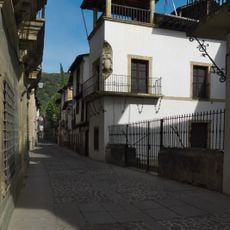
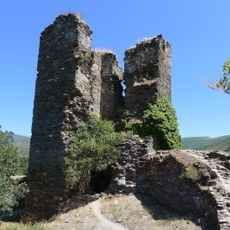
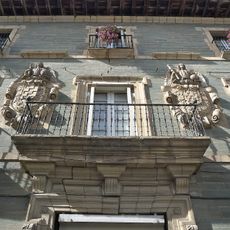
Castle of Villafranca del Bierzo, Medieval castle in Villafranca del Bierzo, Spain.
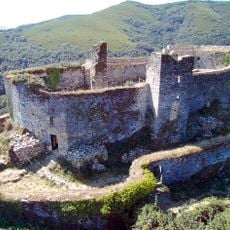
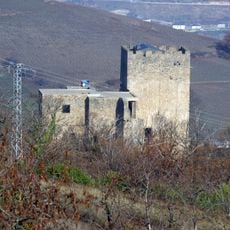
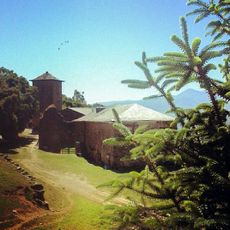
The Castle of Villafranca del Bierzo is a Renaissance residence with a square footprint and four round corner towers built in stone, rising across several levels. A central courtyard sits within its walls, organizing the interior space and creating the heart of the structure.
The castle stands on an earlier fortress called "Fuerza", destroyed in 1507 by the illegitimate son of Pedro Álvarez Osorio, first Count of Lemos. In 1515 Queen Joanna I of Castile granted Pedro Álvarez de Toledo y Zúñiga, husband of María Osorio Pimentel, second Marchioness of Villafranca, permission to rebuild it as the marquessate's residence. From 1600 the fifth marquis, Pedro Álvarez de Toledo Osorio, turned the feudal building into an Italianate palace. It was sacked in 1809 by British troops marching to Lugo and again in 1815 and 1819 by French forces.
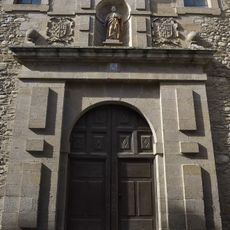
The castle's name recalls the Marquesses of Villafranca del Bierzo, who used it as their residence from the 16th century. The main brick door carries the heraldic shield of Fadrique Álvarez de Toledo Osorio, third marquess. Since 2015 the palace appears as component no. 1869 in the UNESCO retrospective inventory of the Camino de Santiago.
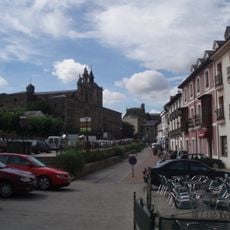
The castle is privately owned by the heirs of pianist María Manuela Caro y Carvajal (1932–2017) and is not open as a regular museum. Visits to the interior require prior permission; the exterior, with its four round corner towers and slate-roofed keep, can be seen from the surrounding streets.
The castle was declared a Bien de Interés Cultural on 22 April 1949. Since 2015 it has appeared as item no. 1869, the palace of the Marquis of Villafranca, in the retrospective inventory of associated components submitted with the UNESCO extension of the Camino de Santiago in Spain.
The community of curious travelers
AroundUs brings together thousands of curated places, local tips, and hidden gems, enriched daily by 94,297 contributors worldwide.