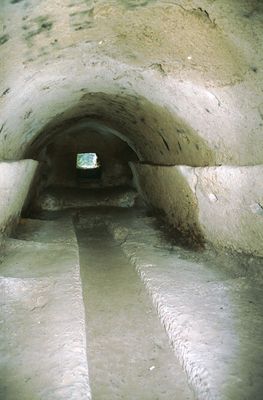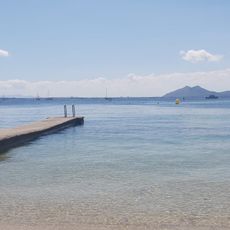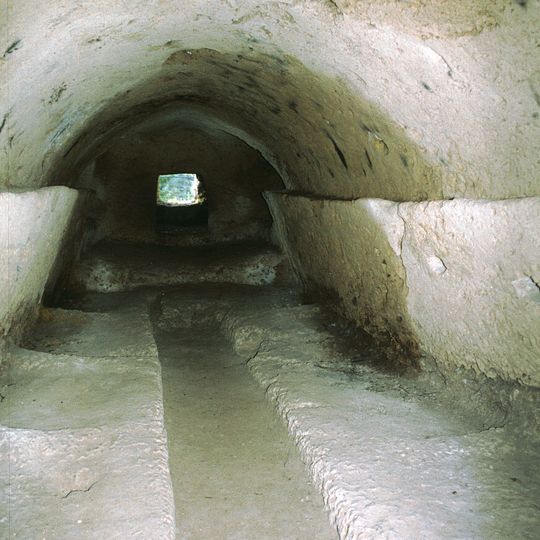
Hypogeum of Cala Sant Vicenç, set of caves from the Bronze Age in Pollença, Spain
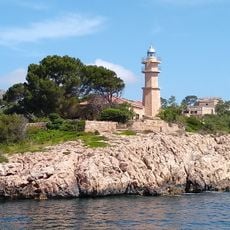
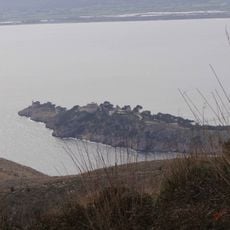
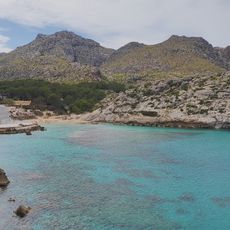
The Hypogeum of Cala Sant Vicenç is a group of Bronze Age caves carved into rock along a rocky coastal area near Pollença. Eight caves are accessible to visitors today, though archaeological evidence shows about fifteen once existed, with some bearing modern modifications such as openings and additions at the entrance.
The caves were created between 1700 and 1500 BC during the Bronze Age and rank among the earliest known places of human activity on Mallorca. Archaeologists, including W. Hemp, found evidence of how people used these spaces for shelter, rituals, or storage in this rocky coastal region.
The caves take their name from the nearby bay of Sant Vicenç, reflecting the ancient inhabitants' close connection to the coastal location. Visitors today can experience how early people adapted their daily life and rituals to this rocky, seaside environment.
The site is easily reached by a short walk from the nearby coast, and there is no entrance fee to visit. Comfortable shoes are recommended since the paths are uneven, and a flashlight helps when exploring the dark cave spaces, while the underground temperature stays cool year-round.
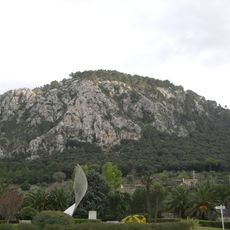
A modern sculpture resembling a flat stone figure stands at the entrance, bridging ancient history with contemporary creativity. This unexpected element shows how the community today honors the heritage and invites visitors to explore the connection between past and present.
The community of curious travelers
AroundUs brings together thousands of curated places, local tips, and hidden gems, enriched daily by 92,532 contributors worldwide.