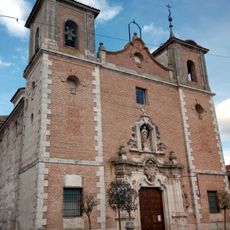
Monastery of Santa María de Palazuelos, 13th-century Cistercian monastery in Corcos del Valle, Spain.
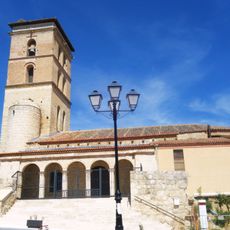
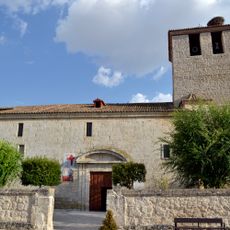
The Monastery of Santa María de Palazuelos is a ruined Cistercian monastery on the right bank of the Pisuerga, between Corcos del Valle and Cabezón de Pisuerga. Only the church building survives, consolidated after the 1998–1999 emergency repairs. It is a Transitional Romanesque-Gothic work, with a nave and aisles; the south nave pier and the original bell gable collapsed before those works.
The monastery was founded in the early 13th century and shifted from a Benedictine community to a Cistercian abbey within a few decades of its founding. It was suppressed in the 19th century during the confiscation of church properties in Spain, which led to the decline of most of its buildings.
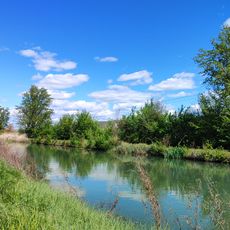
The monastery became known as the "Head of the Cistercians in Castile", a title reflecting its standing among Cistercian houses of the kingdom. Its monks farmed the lands around the Pisuerga: wheat, barley and rye, vines, vegetables and fruit trees, with meadows and woods kept for grazing and fishing rights in the river. The name Palazuelos appears in documents as "villam Palaciolis ad Pisorica ripas", the villa on the banks of the Pisuerga.
The site is in Corcos, a small village in the province of Valladolid, and is most easily reached by car. A visit around midday, when light enters the church directly, gives a clearer view of the carved stone details inside.
The monastery's origins lie at San Andrés de Valbení, a Benedictine house documented from 1063 on the left bank of the Pisuerga, 3.5 km from San Martín de Valvení. In 1165 Alfonso VIII handed it to the Leonese knight Diego Martínez to restore it, and by 1175 it was an independent Cistercian monastery. The old site is now a farm where traces of that first monastery can still be seen.
The community of curious travelers
AroundUs brings together thousands of curated places, local tips, and hidden gems, enriched daily by 93,785 contributors worldwide.