Puente de Cabezón de Pisuerga, Stone arch bridge in Cabezón de Pisuerga, Castile and León, Spain
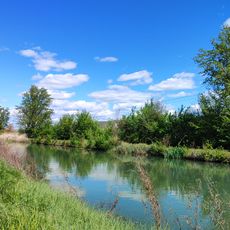
The Puente de Cabezón de Pisuerga is a stone arch bridge spanning the Pisuerga River with nine arches and triangular cutwaters positioned between its piers. The structure carries the VA-113 road today and links different sections of Cabezón de Pisuerga municipality.
The bridge stands on Roman foundations that carried the Asturica Augusta–Clunia road over the Pisuerga. Sancho IV gave it to his physician Nicolás, and María de Molina later transferred it to the Huelgas Reales convent, which collected a toll. In 1495 the Catholic Monarchs ordered repairs after an arch began to collapse; after the first pier fell in 1582, Francisco del Río and Juan de Nates rebuilt it with contributions from towns within 20 leagues.
The bridge was donated by King Sancho IV to his physician Nicolás and later passed by Queen María de Molina to the Monastery of Las Huelgas Reales in Valladolid, whose nuns collected a pontazgo, or bridge toll, from those crossing it.
The bridge is accessible via the paved road it carries and receives daily traffic. Visitors can walk across it easily and view the structure from different riverbank angles.
In 1812, during the Peninsular War, the third arch counting from the left bank was blown up to halt French troops advancing on Valladolid; it was not rebuilt until 1852. A 1999 tractor collision also dislodged stones, repaired at a cost of 700,000 pesetas.
The community of curious travelers
AroundUs brings together thousands of curated places, local tips, and hidden gems, enriched daily by 95,043 contributors worldwide.