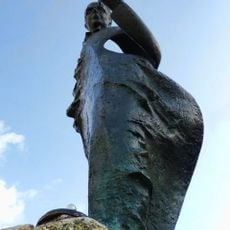
Old town of Pontevedra, Historic centre in Pontevedra, Spain
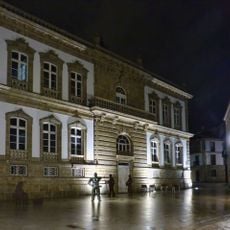
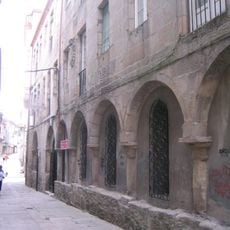
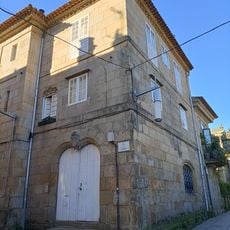
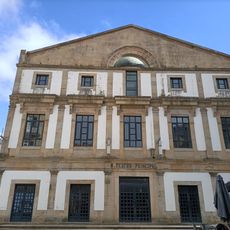
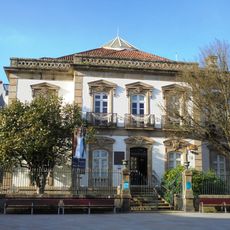
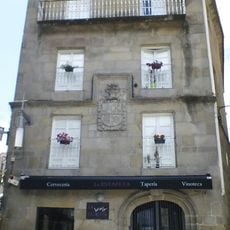
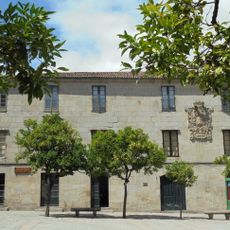
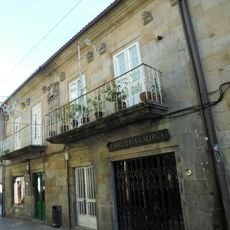
The old town of Pontevedra is a historic district whose plan follows a fishbone layout: a central axis along Sarmiento and Isabel II streets, with secondary streets branching off. Two hills anchor it, the Basilica of Saint Mary Major to the west and the Convent of San Francis to the east. Between them, squares of regular proportions, such as A Ferrería and A Leña, are lined with noble houses bearing stone coats of arms.
The population gathered around the old Roman bridge from the 9th century, and in 1169 Ferdinand II of León granted Pontevedra town status, prompting construction of the Burgo Bridge. A walled enclosure grew in three stages from the high ground by Santa María A Maior, its first plan laid out on three parallel streets. In 1452 John II of Castile made it the loading and unloading port of Galicia, and the final wall was finished in 1480.
The Basilica of Saint Mary Major was built in the 16th century with funding from the Seamen's Guild, whose economic power is still visible in the facade. The guild's influence shaped the town's identity, and the basilica remains the focal point of the old town's western hill.
The old town was pedestrianised in 1999, so it is explored on foot; its bounds are Sierra, Arzobispo Malvar, Michelena and Cobián Roffignac streets. The main axis runs along Sarmiento and Isabel II streets, with the Calle Real crossing north to south. The Casto Sampedro gardens by the former Convent of Saint Francis, with the Renaissance fountain of La Herrería, are the largest green space inside the walls.
The Church of the Pilgrim Virgin was built in 1792 near the line of the old wall, and its floor plan is shaped like a scallop shell, the emblem of the Camino de Santiago. The shell form is best read from the square in front of the building, where the two curved arms of the plan meet at the entrance.
The community of curious travelers
AroundUs brings together thousands of curated places, local tips, and hidden gems, enriched daily by 94,464 contributors worldwide.