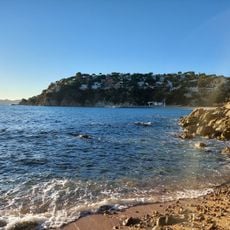
Cala Morisca, Golden sand beach near Tossa de Mar, Spain.
Cala Morisca is a small cove on the Costa Brava coast with golden sand mixed with pebbles along the shoreline. The water is clear and the beach sits in a natural alcove formed by steep rocky cliffs.
In 1988, seventeen tonnes of hashish were found in two hiding places near the cove. Urbanisation plans for the surrounding land date back to at least 1997, when the Tossa town council envisaged 143 chalets; a project revived in 2019 was halted when the landscape around the cove gained permanent protection in 2021.
The cove lies on the municipal boundary between Lloret de Mar and Tossa de Mar, and its name comes from the Turó de la Morisca, the 134-metre hill above it that belongs to the Cadiretes massif. The beach is used for nudism, and the surrounding land was definitively protected in 2021 after repeated development plans, including a 1997 proposal for 143 chalets.
The location is accessible via a hiking path through pine forest with no beach bars or restaurants nearby. Visitors should bring their own water and snacks since facilities are minimal or nonexistent.
The cove is enclosed by dense pine forest that reaches to the cliff edges and creates a natural frame. This vegetation is typical of the Mediterranean and provides shade and a fresh scent on warm days.
The community of curious travelers
AroundUs brings together thousands of curated places, local tips, and hidden gems, enriched daily by 94,884 contributors worldwide.