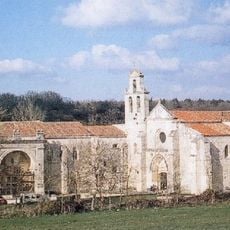
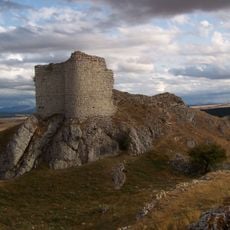
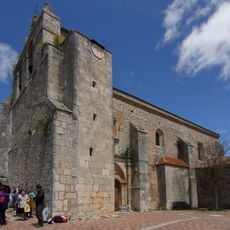
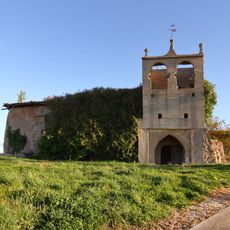
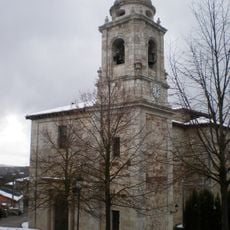
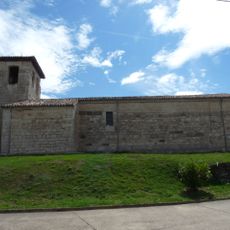
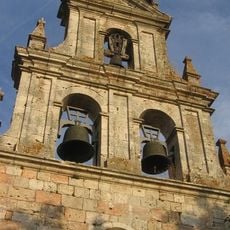
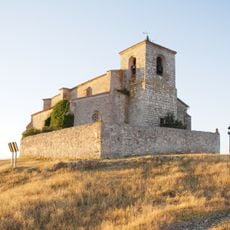
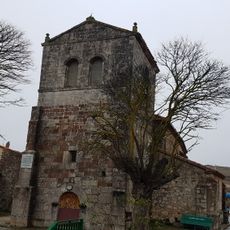
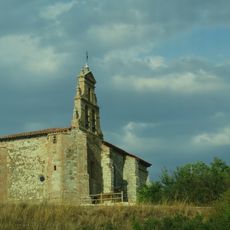
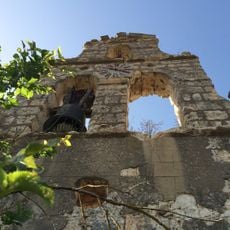
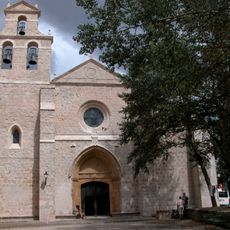
San Juan de Ortega, Romanesque monastery in Barrios de Colina, Spain.
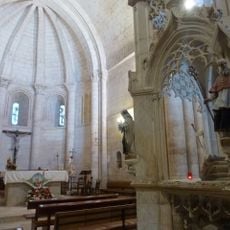
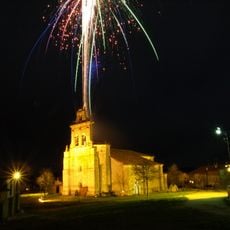
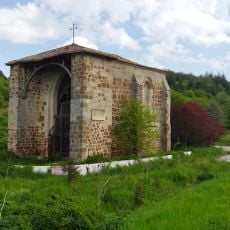
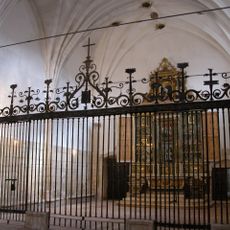
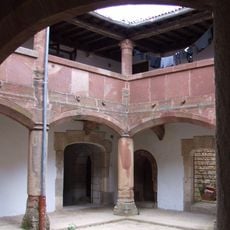
San Juan de Ortega is a monastery complex in Barrios de Colina, Burgos, made up of the church of San Juan de Ortega, the chapel of San Nicolás de Bari or chapel of the Saint, the cloister of the Hieronymites and a pilgrim refuge with a small cloister of reddish stone. The church, in Romanesque and Gothic styles, keeps three 12th-century apses, the oldest part, and Gothic arches added in the 15th century by Juan de Colonia.
The monastery was founded in the 12th century as a shelter for pilgrims walking the road to Santiago de Compostela, and it was first managed by Augustinian canons. In the 15th century, the Order of the Hieronymites took over and shaped the monastic life there for many years.
The monastery's name comes from the Latin Urtica, meaning nettle, the scrubland where John of Ortega built his chapel. The Hieronymite monks ran a pharmacy known across the region, and in the 16th century the hospice held sixteen beds. The hamlet is tiny, and since the 1980s part of the former monastery has served as a pilgrim hostel with fifty beds and a café.
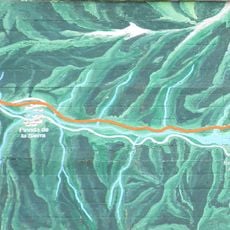
The monastery sits directly on the Camino de Santiago and is easy to reach on foot from nearby villages along the route. It offers beds for pilgrims and a small café, so visiting hours for the church and cloisters may vary depending on the time of day.
At the spring and autumn equinoxes, around 5 pm solar time, a beam of light from a small window in the main façade strikes the Romanesque Annunciation capital, where the Virgin Mary faces the light rather than Saint Gabriel, reversing the usual arrangement. The medieval builders are thought to have planned this effect, which is described as unique in the Western world.
The community of curious travelers
AroundUs brings together thousands of curated places, local tips, and hidden gems, enriched daily by 94,230 contributors worldwide.