Nuevo Rezado, neoclassical building in Madrid, Spain
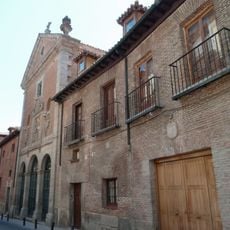
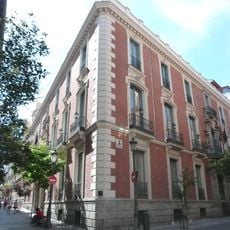
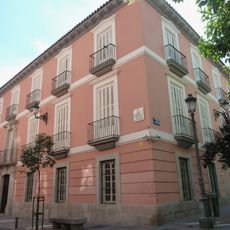
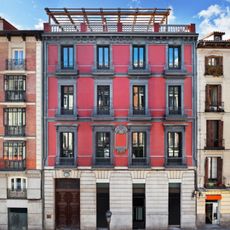
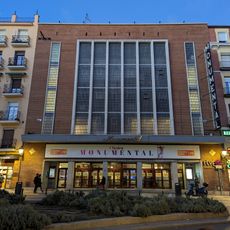
Nuevo Rezado is a neoclassical house in Madrid designed with balanced proportions and clean lines that reflect the architectural approach of the late 1700s. The building displays symmetrical windows, a decorated entrance, and a roof that extends smoothly over the walls, featuring the hallmarks of its style.
Juan de Villanueva designed the building at the end of the 18th century to store the prayer books of the Hieronymite monks of El Escorial; construction began in 1788. In 1836 the Mendizábal government disentailed it, and by royal order it was handed to the Royal Academy of History the following year, 1837. Eduardo Saavedra directed reforms between 1871 and 1874, and it was declared a historical-artistic monument on 5 July 1945.
The name Nuevo Rezado refers to the prayer books (rezados) of the Hieronymite monks of El Escorial, which the building was designed to store. On the facade, look for the grill, the symbol of the martyrdom of Saint Lawrence, to whom the monastery is dedicated. The monks' books were kept here until the 1836 desamortización.
The house is located near the streets of del León, Santa María and las Huertas in Madrid's historic center and is easy to find. The neighborhood features narrow streets and old buildings filled with cafes and shops, making it pleasant to explore the area on foot.
The chronicles of the time record the astonishment of Madrid residents when the carts carrying the jambs and lintel of the doorway entered the city, pulled by twenty-eight pairs of oxen. The building was declared a historical-artistic monument on 5 July 1945, and today it is the seat of the Royal Academy of History.
The community of curious travelers
AroundUs brings together thousands of curated places, local tips, and hidden gems, enriched daily by 94,009 contributors worldwide.