Cloister of the Church of San Jerónimo el Real, Baroque cloister in Madrid, Spain
The Cloister of San Jerónimo el Real is a Baroque cloister designed in 1671 by Fray Lorenzo de San Nicolás and built between 1672 and 1681. Its stone arcades were dismantled, numbered and moved for cleaning before being reassembled in Rafael Moneo's expansion of the Museo del Prado, where the cloister now stands.
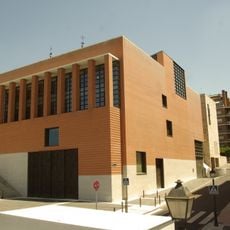
The monastery of San Jerónimo el Real was a religious foundation of the early 16th century; of the whole complex only its church survives. The present cloister's stonework was designed in 1671 by Fray Lorenzo de San Nicolás and built between 1672 and 1681. It was declared an architectural-artistic monument on 15 July 1925, a status that did not stop its decay: by the end of the 20th century it was overgrown and near collapse. Under an agreement between the archbishopric of Madrid and the Ministry of Culture it was dismantled and rebuilt within Rafael Moneo's Prado extension.
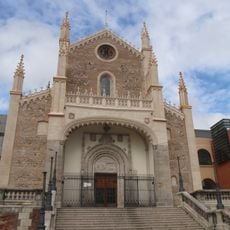
The cloister's name comes from the Hieronymite monastery of San Jerónimo el Real, founded in the early 16th century; only its church survives beside the Prado. Since 2024 the space has displayed 19th-century sculptures, after the Renaissance figures of the Leoni family were moved to the museum's Central Gallery.
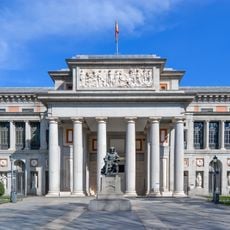
The cloister is now integrated into the Museo del Prado extension and can be visited as part of the museum. Plan time to appreciate the intricate stonework and architectural details throughout the space.
The cloister's arcades were dismantled for Rafael Moneo's Prado extension: each stone block was numbered and hauled outside the city to be cleaned before being put back in place. The 1672-1681 work by Fray Lorenzo de San Nicolás had stood weed-choked and near collapse at the end of the 20th century, despite its 1925 monument designation.
The community of curious travelers
AroundUs brings together thousands of curated places, local tips, and hidden gems, enriched daily by 93,507 contributors worldwide.