Halles de Niort, Market hall in Niort, France
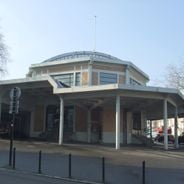
Les Halles de Niort is a market hall built with cast iron and glass in Niort, France, featuring a central nave supported by stone pillars and lit through skylights above the vaulted ceiling. The interior accommodates 60 permanent stalls, with space extending onto the adjacent square when additional traders arrive.
Niort had covered markets from the 13th century, when Alphonse of Poitiers commissioned one built between 1255 and 1261; a second hall, funded by the Duke of Berry, replaced it after a storm damaged the first in 1377 and stood until its dismantling in 1793. A hall opened in 1803 on the Sèvre's eastern bank, was disliked for its abattoir waste and was demolished after a partial roof collapse in 1863. The present building, won in an 1866 competition by engineer Simon Durand, was inaugurated on 1 September 1871 and inscribed as a monument historique on 14 May 1987.
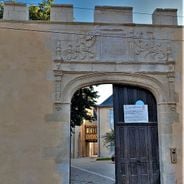
The market's name appears in the 1354 remark by King Jean II the Good, who called Niort's hall "la plus belle cohue du royaume". The pediment above the main entrance carries reliefs of Mercury, god of commerce, and Ceres, goddess of agriculture, with a clock between them. For the 150th anniversary in 2021, stallholders wore costumes from the 1870s.
The hall opens six days each week, with Saturday mornings drawing the largest crowds as most traders bring their full inventory. The main entrance stands at Place du Donjon, providing direct access to the rows of covered stalls inside.
Simon Durand designed the ironwork framework following principles used in Parisian market halls but adapted the proportions to fit the narrower site available in Niort. The original floor tiles and decorative iron arches around the pillars have remained unchanged since the opening.
The community of curious travelers
AroundUs brings together thousands of curated places, local tips, and hidden gems, enriched daily by 92,168 contributors worldwide.