Hirebenkal, Archaeological necropolis in Koppal district, India.
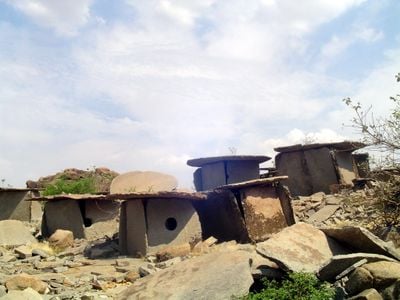
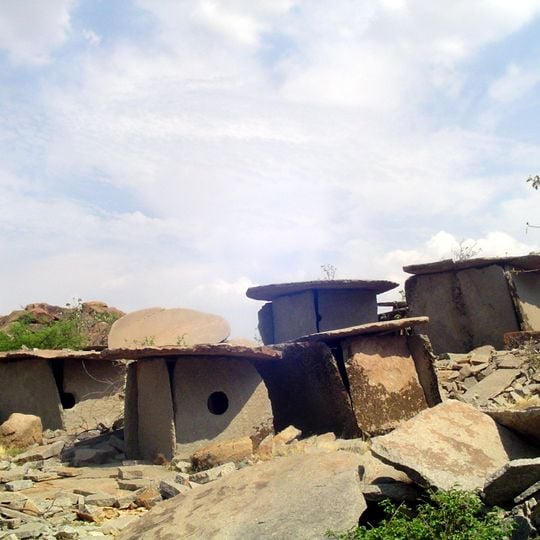
Hirebenkal is an archaeological necropolis with approximately 400 funerary monuments distributed across seven hills near the Tungabhadra River. The three-sided burial chambers are topped with sturdy capstones and form an extensive burial ground set within a rocky landscape.
The site dates from 800 BCE to 200 BCE and marks a transition period between the Neolithic and Iron Age populations. Archaeological investigations started in the mid-20th century when scholars first systematically studied the burials.
The rock shelters feature paintings showing dance and hunting scenes alongside geometric patterns with animals such as deer and cattle. These artworks reveal the daily life and spiritual practices of the ancient inhabitants.
Reaching the structures requires crossing a stream and making your way through thorny vegetation and scattered rocks. Sturdy footwear and appropriate protective clothing are essential for navigating the uneven, rocky terrain safely.
A stone kettledrum found at the location produces sounds that travel across considerable distances, revealing the advanced acoustic knowledge of ancient people. This artifact demonstrates how early cultures understood sound propagation and resonance.
The community of curious travelers
AroundUs brings together thousands of curated places, local tips, and hidden gems, enriched daily by 91,131 contributors worldwide.