Tungabhadra Dam, Hydroelectric power station and dam in Bellary district, Karnataka, India
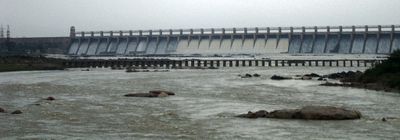
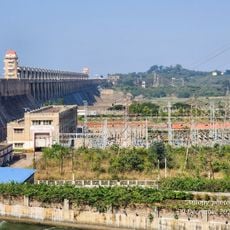
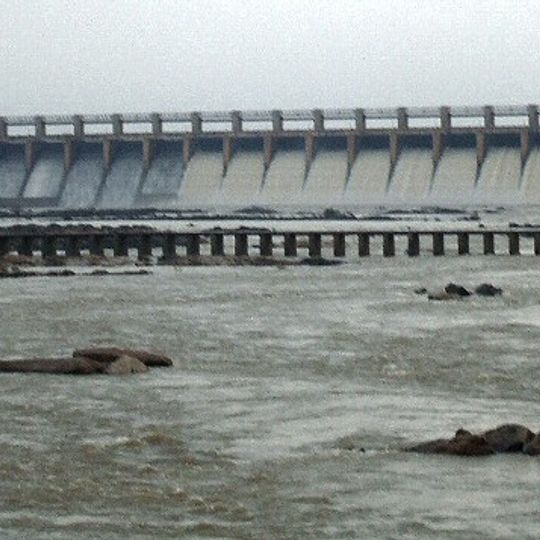
Tungabhadra Dam is a hydroelectric power station and water control structure spanning the Tungabhadra River in Ballari district. The facility holds back a large reservoir fed by monsoon rains, with turbines housed in a powerhouse section at the base of the wall.
Work on the project started in 1949 as a joint effort between the Kingdom of Hyderabad and Madras Presidency, finishing four years later in 1953. The completion brought modern irrigation and electricity generation to a region previously dependent on seasonal rainfall.
Local farmers rely on the irrigation canals that branch from the reservoir, turning dry fields into productive cropland across the region. Villages downstream organize their planting seasons around the water release schedule set by the dam authority.
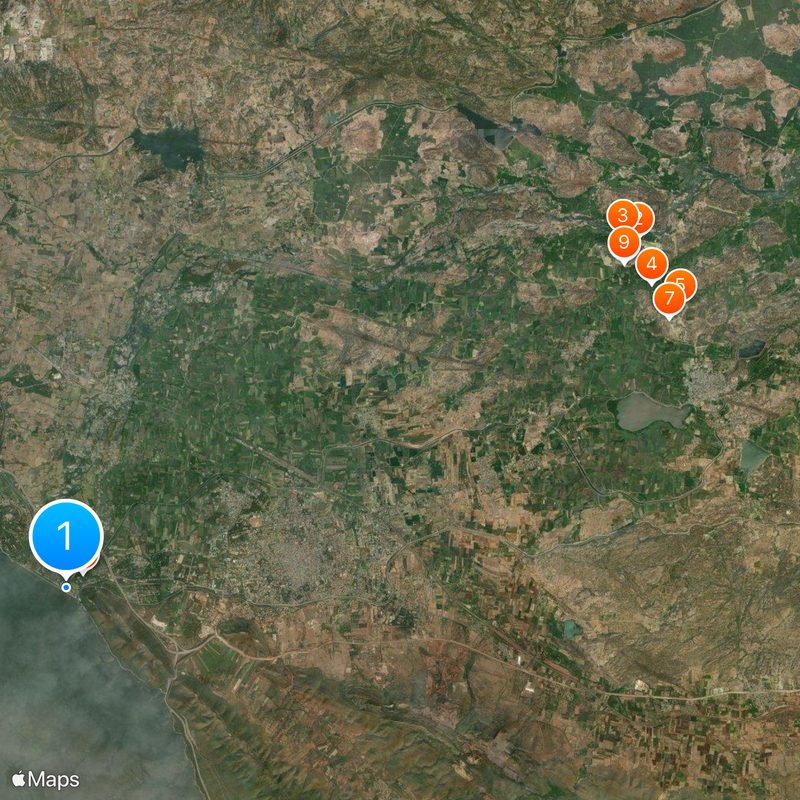
Visitors can drive or walk across the top of the wall to view the reservoir on one side and the riverbed below on the other. The site sits about 15 km from Hospet town and connects via a well-maintained road suitable for all vehicles.
The entire structure uses stone masonry bound with surki mortar made from burnt brick dust rather than concrete. This construction method makes it one of the largest stone masonry dams in India, built with traditional techniques on a modern scale.
The community of curious travelers
AroundUs brings together thousands of curated places, local tips, and hidden gems, enriched daily by 90,753 contributors worldwide.