Louis-Hippolyte Lafontaine Bridge-Tunnel, Bridge-tunnel in Mercier-Hochelaga-Maisonneuve, Canada
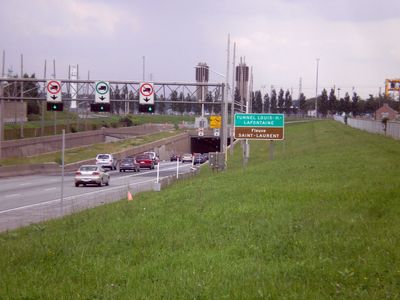
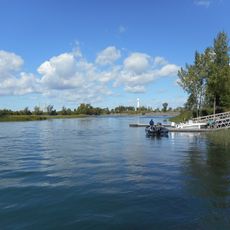
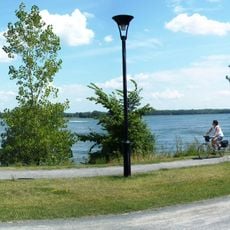
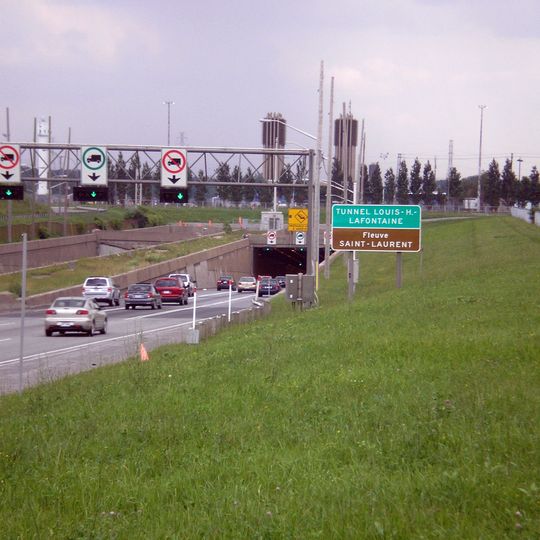
The Louis-Hippolyte Lafontaine Bridge-Tunnel is a crossing that combines elevated roadway and submerged passage beneath the Saint Lawrence River. Concrete tubes run below the water surface and continue into open causeway sections on both shores.
Planning started in the early nineteen-sixties to create an additional crossing over the wide waterway. Completion took place in spring 1967 as part of preparations for the World Exposition in Montreal.
The name honors a nineteenth-century statesman who championed self-government and bilingualism in the province. Today the route serves as a vital commuter link between the southern suburbs and the city center, shaping daily life for thousands of motorists.
Both directions run through separate tubes deep below the riverbed, which can become congested during heavy traffic. Commuters should avoid rush hours in the morning and late afternoon when long queues form.
Engineers built each of the seven tunnel elements in a massive dry dock created on the shore. After completion, each section was towed to the riverbed, flooded, and then lowered into position.
The community of curious travelers
AroundUs brings together thousands of curated places, local tips, and hidden gems, enriched daily by 90,764 contributors worldwide.