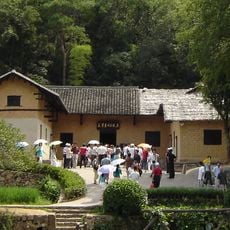
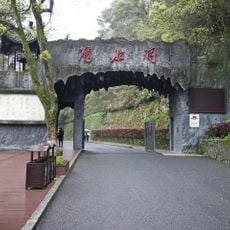
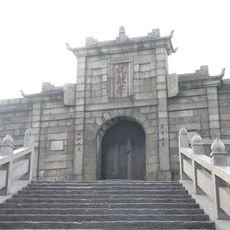
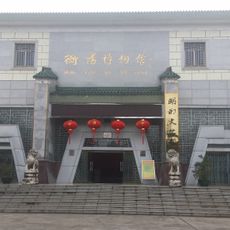
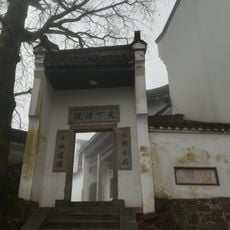
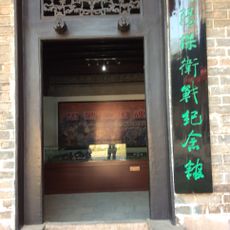
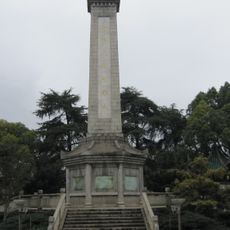
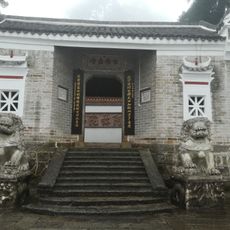
Grand Temple of Mount Heng, Taoist temple at Mount Heng, Hunan, China
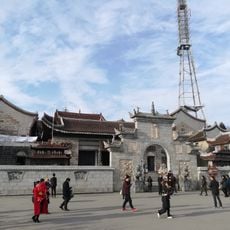
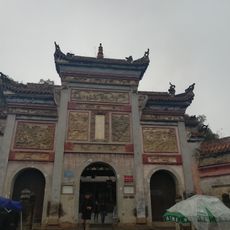
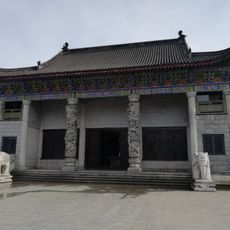
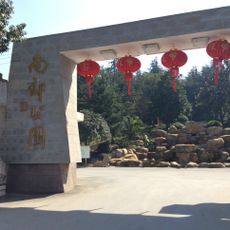
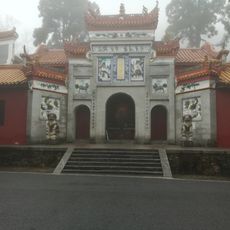
The Grand Temple of Mount Heng stands at the foot of Mount Heng in Hunan, China, covering over 98,500 m². Nine main buildings run south to north along the axis: Lingxing Gate, Kuixing Pavilion, Zhengchuan Gate, Imperial Tablet Pavilion, Jiaying Gate, Imperial Library Tower, Grand Hall, Refreshing Palace and North Hind Gate. The Eight Temples of Taoism and Eight Temples of Buddhism flank the axis east and west. The Grand Hall, modeled on the Forbidden City's Hall of Supreme Harmony, rises 31.11 m on a 35.3 by 53.68 m base and holds 72 stone columns, one for each of Mount Heng's 72 peaks.
The temple was founded in 725 during the Tang Dynasty and was destroyed and rebuilt several times over the following centuries due to fires and conflicts. The last major reconstruction took place in the 19th century and gave the complex its current form.
Three religions share the same grounds here: Taoism, Buddhism, and Confucianism each have their own halls, standing side by side without merging into one another. A visitor can move from one tradition to the next simply by walking from one building to another.
The complex is large, so it is worth setting aside enough time to walk through the different areas without rushing. During religious festivals, the site draws more visitors, which noticeably changes the feel of the place.
The 1882 reconstruction followed the layout of Beijing's Forbidden City, making this one of the few religious complexes built outside the capital using an imperial palace plan. This choice reflects the political weight that Mount Heng held during the imperial period.
The community of curious travelers
AroundUs brings together thousands of curated places, local tips, and hidden gems, enriched daily by 94,354 contributors worldwide.