Lingxiao Pagoda, Buddhist pagoda in Zhengding County, China
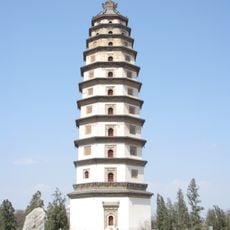
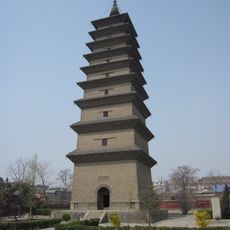
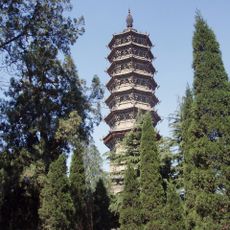
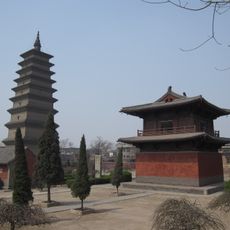
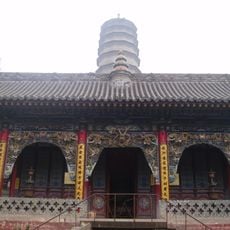
Lingxiao Pagoda is a 42-meter, nine-story octagonal tower in Zhengding, Hebei. Its first four levels are brick, while the upper five stories and nine rings of eaves are entirely wooden, topped by a cast-iron spire. A large central column runs through the interior, and a wooden staircase climbs to the fourth floor.
The pagoda was constructed in 1045 during the Song Dynasty, replacing an earlier wooden structure from 860. Subsequent dynasties carried out renovations that preserved the building through the centuries.
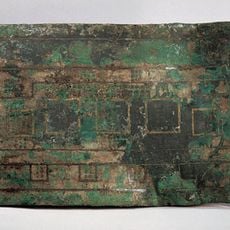
Locals long called it the Wooden Pagoda because its upper storeys are timber; its formal name was once Huiguang Pagoda. The name Lingxiao, "reaching the sky", suits a tower whose iron spire tops 42 metres. A stone reliquary found in 1982 in the underground crypt beneath the base carries an inscription recording that the pagoda was built during the Tang dynasty.
The interior wooden staircase allows visitors to climb up to the fourth floor and examine the construction from close range. The building has withstood an earthquake in 1966 and remains in stable condition for public access.
Inside, a wooden staircase climbs only to the fourth floor. The central column, nine round timbers bound together and running to the top, is called a pillar of the pagoda's heart; architectural historian Luo Zhewen described it as the only surviving example of its kind in Chinese architecture. In the Northern Song, when the old column rotted, the monk Huaibing measured and fitted a replacement timber without dismantling the tower.
The community of curious travelers
AroundUs brings together thousands of curated places, local tips, and hidden gems, enriched daily by 94,195 contributors worldwide.