Stele of the Ode to the Feat of the Prince Qinghe, Tang Dynasty stone monument in Zhengding County, China
The Stele of the Ode to the Feat of the Prince Qinghe is a stone monument from the Tang Dynasty that stands in Zhengding County, carved with inscriptions documenting the prince's accomplishments. The stone displays traditional Chinese calligraphy and preserves detailed records carved directly into its surface.
Erected on 1 July 766 by order of Emperor Daizong of the Tang, the stele was composed by Wang You and written and sealed in calligraphy by Wang Shize to praise Li Baochen, military governor of Chengde. Its text records his response to flooding of the Hutuo River, when he mobilized people to repair roads and dikes, and his 'fengzheng bufu' policy exempting residents from harsh taxes after the Shi Chaoyi rebellion.
Locals call the stele Li Baochen Bei, Fengdong Bei or Fendong Bei. Its 1,007 surviving characters are cut in a mix of regular and running script by Wang Shize, who also wrote the twelve-character seal-script title. The text records Li Baochen's flood works on the Hutuo River and his 'fengzheng bufu' tax exemption.
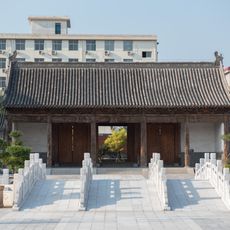
The monument is located in Zhengding County and can be visited independently or through guided tours. Visitors should be aware that the site is outdoors at a historical location, so it helps to prepare for weather conditions and allow time to read the detailed inscriptions.
The stele is also called the Fengdong ("wind-moving") or Fengdong ("freezing") Stele, and locals say the massive stone once swayed in strong wind. Its inscription survives as 1007 characters in a mix of regular and running script, brushed by Wang Shize, who also wrote the 12-character seal-script title across the top.
The community of curious travelers
AroundUs brings together thousands of curated places, local tips, and hidden gems, enriched daily by 94,018 contributors worldwide.