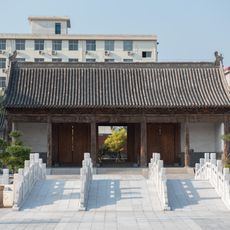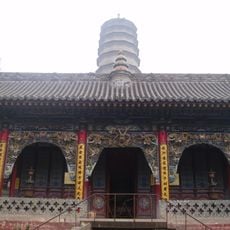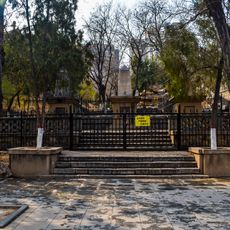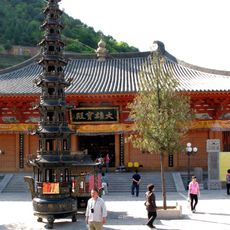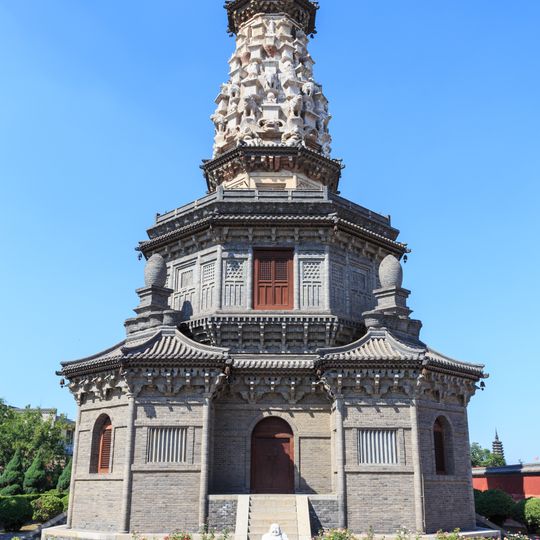
Hua Pagoda of Guanghui Temple, Buddhist pagoda in Zhengding County, China.
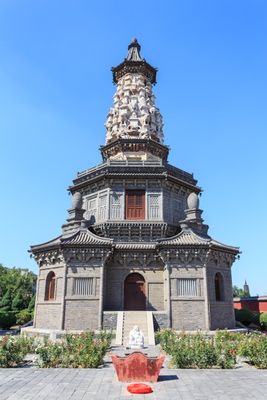
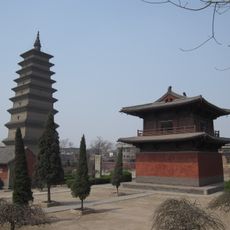
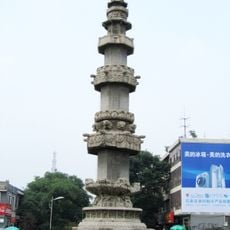
Hua Pagoda of Guanghui Temple is an octagonal brick structure with three levels that stands about 40.5 meters tall. Four smaller hexagonal pagodas sit at the corners of the first level, creating an uncommon arrangement within the main structure.
The pagoda was first built during the Tang Dynasty and received major reconstruction during the Jin Dynasty that shaped its current form. These changes reflect how religious buildings were renewed and adapted across different periods of Chinese history.
The exterior walls display detailed brick carvings showing lions, tigers, elephants, and dragons that represent traditional Chinese religious beliefs. These sculptures tell Buddhist stories and show how artists understood sacred subjects when they built this place.
The pagoda is open during daytime hours and can be visited at a leisurely pace to take in its full structure and details. Planning your visit for quieter periods helps you see the brick carvings and architectural features more clearly without crowds.
The four corner pagodas attached to the first level are a rare architectural feature rarely seen in other Chinese religious structures. This uncommon design made the temple an interesting example of how builders experimented with religious building layouts.
The community of curious travelers
AroundUs brings together thousands of curated places, local tips, and hidden gems, enriched daily by 92,635 contributors worldwide.